
A little curiosity. Four ways to grow.
A letter becomes a word. A collection becomes a number. A shape or color reveals a pattern. Meet our four learning worlds and see what your child can explore in each one.


What will we discover?
Each world has its own friendly guide and a different way to practice noticing, comparing and explaining. Follow an interest, revisit a favorite or try something new.
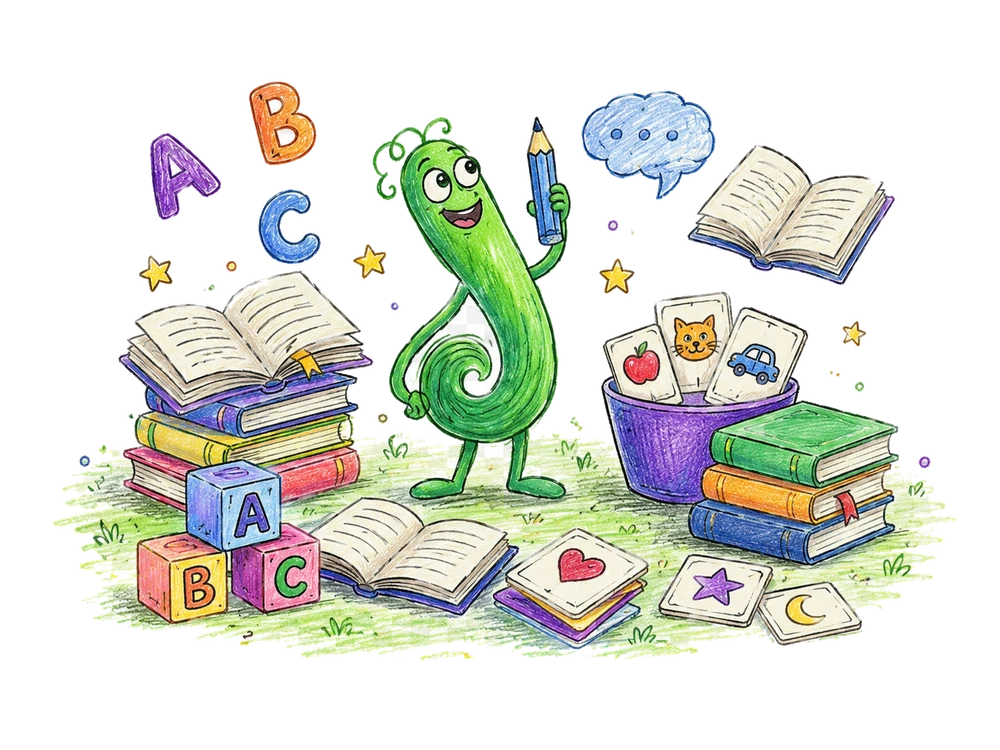
Letters & Words
Match letters, connect uppercase and lowercase forms, and explore familiar words. Each language follows its own alphabet and word examples.
- Recognizing uppercase and lowercase letters.
- Finding a matching letter among different choices.
- Connecting familiar words and pictures.
- Noticing beginning sounds and simple word patterns.
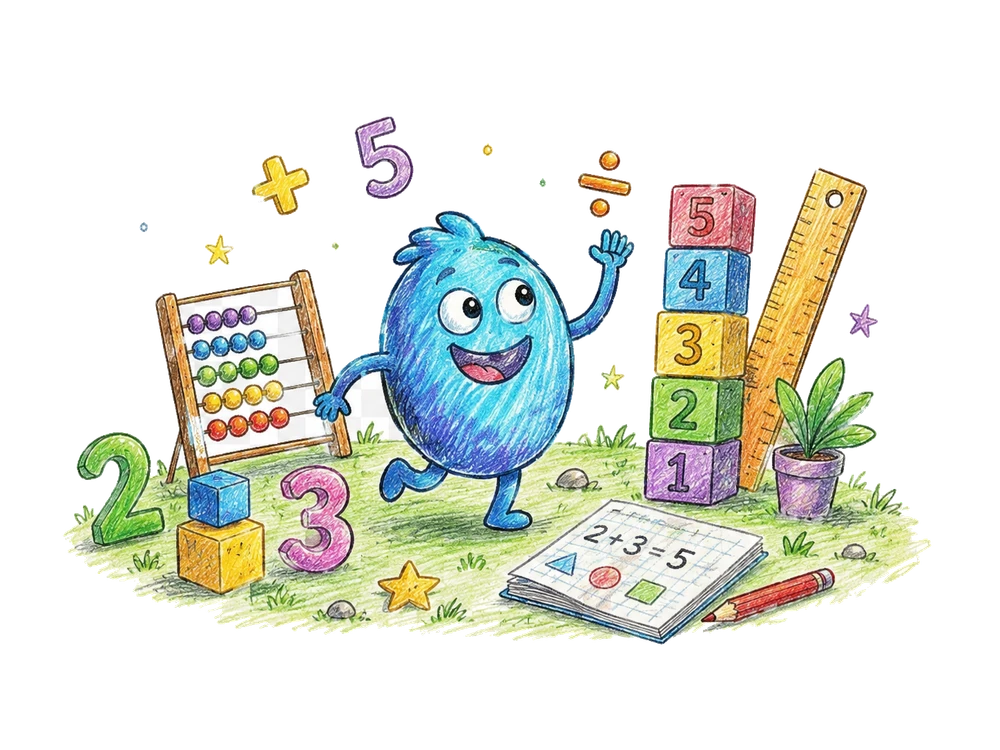
Numbers & Math
Connect number symbols with groups of objects, compare quantities and explore arithmetic through picture-based activities.
- Counting pictured objects one at a time.
- Matching a numeral to a group.
- Comparing more, fewer, and equal amounts.
- Continuing simple patterns and exploring early addition and subtraction.
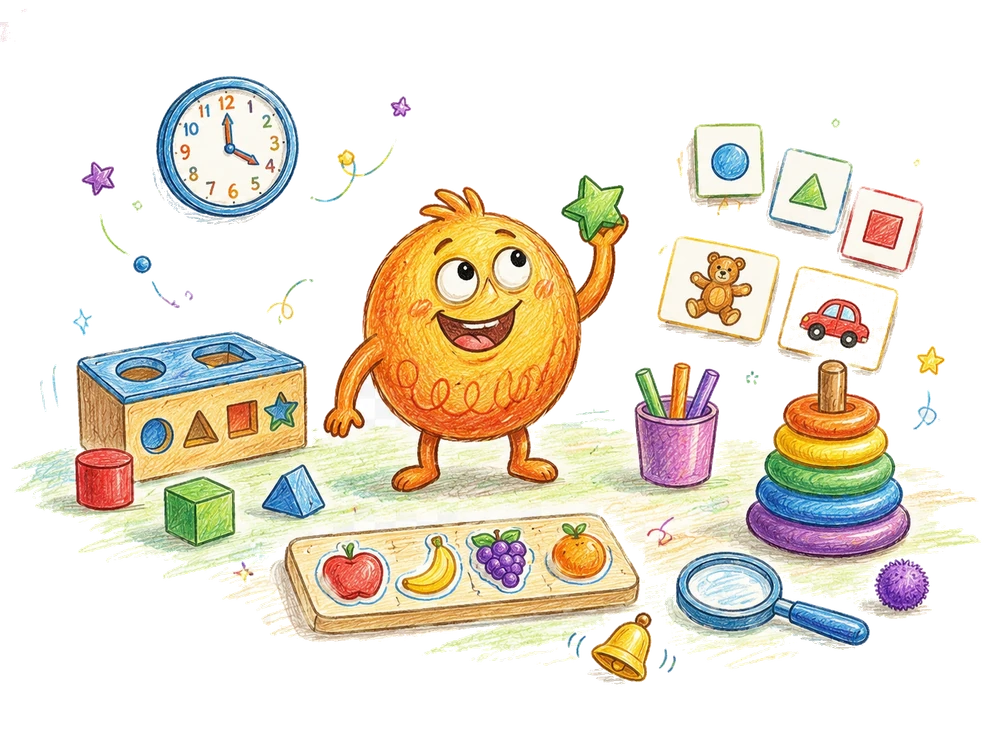
Shapes & Objects
Recognize and compare shapes, notice sides and corners, and practice spatial relationships with illustrated objects.
- Recognizing circles, triangles, squares, rectangles, and other familiar shapes.
- Matching objects and finding an item that is different.
- Sorting by a shared feature.
- Exploring simple spatial relationships and visual patterns.
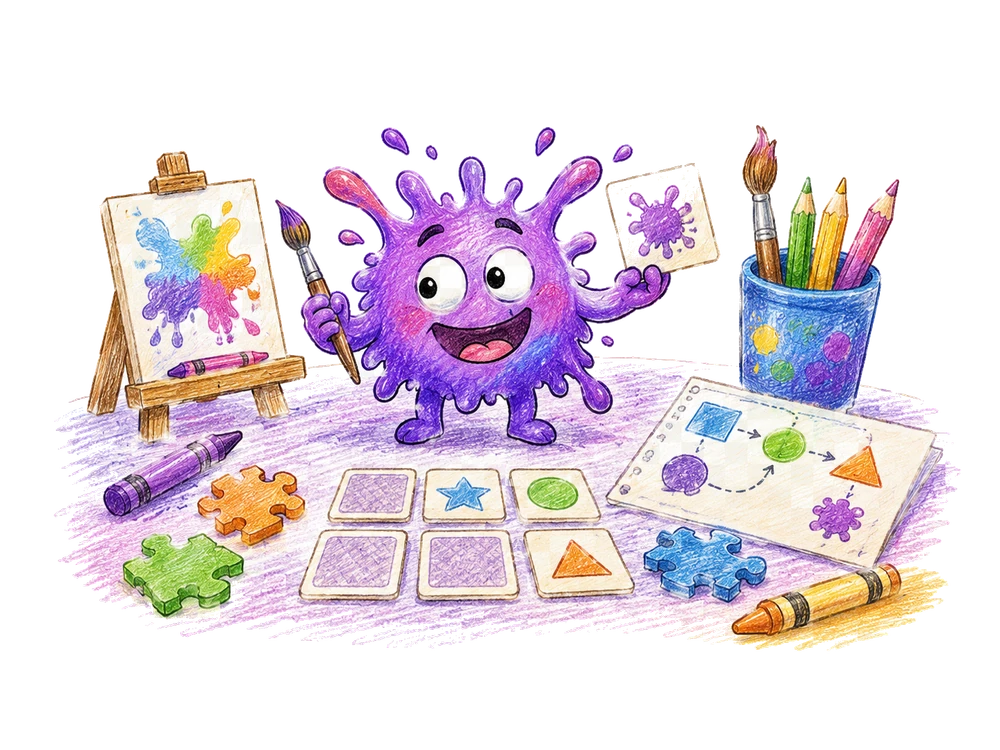
Colors & Patterns
Name and match colors, look closely at pictures, and explore repeating patterns and visual sorting.
- Recognizing common color names.
- Matching colors across pictured objects.
- Sorting objects by color.
- Continuing simple color patterns and noticing a different item.
From curiosity to a small discovery
Follow an interest
Start with the world your child is curious about. Letters, numbers, shapes and colors can be explored in any order.
Find a comfortable level
Browse preschool, kindergarten, first grade and second grade. The age ranges are starting points; choose examples that feel inviting for your child.
Try, talk and return
Open the activity map, read a chapter’s skills and try a sample. Talk about one answer, then take a break or continue together.
Small discoveries belong in everyday life, too.
Count cups at snack time, look for shapes on a walk, spot a letter in a favorite book or make a color pattern with blocks. The activities give you ideas to explore together on and off the screen.
For parentsQuestions before you begin
How are the four worlds connected?
Letters practice noticing symbols and sounds; numbers connect symbols with quantities. Shapes and colors invite children to compare features, sort and recognize patterns. These are related habits of thinking, with different examples in each world.
What is the difference between the subject guides and the activity map?
These guides explain what each subject offers and how a parent can support practice. The activity map organizes the actual activities by subject, learning level and chapter, with skills and example prompts.
Can we explore before creating an account?
Yes. You can read the guides, browse chapters and try a sample activity without an account. A parent-managed child profile saves progress; finishing the current stop opens the next one.
Does every language teach the same alphabet?
No. The letter activities use the selected language’s alphabet and word examples. Switch the learning language to explore the content prepared for that language.