A small water drop can reveal a visible difference between a paper towel and a smooth surface. With an adult supervising the water, a child predicts or simply observes what happens to similar drops on two labeled samples. Record the immediate and later views separately, and avoid treating one wet patch as a precise measurement or universal product ranking. This guide includes safe setup, examples of ambiguous results, and ways to participate without touching water.
The question: what happens to one drop?
Place a small drop of water on a suitable piece of paper towel and another on a smooth water-safe surface. Ask the child to describe what is visible immediately and after a short, agreed interval. The drop may spread, soak into a material, remain as a bead, or produce another observable result.
The central skill is comparing the same kind of observation under stated conditions. Use similar drops and the same waiting period when practical. The activity does not require the child to explain the microscopic structure of a material or to decide which material is universally best.
An adult chooses safe materials and controls the water. A child can point, describe, use a communication device, or direct a helper. Water contact is optional, and the adult remains responsible for supervision and cleanup.
Materials and supervision
Prepare a water-resistant work surface, a tray, two small samples selected by an adult, a dropper or spoon for adult use, a small amount of room-temperature water, and a towel. A paper towel and a clean plastic plate are examples if they are suitable for the setting.
Keep the samples separate and label them A and B with words or accessible symbols. Avoid electrical equipment, unknown substances, sharp objects, and materials that should not be wetted. The adult chooses tools appropriate for the child’s age and needs.
Even small amounts of water need supervision. An adult controls the container, cleans spills promptly, and empties any water container after the activity. If direct water use is unsuitable, a clear adult-made recording can show the same sequence.
Define the comparison
Choose a question before adding water: “After one small drop and a short wait, what can we see on each sample?” This question asks for a visible description, not a precise measurement of how much water each material absorbs.
A drop that disappears from the surface may have moved into the material, spread into a thin layer, or become hard to see. Use the sample and a suitable method to investigate further rather than claiming an exact amount from appearance alone.
The labels “absorbent” and “less absorbent” can describe the observed comparison only with appropriate context. One drop on two samples does not establish performance for every brand, thickness, or use.
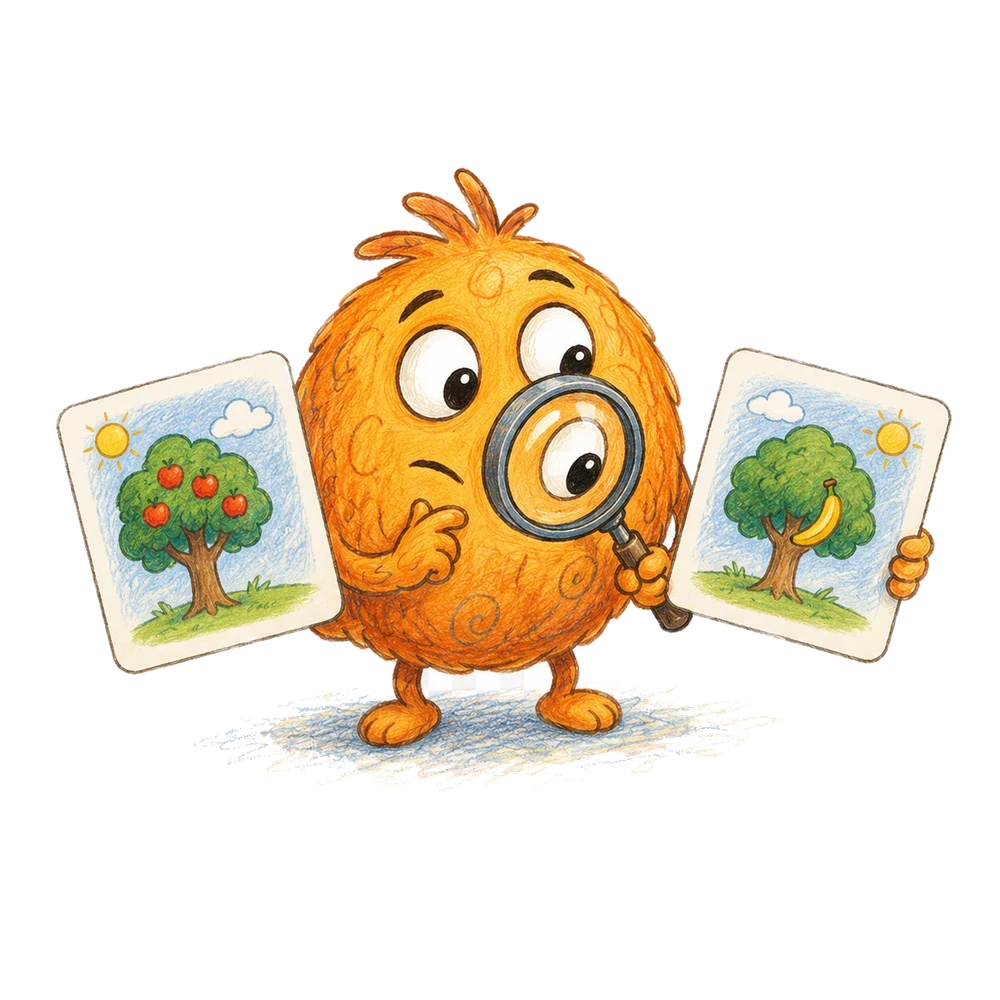
A first comparison in steps
The adult controls the dropper and water while the child chooses an accessible way to observe and respond.
- Have an adult prepare two labeled suitable samples on a stable tray.
- Ask the child for an optional prediction about each sample.
- Place one similar small drop on each sample using the same method.
- Observe immediately and after an agreed short interval.
- Record visible results and any uncertainty separately from predictions.
- Have an adult clean and dry the area and empty the water container.
A sample conversation
Adult: “Here is a piece of paper towel and a smooth plastic plate. What do you think will happen to a drop on each?” Child: “The towel will drink it.” Adult: “I’ll record that as a prediction. Let’s add one small drop to each and look.”
After the drops are placed, the child points to a wet patch on the towel and a rounded drop on the plate. Adult: “You noticed a spreading wet area here and a visible drop there. Let’s record what we can see after our wait.”
If the actual materials behave differently, use the observed result. The phrase “drink” can be a helpful child’s metaphor; explain that the water enters or spreads through the material rather than suggesting the towel is alive.
Try to make the drops comparable
Use the same dropper or spoon and have an adult place one similar small drop on each sample. Exact equality may be difficult without a measuring instrument. Record that the drops were intended to be similar rather than claiming they were identical.
If one drop is visibly much larger, the comparison is harder to interpret. Start with fresh samples and similar amounts if appropriate, or note the difference. Do not add extra water to one sample without recording it.
The child can choose which labeled sample receives the first drop. The adult controls placement and confirms the child’s selection. Avoid splashing or putting water near electrical equipment.
Agree on a waiting period
Choose a short interval that works for the group, such as watching immediately and again after a minute. Use a timer only if it is accessible and helpful. Record the actual interval rather than implying an exact time that was not measured.
A material can change during the wait. “The wet patch became wider” is a different observation from “the drop disappeared immediately.” Include both if the child noticed them.
If the activity must stop before the second look, record the first observation only. Do not invent a later result to complete a chart.
Describe what is visible
Ask the child to point to the drop or wet area. They might say “round,” “spread out,” “shiny,” or “I cannot see it now.” A helper can write the words and identify which sample was described.
If the drop is transparent against the plate, a safe change in viewing angle or background may make it easier to see. Do not touch or move the sample without noting the change if the group is comparing the same setup.
A child’s report that a drop is no longer visible is useful. It does not by itself prove exactly where every part of the water went.
Prediction and result belong in different places
Before the test, a child might predict that both drops will remain round. Write that prediction in one column. After the wait, record the actual visible result in another column, such as “one spread into a patch; the other stayed rounded.”
If the result differs, retain the original prediction. The comparison is the point of the activity; a surprising result is not a mistake to hide. The child can ask to repeat the test if safe and useful.
An “unsure” prediction is equally acceptable. A child may prefer to observe without predicting and still participate fully.
Paper towel and a smooth plate
An adult places a small drop on each prepared sample. A paper towel may show a spreading wet area, while a smooth plastic plate may show a visible drop. These are examples, not guaranteed results; surface texture, coatings, and drop size can change what happens.
Ask, “Which sample has a visible wet patch? Where is the water-shaped bead?” The child can point or ask a helper to trace the area on a separate drawing. Avoid pressing a finger into the water unless that is appropriate and desired.
After the agreed wait, record both samples. Do not call one sample “better” without naming the purpose: spreading water and keeping a drop on the surface may be useful for different tasks.
Two kinds of paper
Compare equal-sized samples of two paper types if they are safe and available. Label them clearly and use similar drops. Ask the child whether the visible wet areas differ after the same interval.
The samples may differ in thickness, coating, or texture. A larger wet patch does not automatically tell you exactly how much water entered each material. Note the observed pattern and avoid a precise absorption ranking without a measurement method.
If the two papers look alike, use labels or distinct borders that do not interfere with the drop. An adult can place the water while the child identifies which sample is A or B.
A thick and a thin sample
A single sheet and a folded stack may behave differently. Before testing, agree whether the comparison concerns material type or thickness. If both change at once, the reason for any difference is harder to identify.
For a thickness comparison, use the same type of paper and prepare one single layer and one stack. Place similar drops and observe for the same interval. Record the number of layers and the visible result.
A child can point to the number of layers or direct a helper to prepare them. Do not assume a thicker sample always absorbs a particular amount; test and describe the actual setup.
A drop that rolls or spreads
On a tilted plate, a drop may move downhill. On a flat plate, it may remain in one place or spread. Check the surface position before comparing with another material and record whether it was level or tilted.
If the drop rolls off the sample, the result is “moved off the surface,” not necessarily “was absorbed.” Use a tray and have an adult clean the water promptly.
For a fairer material comparison, place both samples on similar stable surfaces. A separate tilt test can be interesting, but it asks a different question.
Look at the underside only when safe
An adult may lift a suitable sample after the first observation to see whether the underside is wet. Explain that lifting changes the setup and record when it happened. The child can observe or direct the adult without touching the sample.
If the underside is wet, describe that feature. It can help investigate where water moved, but the test still does not measure the exact quantity absorbed. If the underside is not visible or the material cannot be lifted safely, record that limitation.
Use a tray to catch drips and avoid lifting a sample above electrical items. Dispose of or dry the material according to its type and the setting.
A drop that is no longer visible
If a child says, “The drop disappeared,” ask what they mean and show the sample from a safe position. There may be a visible damp area, a thin spread-out layer, or no clear mark. Record the observation without inventing a mechanism.
A later check may show a change in the damp area. Label the new time and keep it distinct from the initial result. Without measuring water and accounting for the conditions, do not claim that a specific amount has evaporated or been absorbed.
A child may also find the transparent water hard to see. Offer an accessible view or adult description and record who observed each feature.
A fair repeat
Use fresh dry samples of the same materials, similar drops, the same surface, and the same waiting period if the group wants to repeat. Label the second trial separately. The goal is to see whether the observed pattern recurs under similar conditions.
If one sample was already damp, note that the starting condition changed. A damp towel and a dry towel are not equivalent starting points. A repeat can produce a different result without making the first observation false.
Do not repeat until a preferred outcome appears. Keep all observed results and any uncertainty in the record.
If the result is unexpected
A child may predict that the paper towel will absorb the drop quickly, but a coated or previously damp sample may behave differently. Ask what was actually observed and check the sample’s condition without assigning an unsupported cause.
The group can ask a new question: “Was this sample already wet?” or “Would a fresh piece behave similarly?” An adult decides whether a new test is safe and worthwhile. Only the conditions that are actually checked should appear as facts.
A surprising outcome is not a reason to change the child’s prediction after the test. Preserve both statements and any new question.
A simple first version
Show one drop placed by an adult on one suitable sample, or use a clear recording. Ask the child to point to the drop or damp area and choose a description. A comparison between materials can wait for a later round.
Use a large image, a spoken description, or a communication board as appropriate. Include “I cannot tell” as a valid answer. The child does not need to touch water or operate a dropper.
One observation with a clear source and time can be a complete activity. The adult performs cleanup even when the child only watches.
A more demanding comparison
Use two fresh samples of the same material with different numbers of layers. Place similar drops using the same method and observe at the same times. The child can compare the visible damp areas or ask to inspect the undersides with adult help.
Before drawing a conclusion, check that the sample size, starting dryness, and drop amounts were reasonably similar. If they were not, note the limitation. This is a comparison of the prepared samples, not a universal test of all materials.
A later investigation could use an appropriate measuring method, but an exact volume calculation is not required for the first visual comparison.
Use a chart with clear labels
Create a row for sample A and a row for sample B. Add columns for prediction, immediate observation, and later observation. Use the child’s words or agreed symbols and include the actual time or interval.
If a drop rolls away or a sample begins damp, record that fact in its row. It explains why a direct comparison may be limited. A blank cell can mean “not observed” if that meaning is stated.
A chart is optional. It should support the conversation rather than require the child to produce a long written response.
What the word absorb means here
In everyday language, a material absorbs water when water enters it. A paper towel can take in water, and the damp area may spread. The child can describe the visible wet patch without needing to see individual spaces within the paper.
A visible patch is evidence that the material is wet, but it does not automatically give an exact absorbed volume. Some water can remain on the surface or move in ways that are hard to see. Use modest language such as “the towel became wet here.”
If the child asks why materials differ, explain that their structure and surface can affect how water moves. A detailed explanation needs more information than this one comparison provides.
A comparison is not a product rating
A towel sample may show a larger or smaller wet patch than another sample, but the result depends on the sample, drop, timing, and method. It does not establish which brand is best for every spill or purpose.
If the practical question is cleaning a spill, a separate adult-led test would need a suitable measured amount, comparable samples, a consistent method, and a clear way to assess the result. Even then, conclusions should be limited to the tested products and conditions.
For the child’s first activity, describe the visible changes and avoid advertising or a universal ranking based on a single drop.
Make participation accessible
Provide a large view, a spoken description, high-contrast labels, or an appropriate recording according to the child’s needs. A helper may point to the wet area and describe it, while the child selects the feature they want recorded.
Use the participant’s preferred communication method for predictions and results. Confirm a choice before marking the chart. If the child cannot directly perceive a feature, identify an adult’s description as the source rather than attributing it as a direct observation.
Touching a wet material is optional. Ask before guiding a hand, and let the child stop or switch to a picture-based activity.
Clean up and review
The adult removes or dries the samples, empties the water container, and wipes the work surface promptly. Keep any remaining water and tools under adult control. The child may help with a safe, dry part of the cleanup if they choose.
Read the record back: “You predicted the drops would stay round. We saw a wet patch on sample A and a rounded drop on sample B.” Ask whether that matches the child’s intended description.
If a sample or result was mislabeled, correct the record with the child. Keep predictions separate from observations and note any uncertainty about what was visible.
Compare the boundary of a wet patch
On a suitable paper sample, a child may notice that a wet area has a boundary. Ask them to point to the edge without touching it if the view is clear. A helper can draw an approximate outline on a separate diagram and label the observation time.
At the later check, compare the same area and note whether the visible boundary appears to have moved. A faint or uneven edge makes a precise measurement difficult. Record a range or describe the boundary as unclear rather than drawing an exact line by guesswork.
The patch outline describes where the sample visibly looks wet. It does not by itself measure all water inside the material or establish that two different materials contain the same amount.
A prediction made after the first look
After observing the initial drops, the child may wonder what will happen during the next minute. Label that statement as a prediction about the later check. It is different from the original prediction made before water was added.
For example, the child might say, “The wet patch may spread farther.” At the later check, compare the same visible area and record whether it appears larger, similar, or unclear. If the sample moved, include that change.
A prediction made after seeing the first result uses more information than one made beforehand. Keeping their times separate makes the record understandable and allows both ideas to be discussed.
Choosing which feature to compare
Before the adult adds water, let the child choose between observing the visible shape of the drop and watching the area that becomes wet. Both are useful questions, but they may require different descriptions.
Keep the chosen question visible or available through the participant’s communication method. At the check, point to the relevant feature on each labeled sample. If the child changes the question, record that change rather than combining unrelated answers into one rating.
Continue with another water question
Sink or float as a prediction and test activity asks where an object settles in water. It uses a different setup and requires close adult supervision and prompt cleanup.
Melting ice with observation instead of a race focuses on change over time. A child can compare dated or timed observations without needing to make the ice melt faster.
Choose the next activity based on suitable materials and the child’s interest. A single carefully described drop can be enough for an initial observation.
Helpful answers
Does a larger wet patch prove that more water was absorbed?
Not by itself. The patch is a visible result; an exact comparison requires a suitable measurement method.
Must the child touch water?
No. The child can point, describe, use a device, or direct an adult who places the drops.
What if the drop is no longer visible?
Record that observation and inspect any visible damp area without assuming exactly where all the water went.
Can we compare two materials with different drop sizes?
A visibly different amount limits the comparison. Use similar drops or record the difference.
Who supervises and cleans up?
An adult controls the water, supervises the activity, empties containers, and cleans spills promptly.
Turn a little idea into an adventure.
Try a short activity together, then bring the discovery back into your day.
Shapes and object practice