Rain against the window might invite a conversation, a familiar book, a block game, or a quiet break. The six ideas below are ordered by the setup assumed in each example: the first uses a spoken word, while the last asks an adult and child to arrange a small paper scene. The order will change if a book is already open or paper is hard to find. A child can choose an activity, adapt it, or decide to rest instead.
How to use the list
This is a comparison of preparation in six specific examples, not a ranking of educational value or difficulty. A spoken-only activity may take no object to set up but require substantial listening support. A familiar picture book may already be within reach and work better for a child who prefers visual information. Choose the materials, communication methods, and amount of help that fit the people taking part.
The examples use everyday materials, but none requires a purchase. An adult checks that objects, tools, and the play area are appropriate for the child's age and needs. Large blocks, plain paper, a picture on a device, or an adult-made drawing can be substituted when they serve the same purpose. A person who cannot hold a pencil or move a block can still choose, direct a partner, and explain an idea.
A rainy day is not an obligation to fill every minute. Ask what the child wants to do and agree on a possible stopping point, such as one page of a book or one completed pattern. Snacks, rest, and ordinary household routines can come first. If the child changes their mind halfway through, the activity can change or end without making up the missed steps.
The order below assumes that a spoken game requires no separate materials, a book needs to be found and opened, blocks need to be gathered, and paper pieces need to be prepared. Your circumstances may reverse that order. Use it as a starting point for a decision, then adjust it based on actual setup and the support the child requests.
1. Talk about a familiar word
Choose a word that is meaningful to the child, such as ‘moon.’ Say the whole word naturally, then listen to its beginning together: ‘moon’ begins with /m/ in this example. The child might suggest another familiar word with the same beginning, point to a picture, or simply listen. The written letter M and the spoken sound are related but are not the same kind of thing.
Before comparing two words, agree on the names being used. A picture of a cup could be called a ‘cup’ or a ‘mug’; those words begin with different sounds. If the child says ‘mug,’ use that word in the comparison rather than silently expecting ‘cup.’ A word game is clearer when the chosen words are shared information, not a secret answer in the adult's head.
Listening without visual support may not be accessible or comfortable for everyone. If the child uses a hearing device, sign language, pictures, a communication device, or another familiar approach, plan the exchange with them and the people who know their communication preferences. Watching lips alone does not reliably distinguish every sound. The activity can remain a conversation about words without requiring a child to repeat a particular sound aloud.
Keep the round small. One word and a shared observation may be enough. If the child suggests a different topic, such as a story about the moon, follow that idea if everyone wants to. Do not infer a general reading ability from one answer, and avoid turning a relaxed indoor conversation into a timed test.
2. Count something on a picture-book page
Find a familiar book or an accessible image that the child wants to explore. On one page, choose a clearly visible set: perhaps two birds on a fence. Agree to count the birds on that page, then point to each one once. The result is two if there are exactly two selected birds; the fence and birds on another page are not part of this particular count.
A page can invite more than one sensible count. If a child includes a bird partly hidden behind a tree, discuss whether the picture gives enough information to identify it. If the group is hard to delimit, choose a clearer set or say ‘the two birds we can see here.’ A child can point, direct an adult's finger, use a screen, or name the objects; physically touching the page is optional.
After counting, ask a question about the story if the child is interested: ‘Where might those birds be going?’ The answer is an imagined continuation unless the book tells you. Counting a visible group and inventing an event are different activities, and either can stand alone. There is no need to read the entire book or extract a lesson from every page.
A library book, a family photo used with permission, or a hand-drawn scene can serve the same role. If no book is available, draw two large circles and decide together what they represent. Keep private details out of a picture that will be shared, and ask before photographing a child's work.
3. Join two blocks and one block
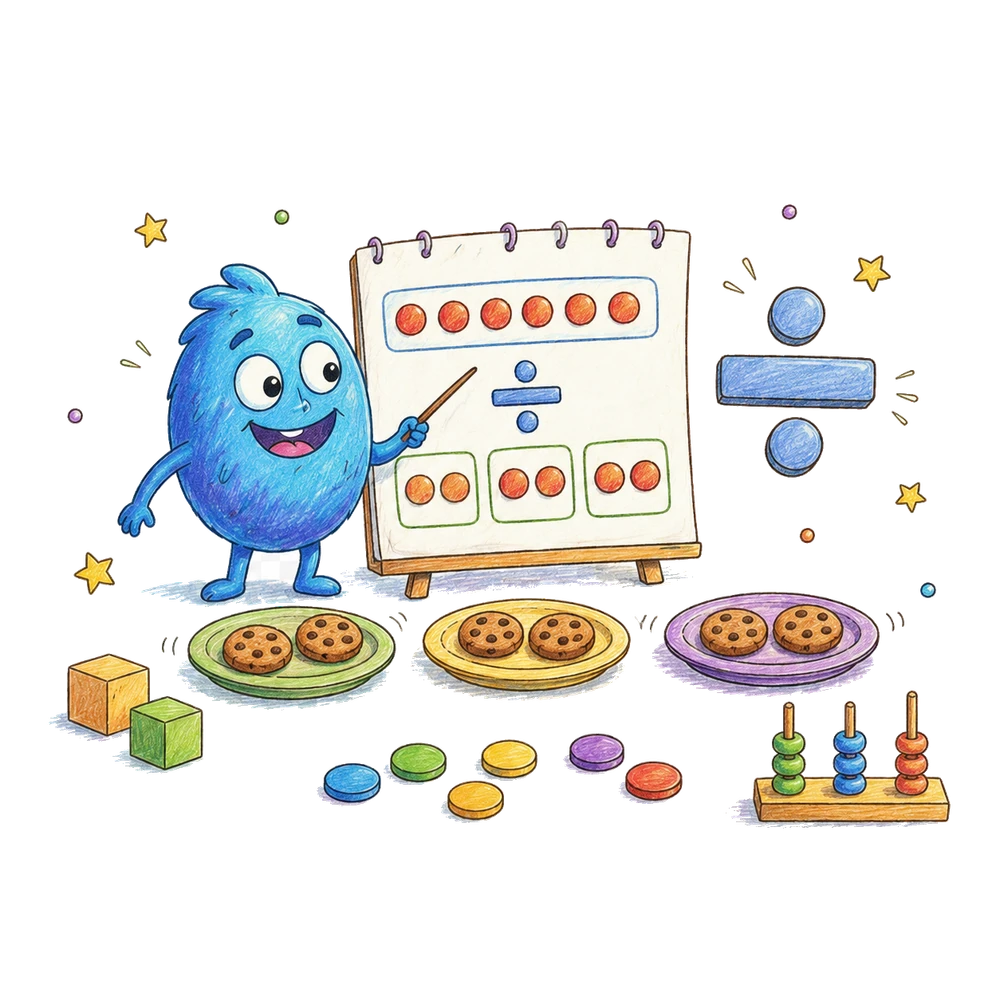
Place two large blocks in one group and one block in another. Ask, ‘How many blocks will there be altogether if we bring both groups together?’ Move the groups together without adding or removing a block. Point to each block once: one, two, three. The combined group contains three blocks. A child may direct a partner to move them or indicate the count with a communication device.
If the child answers ‘two,’ ask which group they counted. Two is the number in the first group; the question asks about both groups together. Circle or indicate the entire combined set and check it with the child. If the pieces have shifted or one is hidden, rearrange them so each is accessible. A single response does not show whether a child understands addition in every context.
Write 2 + 1 = 3 only if the symbols are useful for the current conversation. The 2 and 1 describe the starting groups, and 3 describes the total after they are joined. Moving a block back out can create a new question: from three, removing one leaves two. Name the action before writing a different equation so the symbols match what actually happened.
Blocks are an example, not a requirement. Three large paper squares, three drawings, or three familiar objects can represent the same quantities. An adult chooses safe materials, and the child can decide which group to move first. If only two objects are available, count those two; do not claim the example contains three until a third has actually been added.
4. Build an alternating paper pattern
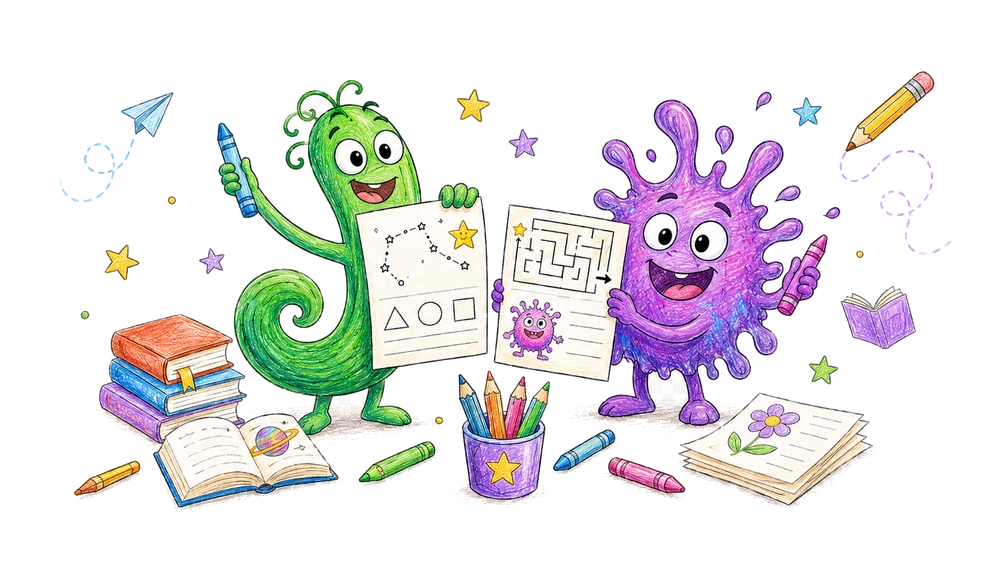
Prepare several large paper circles and squares, or draw the shapes on a sheet. An adult handles cutting when appropriate and chooses sizes and tools suitable for the participants. Arrange a circle, a square, a circle, and a square. Tell the child that this example repeats the two-shape unit ‘circle, square,’ then invite them to choose what comes next. In that stated pattern, the next shape is a circle.
A row of shapes by itself does not reveal every possible rule. If a child proposes a different continuation, ask them to explain or show their idea. They might have noticed a color, size, or spacing feature that the adult did not intend. When the rule has been agreed as alternating shapes, check the last completed unit and add the next circle. If the group agrees on a new rule, describe it before continuing.
The child can move pieces, point to a choice, direct a partner, or select shapes on an accessible screen. If shapes are hard to distinguish visually, use larger high-contrast outlines or an appropriate tactile representation. Do not rely on color alone to distinguish the two categories. A partner should ask before offering physical help and allow the child to approve the resulting placement.
When the row reaches six pieces, it can read circle, square, circle, square, circle, square: three repetitions of the two-shape unit. Point out the units if the child is interested. A mixed row that no longer alternates can be changed, kept as a new design, or set aside; the child does not need to make a long row for the activity to be complete.
Paper pieces can be reused or recycled according to the household's usual practices. If cutting is inconvenient, draw the shapes or use two kinds of large, safe objects already available. The preparation ranking changes with the substitution: a ready set of blocks might take less setup than a hand-cut paper pattern.
5. Make a bridge for a toy
Choose a small toy and a few stable building pieces that are appropriate for the child. Two supports and a piece of sturdy cardboard can form a simple imagined bridge. Place the supports on a level surface and lay the cardboard across them. The child decides where the toy starts and where it is meant to go. This is a model for play, not a structure designed to support a person.
Before placing the toy on top, ask what the child thinks will happen and then try the arrangement gently. If the cardboard slips, observe what moved. The partners can move the supports closer, choose a different piece, or decide to build a road on the floor instead. A prediction is an idea to compare with what happens, not a promise that the bridge will stand.
Change one visible feature at a time when you want to compare two arrangements. For example, keep the same cardboard and toy while moving the supports closer. Describe what happened in each position. Even then, a single trial can be affected by how the toy was placed or how the supports moved; avoid drawing a broad rule about every bridge from this one model.
A child who does not move the pieces can direct a partner: ‘Put the support here,’ ‘stop,’ or ‘try the toy.’ The partner follows the instruction and confirms the result. If the surface is difficult to reach, build in a tray or at a comfortable table. Avoid stacking heavy or unstable objects above anyone, and let an adult manage materials that need extra care.
The story can end with the toy crossing, waiting for repairs, or choosing another route. If the bridge does not stand, it can still have prompted a useful observation. No one needs to keep rebuilding once the participants are tired or uninterested. The child may prefer to leave the model for later, provided the space and materials can be kept safely.
6. Arrange a paper scene and tell a story
Make a simple setting on a sheet: a house, a path, and a tree drawn with a few marks. Add two large paper figures or choose objects already at hand. A child might decide that one character is going from the house to the library while another waits by the tree. Both places are imaginary unless the participants choose otherwise; there is no need to include a real address.
Invite the child to decide what happens first. They can move a figure, point, dictate a sentence, select from picture cards, or use a communication device. A partner can record the words: ‘First, the rabbit leaves the house.’ Ask the child whether that sentence matches their idea before adding it to the page. The adult's role is to make the child's choices visible, not to supply every event.
A second event might be ‘Then the rabbit meets a friend by the tree.’ A final event could be the pair walking to the library. These are only possible choices. If the child changes the order, move the figures and revise the written notes together. Words such as ‘first’ and ‘then’ describe the sequence selected for this story; they do not require a child to reproduce an adult's version from memory.
The child may want to draw rain on the paper, but the scene need not be about the weather. It could take place at a neighborhood market, in an apartment building, on a bus, or in an invented world. Choose details familiar or interesting to the participants without assuming every family lives in the same kind of home or has access to the same places.
When finished, ask whether the child wants to tell the story to someone else, save the page, or put it away. A family member can listen without quizzing the child about every detail. If the child declines to share, the story is still complete for the people who created it. A photo or public display requires a separate decision about what is shown and who can see it.
Choose based on the child and the room, not the list alone
A book may be the lowest-preparation option if it is already open on the sofa. For another family, speaking about a word is easy while finding a book would interrupt an established routine. A child who prefers a visual model might find blocks more accessible than the spoken sound game even though gathering them takes an extra step. Rank the options again using your actual circumstances.
Consider the space as well as the materials. A table with good access may suit a paper scene; a tray on the floor or a wheelchair tray may suit another participant. A bridge needs a stable surface and enough room for the pieces, while a book can be shared in a comfortable chair. The child should be able to see, reach, hear, or otherwise access the part they are asked to consider.
Weather can affect the room without determining a family's plans. Some children enjoy listening to rain; others find a loud storm distracting or unsettling. Move to a quieter area, close a curtain, offer a familiar object, or choose rest according to the child's preference and the household's circumstances. The activities do not require going outside or treating the weather as a problem to solve.
If an adult has only a few minutes, one clear interaction may be enough: notice two birds, complete one two-shape pattern unit, or hear the child's plan for a toy. A longer activity is not automatically more valuable. Agree on a natural ending and avoid asking the child to complete every example merely because the materials are already out.
A useful observation is specific: ‘The child pointed to both birds while I named them’ or ‘The child asked me to place the square after the circle.’ It describes the action and support in that moment. It does not establish a grade level or predict future performance. A note is optional and should serve a purpose the family or child actually values.
A flexible afternoon with room to change course
Imagine a child chooses the book and opens to a page with three umbrellas. They point to two of them and say ‘two.’ An adult can ask which umbrellas they intended to count rather than immediately calling the answer wrong. If the question concerned all three visible umbrellas, the partners can find the third and count the selected set together. If the child chose only two, their answer describes that smaller group.
The same child may then ask to make a paper umbrella. That suggestion changes the activity: the family can decide whether they have suitable materials and time. An adult might draw the outline while the child chooses its colors, or the child might describe a design to save for another day. The earlier count does not require a matching craft, and the craft does not need to become another counting exercise.
If an adult prepared blocks but the child chooses the book, the blocks can stay in their container. A ranking is useful only while it helps someone choose. It should not override a child's preference or the practical needs of the household. Likewise, if the child starts a bridge and then wants a quiet break, identify a safe place for the pieces and stop.
A change in the environment may call for a change in plan. If a table becomes needed for dinner, move a portable paper scene only after asking the child whether to save it. A quick sketch of the arrangement or a spoken description may help resume later; neither is mandatory. If the model cannot be kept, acknowledge that disappointment rather than promising an identical reconstruction.
For siblings or friends, begin by asking whether they want to work together. One might choose the pattern while another reads nearby. If both build the bridge, they can agree on roles or jointly decide each placement. A child who directs an adult has a meaningful role, and a child who observes is not required to take a turn manipulating the toy. Separate activities are also a valid use of shared space.
A child may enjoy repeating one familiar activity rather than trying all six. They might ask for the same book page again and notice a different object on the next visit. Repetition can be a choice, not a signal that the adult must immediately increase difficulty. Ask whether the child wants the same version, a small change, or something else. Their answer guides the next step.
When an activity involves a guess, keep the question and observation distinct. ‘I think the bridge will hold the toy’ is a prediction; ‘the cardboard moved when the toy reached the middle’ describes an observed event. If the result surprises the group, they can examine the setup or stop. One playful trial does not require a formal experiment or support a general claim about all materials.
Materials can serve different purposes in different games. Three blocks might represent two groups being combined in one activity and two bridge supports plus a toy's destination in another. Before counting, agree which objects are included. A cardboard bridge deck is not automatically a block just because it is on the same tray. Naming the group prevents misunderstandings when roles or materials change.
A useful ending respects the child's work and the available space. Ask, ‘Would you like to keep this, change it later, or take it apart?’ For a shared construction, all participants can express a preference. An adult may need to clear the area for another purpose and can explain that constraint honestly. Acknowledging the child's plan does not require promising to preserve a model indefinitely.
After the activity, the family can return to ordinary routines without producing a report. If a teacher or caregiver needs a brief description, mention what was chosen and what support was used, with the child's participation where appropriate. Otherwise, the shared story, count, or moment of rest can stand on its own. The next rainy afternoon can begin with a completely different choice.
Helpful answers
Must every idea be completed on a rainy day?
No. Choose one, adapt it, or take a break. The list is a set of options rather than a schedule.
Does the order rank the difficulty of the activities?
No. It describes the setup assumed in these examples. Difficulty and support depend on the child and the way the activity is offered.
Can a child participate without moving or writing?
Yes. They can point, dictate, use a communication system, or direct a partner and check the result.
Turn a little idea into an adventure.
Try a short activity together, then bring the discovery back into your day.
Numbers and counting practice