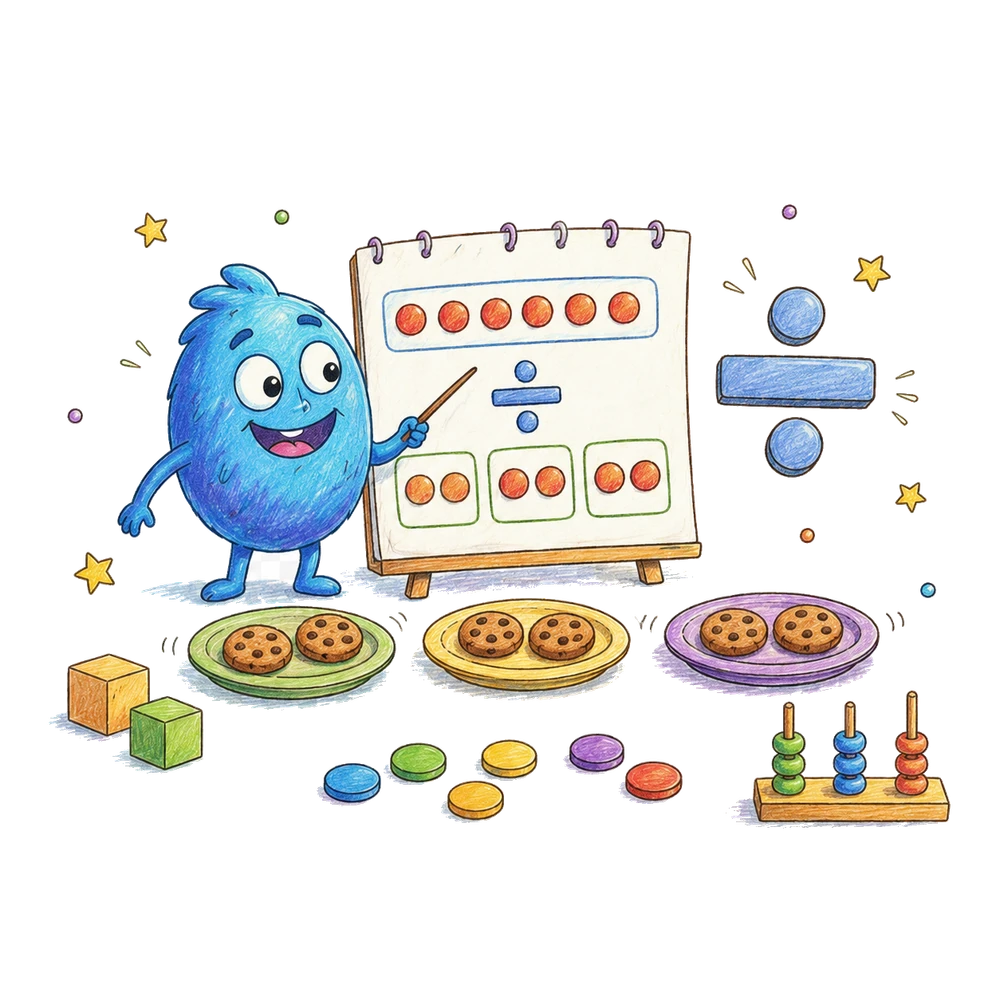
A counting game ends with the pieces pushed aside and the child saying, “I’m done.” The next useful step may be to put the game away, offer a quiet break, or do something entirely different. If the child later wants to return, the adult can look at what made the activity difficult and change that particular condition instead of immediately repeating the same task.
Start with the person, not the unfinished task
A difficult session can mean many things: the instructions were unclear, the screen was hard to see, a tool was uncomfortable, the room was noisy, the task took longer than expected, or the child simply did not want to continue. An adult may not know which of these, if any, mattered. Begin with what is visible or communicated and avoid treating a single response as a verdict on the child’s ability.
If the child asks to stop or pushes the materials away, acknowledge that signal. “We can put this away” makes the immediate choice clear. Offer company, quiet, water, movement, or another familiar option according to the child’s wishes and the situation. A child does not need to explain why they need a break before receiving one, and a break is not a reward earned by finishing the last question.
The adult’s response can be brief. A long discussion immediately after frustration may add another demand. You might say, “That was hard. Would you like me to stay nearby or give you some space?” Then honor the answer when it is safe to do so. If the child does not respond, remain available in a way consistent with their needs and your caregiving responsibilities.
Stopping today does not require deciding whether the child will ever try the activity again. You can leave that question open. If a later decision is needed for schoolwork or another commitment, address it with the people responsible when the child is ready and with appropriate support. The unfinished item does not have to be solved during the moment of distress.
Avoid labels such as “lazy,” “not a math person,” or “always gives up.” They turn a particular event into a judgment about the child and offer little guidance about what to change. A more useful account might be, “The numbers were small on the screen, and the child moved closer before asking to stop.” It records something you observed without claiming to know the child’s motive.
If there is an immediate safety issue, address it first and seek appropriate help from a responsible person. The ideas in this article concern an ordinary activity that was difficult, not a substitute for a safety plan or individual professional guidance. Once the immediate need is addressed, the same principles of listening, offering choices, and adapting access can inform a later conversation.
Notice the specific barrier before choosing a change
When the child is ready, invite their perspective without demanding an explanation. “Was there anything you would like to change next time?” leaves room for “no,” a gesture, a device message, or an answer later. A child might know exactly what bothered them, might be unsure, or might not want to discuss it. You can still offer a break and examine the materials yourself.
Separate the learning idea from the demands wrapped around it. A counting task may ask the child to see small pictures, touch a precise target, remember a spoken instruction, and give an answer quickly. Difficulty with any one of those demands can affect the whole experience. It does not by itself tell you whether the child understands the number being counted.
Look for a concrete point where the activity became less accessible. Did the child ask for the instruction again? Did a piece slide away when touched? Did the written example disappear before they were ready? Did a sound or interruption occur? These observations do not prove a cause, but they give you testable possibilities. The child’s own explanation may point somewhere different from the adult’s first guess.
Consider the setting as well as the task. A familiar game can feel different in a crowded room, after a long trip, or when the usual communication tool is unavailable. Instead of changing every element at once, identify one condition you can make more comfortable if the child wants another attempt. You can also decide that the right next step is no attempt today.
An observation can include uncertainty. “The child looked away after the voice prompt” is something a partner may have seen; “the voice prompt caused the problem” is an interpretation unless there is more information. Write or remember both as different kinds of statements. If you later change the volume and the child participates, that may be useful information, but one session alone does not establish a universal explanation.
Do not turn the discussion into an interrogation. Two concrete choices may be enough: “Would you like the picture larger, or would you rather stop?” The child can choose neither or propose something else. If they say the task itself was not interesting, respect that information instead of assuming a different font will solve the problem.
Option two: return to one part with support
Suppose a child wanted to count five blocks but lost track when the pieces were close together. If they later want to retry, place two blocks in a clear row and ask whether counting them together would help. Move each counted block to a marked area or point once to each piece. The smaller group and visible tracking address the observed difficulty without assuming the child cannot count five in every context.
Offer the support before the task begins: “I can hold the pieces still, point with you, or let you show me another way.” The child can accept one choice, request something else, or decline the activity. If an adult moves the pieces, the child can direct the order and check the result. Assistance with handling is not the same as taking over the decision.
For an unclear instruction, replace a long sequence with one step and a visible example. Instead of “Count the blocks, record the number, and compare the two rows,” begin with “Show me this row.” Once the child knows which group is meant, they can choose whether to count, record, or stop. A shorter instruction should preserve the point of the activity rather than quietly changing the expected answer.
For print that was difficult to see, a larger, higher-contrast version may be worth offering if the child wants it. Check whether the relevant information remains visible and whether the new version is actually comfortable. Merely enlarging a page can create scrolling or hide a label, so observe the whole interaction and ask for feedback. A partner can also read or describe content when that is useful.
For a tool that slipped, try a stable surface, larger pieces, or a partner who holds the material as directed. Ask before touching the child’s hand or moving their work. If the child says the new tool still does not work, accept that information and consider another option. A support is successful when it serves the participant, not merely when an adult has supplied it.
Set an ending before restarting: one example, one page, or one exchange can be enough. The child may continue beyond that point by choice, but should be able to stop at the agreed boundary. At the end, ask whether the change helped only if the child is willing to discuss it. “I don’t know” and a request to stop are useful responses.
Imagine that a child stopped a picture-matching game because the cards kept sliding. At a later time, they choose to try one pair on a nonslip surface. The adult holds the surface steady only if asked, and the child selects the two cards. If the cards still move, the team can stop and look for another arrangement. Completing one pair is a possible agreed ending, not a prerequisite for the child to leave.
In another case, a child says a spoken instruction was too fast. With their agreement, a partner can repeat one step more slowly and leave the example visible. Ask whether repetition, written words, a gesture, or another method is preferable. If the child is unsure, you can offer a trial with permission and stop if it does not help. Slower speech is one possible adjustment, not a universal solution.
If the task was timed and the child wanted more time, distinguish the learning question from the timer. A later untimed version may allow the child to explore the same content, provided speed was not itself the stated goal. If a school assignment includes a timing requirement, discuss available arrangements with the responsible teacher rather than promising that a home version changes the assignment’s rules.
Option three: change the format while preserving the idea
If the original task asked how many objects are in a group, blocks, drawings, spoken descriptions, or accessible symbols can represent that group. For example, a printed picture of three apples can be replaced with three large blocks. Make the correspondence explicit: each block stands for one apple. The child can count or indicate the amount without needing to manipulate the original screen.
Changing format can also change the question, so check the goal. If the original task was to read the written numeral 3, simply counting three blocks explores quantity but does not by itself check recognition of that symbol. You might place a large “3” card beside the blocks if the child wants to connect the two. Both activities can be useful; they answer different questions.
For a writing activity, the child might dictate a sentence, select words on a device, type, or direct a partner to write. If the purpose is to communicate an idea, those alternatives can preserve it. If the specific purpose is practicing handwriting, dictation does not practice the same physical action, although it can allow the child to share the idea while a more comfortable writing plan is considered separately.
For a shape comparison, use paper outlines, raised shapes, or a partner’s description if those materials are appropriate and accessible. State which feature is being compared: a circle’s curved outline and a square’s straight sides, for example. A texture can identify the card, but it should not be confused with the geometric feature unless texture is the chosen topic.
A format change is an invitation, not proof that an adult has found the child’s permanent learning style. Ask whether this version is useful today. The child may like blocks for one task and prefer a screen for another. Keep alternatives available and revisit the choice when circumstances change.
If the child invents a different activity with the replacement materials, ask whether they want to explore the original idea or play freely. Building a garage from the blocks can be the chosen next activity. It should not automatically become a disguised counting test merely because counting was the adult’s earlier goal.
Option four: choose a different activity together
Offer a small menu based on real possibilities: “We could read the book you chose, draw, or take a break. Is one of those appealing?” Include the option to suggest something else when feasible. A choice is meaningful only if the alternatives are genuinely available and the child can communicate a preference.
A familiar activity can provide continuity without repeating the hard moment. If the child likes building, they might make a house from large blocks. If they like stories, a partner can read one page or tell a scene. Do not attach a hidden requirement to prove readiness for the earlier task. The child may simply want a different shared experience.
A child may prefer to continue independently or ask an adult to remain close. Clarify the adult’s role: “Would you like me to build with you, watch, or be nearby?” Respect the answer within the limits of appropriate supervision. If the child changes their mind, the arrangement can change too.
For two siblings or partners, one person’s break need not determine that everyone repeats the same activity. An adult may help arrange separate choices or a shared activity both accept. Avoid comparing who finished or who stayed longer. A calm transition for each participant can matter more than preserving a group schedule.
If the child suggests returning to a related activity, ask what should be different. Perhaps they want the same book without the comprehension questions, or the same game with a partner moving the pieces. The change should be visible and agreed upon before starting. Otherwise a ‘new’ activity can recreate the exact barrier that led to the difficult session.
Some days no new activity is wanted. Rest, a meal, a routine transition, or time together can be the next part of the day. There is no requirement to end on a correct answer, a completed worksheet, or a demonstration that the child is ready to continue.
Make a small plan for a later attempt
If the child wants to revisit the task, agree on one specific change and one stopping point. For instance: “Next time we will use three large blocks, and we can stop after one group.” Prepare the materials before inviting the child so the agreed support is actually available. The plan can be revised or declined when the time comes.
Keep a short record only if it helps the people supporting the child. “The child asked for larger pictures; we stopped before trying them” is more informative than “would not cooperate.” Distinguish what was requested, what was offered, and what happened. A proposed support should not be recorded as successful until it has actually been tried and the child’s response considered.
After a later attempt, compare the experience with the original question. If larger pictures helped the child see the items but the instructions remained confusing, a future change might address the instruction. If the child disliked the new version, do not force a repeat simply because the adjustment seemed sensible to an adult. Their feedback is part of the evidence.
When difficulties persist across situations or the family has concerns, it can be useful to talk with the child’s teacher or an appropriate professional about the specific barriers and supports observed. Share concrete examples and the child’s perspective where possible. One difficult activity does not establish a diagnosis, and this article cannot determine an individual support plan.
A plan should identify who can respond when help is requested. If a child uses a card or device message for “pause” or “help,” the adults involved need to know how to notice and honor it. A communication tool that is unavailable during the activity cannot provide the intended support. Check access before the next session, not only after another difficulty.
The child can decide not to make a plan today. Put the materials away, acknowledge that you heard the request, and return to ordinary life. If a future task must be arranged, the responsible adults can prepare appropriate options and invite the child’s input at a suitable time. The best next activity is the one that fits the person and the moment, including the possibility of stopping.
When several adults support the child, agree on a practical way to communicate the plan. For example, the caregiver and teacher might note that the child can request a pause using a particular card and that an adult will respond. Ask the family and child what information they are comfortable sharing. A short, relevant description usually serves planning better than a detailed account of an upsetting moment distributed widely.
A plan can fail for ordinary reasons: the larger pieces are not available, the room is still noisy, or the child no longer wants the proposed activity. Treat that as information about the plan and the day, not as a broken promise by the child. The adult can offer another available option or stop, then prepare the missing support for a future invitation if it remains useful.
The child may also help decide when the plan should be reviewed or set aside.
Helpful answers
Does the child need to retry right away?
No. A break, stopping for the day, or choosing another activity are valid options. A later return can include an agreed change in support.
What if the child cannot explain what was difficult?
They can still stop or take a break. An adult can review the task and setting, offer accessible choices, and ask again only if the child is willing.
Does changing to blocks preserve every learning goal?
No. Blocks can represent a quantity, but counting them alone does not necessarily practice reading a written numeral or handwriting it.
When might outside support be useful?
If difficulties continue across situations or the family has concerns, discuss concrete observations and available supports with a teacher or appropriate professional.
Turn a little idea into an adventure.
Try a short activity together, then bring the discovery back into your day.
Numbers and counting practice