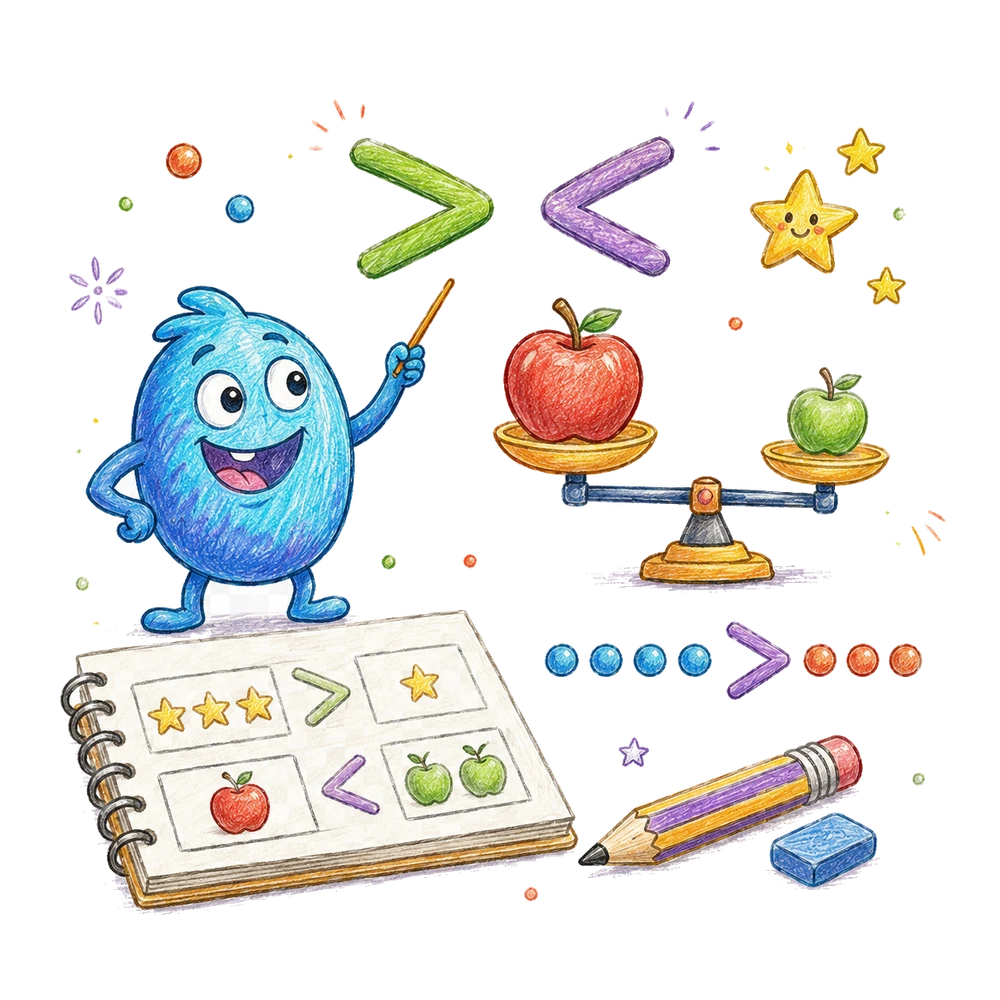
Four blocks are on the table. A child and an adult want to check that each block was counted once. They can watch a demonstration, check together, or let the child choose and direct a method. The six options below are ordered by how many decisions the learner leads in these particular examples. The order is a planning aid, not a score for the child: support can remain available at every point, and the most independent-looking option is not always the most useful.
What this ranking means
In the first example, the adult selects the review method and demonstrates it. In later examples, the child chooses more of the method, materials, or next step. This does not rank intelligence, maturity, educational value, or the amount of adult presence. A child may lead a complex decision while a partner moves materials or writes a response at their direction.
Review means returning to a specific idea, action, or result to see what it shows. It can involve checking a count, comparing a picture with a sentence, explaining a choice, or deciding what to do next. It need not be a graded test. Before starting, agree on the question: for the block example, ‘Did we count each of these four blocks once?’ The boundaries matter because a block elsewhere on the table is not automatically part of the group.
Choose large materials appropriate to the participants, a stable surface, and a way for the child to communicate. A child can point, speak, sign, use a communication device, type, or direct a partner. Ask before giving physical assistance. A request for help is useful information about the task and its conditions, not a failure of independence.
The six options are not a ladder the child must climb. Someone might choose a partner-led demonstration today and direct their own check tomorrow, or prefer the shared method every time. Fatigue, familiarity, interest, access, and available time can change what works. Offer a real choice, including a break or a decision not to review at that moment.
1. Watch or explore an adult's model
The adult places four blocks in a visible starting area and an empty tray beside it. They move one block at a time into the tray while saying ‘one, two, three, four.’ Each word is paired with one moved block. At the end, four blocks are in the tray and none remain in the starting area. The adult explains that the movement makes it easier to see which blocks have already been counted.
The child can watch, explore the arrangement in an accessible way, or tell the adult to pause. They might notice that a block was skipped or ask to see a step again. The adult retains the initial choices in this example, but the child still has agency over participation. If the child wants to move a block, change the plan together rather than insisting that the demonstration remain untouched.
A model shows one possible method, not proof that the child has learned or endorsed it. It also depends on clear conditions: the tray is initially empty, each selected block is moved once, and no block is added while counting. If a fifth block is already in the tray, remove it before the demonstration or explain that the total in the tray includes that additional block.
2. Check one step together
The adult again suggests moving the blocks to a tray, but the child chooses which block to move next. The partner can move it after receiving the child's instruction, or the child can move it independently if desired. Together they mark each movement with the next count word. Before continuing, the adult waits for confirmation that the selected block has reached the counted area.
If the pair reach ‘four’ while a block remains in the starting area, pause and inspect rather than guessing which person made an error. Perhaps a block was counted twice, the starting group contained five, or an extra object entered the scene. Restore or redefine the group and count again only if both want to. The shared check should make the source of uncertainty visible.
A child can also choose to stop after matching one block to one count word. The adult may say, ‘We moved this one and called it one,’ without treating an unfinished sequence as a completed count. The question and the number of blocks can be reduced to fit the moment. Help with the physical movement does not determine who made the decision.
3. Choose between two prepared checks
Offer two ways to review the same four-block group. In the first, each block moves into an empty tray as it is counted. In the second, the blocks stay on the table and a partner places one paper marker beside each counted block. Before starting the marker method, agree that markers are not blocks and are not included in the block count. The child selects the method and may ask for it to be changed.
For either method, check the relationship one at a time: one block goes to the tray, or one marker is placed beside one block. Four blocks require four matching markers if each gets exactly one. If a marker lies between two blocks, ask which block it represents and move it if the child wishes. The visual record is only useful when the partners agree what it means.
The prepared choices reduce the burden of inventing a plan, but they should not be the only possible answers. The child can ask for the methods to be explained again, suggest a different check, or decline. An adult can describe the setup and carry it out according to the child's choice. Selecting a method and moving materials are separate parts of participation.
4. Lead the count and request a hint
The child decides when to begin counting the four selected blocks and how to signal each one. An adult remains available with an agreed hint, such as ‘How will you remember which block you counted?’ The child may choose to move the blocks, point to them, or ask a partner to make the movements. The adult does not have to leave the room for the child to lead the check.
Before counting, establish a way to ask for help that the child can actually use: a word, gesture, card, device message, or other familiar signal. Also provide a way to say ‘not yet’ or ‘stop.’ A help plan is most useful when the partner responds consistently and the child can request a different kind of assistance. The adult should not withhold a requested support merely to make the task appear independent.
Suppose the child says five for four blocks. Invite them to show the count or indicate where uncertainty began. A block may have been visited twice, but the original group or the adult's question could also be unclear. A marker, an empty counted area, or a slower pace can make the next attempt easier to inspect. If the child is not interested in retrying, end the review without assigning a label.
If the child asks ‘What comes after three?’ the adult can provide the requested count word or another agreed prompt. The final response can then be described accurately: the child led the movements and used an adult's verbal hint. There is no need to pretend the hint was absent, and no reason to treat receiving it as a lower-value result.
When the count reaches four and the starting area is empty, compare that result with the original claim. They match if the original claim was four. The check confirms the quantity for the selected group under these conditions; it does not establish that every future group will be counted accurately. The child can decide whether the match answers the original question.
5. Select and explain a checking method
Instead of offering two prepared methods, ask, ‘How would you like to keep track of the blocks you have counted?’ The child may propose a tray, point to each block, draw marks, or ask a partner to record. Invite them to show the steps before beginning if that helps. They can also say they do not know and request choices or a demonstration.
A valid method needs a way to distinguish counted from uncounted blocks. Moving each item to an empty area does this physically. Pointing can work when the arrangement and the counter's place are clear, though moving or marking may make a repeated count easier to spot. If a child proposes touching the same block for each number, ask how the method will show that all four different blocks were included.
The child can explain the method in the form that suits them: ‘I move each one,’ a gesture from table to tray, a diagram, or a device message. The partner can restate it and ask for confirmation. An explanation is useful for coordinating the work, but a polished verbal sentence is not required. The child's direction can be followed even when another person carries out the movement.
Once the method is in use, let the child revise it. Perhaps pointing works for a row but becomes confusing when the blocks are scattered. They might add paper markers or request a reset. Changing strategy is a decision made during the review, not evidence that the first choice was invalid. Keep the selected group and the starting conditions clear before comparing totals.
At the end, ask whether the result answers the question. If all four blocks were moved once and the original answer was four, the two counts agree. If the original answer was three, the partners can identify the mismatch and choose whether to investigate. Agreement between two checks is evidence about this group, not a guarantee that the method could never contain an error.
6. Choose what to review and what to do next
A child may have several pieces of recent work: a drawing with a caption, a small count, and a map made from paper. Offer the choice to revisit one, to request adult input, or to do something else. If they select the map, they might ask whether a friend can find the library using its key. The purpose of the check comes from the chosen work and question, not from an adult's predetermined list of mistakes.
The child selects a reader or partner only if they want one. A partner can follow the map's symbols and describe where they arrive. If the reader cannot identify the library, the child might add a symbol to the key, move a label, explain the route aloud, or decide the map is finished. The partner reports what was confusing without rewriting the page without permission.
If the child chooses a caption, they might ask an adult to read it back and compare it with the intended message. For example, a picture shows two cats, and the caption says ‘Three cats sleep.’ The child can decide whether the picture needs another cat or the sentence should say two. Both changes are possible; the right choice depends on what the author intended.
A plan for the next step can be modest: save the page, make one change, ask a teacher a question, or stop for the day. It is not necessary to create a daily goal or a streak of completed reviews. The child should know what will happen with their work and who will see it. An adult may explain a real classroom or household requirement, but should not invent one to force continued practice.
Choosing the review topic gives the child more decisions in this example, but it can also be demanding. Too many options may make it harder to begin, and a child might prefer a prepared check. Offer a shorter menu, an example, or shared planning when requested. The ranking concerns the structure of these scenarios, not a judgment that one choice is better for a particular child.
Apply the same idea beyond counting
For a picture-book retelling, a child can choose two or three pictures from a story they know and arrange them in their intended order. An adult can read the relevant page or describe an image if asked. If the child invents a different ending, distinguish a retelling of the source from a new story without treating the invention as an error. The chosen purpose determines what counts as a useful check.
For a written message, the writer might ask a partner to read back a sentence exactly as recorded. The writer can then decide whether it communicates the intended idea. A dictated sentence, a typed sentence, or a sentence assembled from word cards can all be reviewed. Corrections to spelling, word choice, and punctuation are separate decisions; agree on which question matters today.
For a repeating pattern, the learner may set out circle, square, circle, square and tell a partner the rule is ‘circle, square.’ A partner can check whether the next chosen shape follows that stated rule. A row can support more than one possible interpretation if no rule was agreed, so ask the creator before labeling a continuation wrong. A tactile or spoken pattern may serve the same purpose.
For a drawing, the check might be whether two requested elements are present: a boat and a shoreline, for instance. If the artist intended an open sea with no shore, the missing shoreline is not automatically a mistake. Review the original request and the author's plan together. The child can add, remove, explain, or leave the image unchanged depending on the agreed goal.
For a simple measuring task, agree on what is being measured and where the ruler begins. A child might compare two strips by aligning one end of each, then check with a ruler if available. The result depends on the selected endpoints and unit. An adult can hold the ruler at the child's direction; the child can still decide which strip to compare and when the check is complete.
Make feedback specific and keep support available
Start feedback with the shared question and the evidence that can be inspected. ‘We wanted one marker for each block; this block has no marker yet’ identifies a particular relationship. ‘You weren't paying attention’ attributes a cause that the adult may not know and does not explain what to check. The learner can verify the observation and decide whether to add the marker or change the plan.
Ask before offering a hint when the situation allows: ‘Would you like an idea, or would you rather keep looking?’ If the child asks for help, find out which part is difficult. They may understand the count but need the tray closer, the question repeated, or the noise reduced. Support for access and support for the academic idea can coexist, but they are not interchangeable.
A useful hint preserves the child's opportunity to decide. Instead of immediately moving a missed block, an adult might point to the uncounted area and ask what remains. If the child wants the adult to move it, follow that direction and read back the result. If a hint is not understood, offer a clearer example rather than repeating the same phrase louder.
For a child who uses a communication system, prepare access to words for uncertainty and correction as well as answers. ‘I don't know,’ ‘show me,’ ‘that one,’ ‘change it,’ and ‘finished’ can all be important during review. The exact vocabulary should fit the person's existing system. Wait for the selection and confirm what was meant; an adult should not select the response on the child's behalf without direction.
A visible answer key can be a useful reference when the task has a definite answer, but it should match the actual task. A key saying four is not useful if an extra block was added. Compare the selected set or original instructions before relying on it. For a creative drawing or story, a single answer key may not capture the author's intended choice; ask the author about the goal instead.
Sometimes a child correctly finds a mismatch and chooses not to fix it immediately. They may be tired, want to preserve the original work, or prefer to ask someone later. A note such as ‘The caption may need checking tomorrow’ can keep the question available without demanding an immediate revision. If no note is wanted, the partners can simply pause and return if they choose.
When an adult must report progress to another caregiver or teacher, distinguish observation from inference. ‘Counted the four blocks while I held the tray; asked for the next number after three’ specifies the task and supports. It does not show that the child can or cannot count every four-object group alone. Include the learner's perspective and share only information appropriate to the setting.
Privacy applies to review work as well as finished work. Ask before photographing a child's draft or displaying it to others. A child may welcome sharing a map and prefer to keep a mistaken first count private. Families and schools may have different arrangements, so explain any necessary sharing in advance and avoid promising confidentiality that an adult cannot provide.
If a child is frustrated, pause the check and address the immediate need. They might want a break, a different partner, a smaller group of objects, or no further review. Do not make food, comfort, or a previously agreed break conditional on correcting an answer. When everyone is ready, a new invitation can name one small question rather than restarting the entire task.
For a new context, begin by restating the goal instead of assuming a method transfers automatically. The strategy of moving blocks to a tray may not suit marks already drawn on a page. A child might cross each mark out on a copy, point while a partner records, or choose another approach. What remains common is the need to track which items belong to the group and which have been counted.
A family can keep a small menu of review options—a visible example, a partner check, a choice of tools, or a question to revisit later—without treating the menu as a daily requirement. At a library table, a folded scrap may be enough for a map check; at home, the child may prefer blocks on the floor. Availability and accessibility matter more than reproducing a prescribed routine.
Close by asking whether the child wants to keep the current result, change it, or stop. If the review involved four blocks, they can return them to storage or build something unrelated. The partner can summarize the specific outcome if invited: ‘We counted four and matched the original answer.’ The next review can use a different level of support, or there may be no next review that day.
Helpful answers
Does more independence mean less help?
Not necessarily. A child can choose the method and direct a partner while receiving physical, communication, or organizational support.
Must the child complete every level?
No. The examples are options ordered by the decisions led in each scenario, not levels that every learner must pass.
How can four blocks be checked?
Move each of the four into an initially empty counted area once, or use another agreed method that keeps track of every block.
Turn a little idea into an adventure.
Try a short activity together, then bring the discovery back into your day.
Numbers and counting practice