If a familiar block is already on the table, a child can begin observing it without preparing an experiment. Folding a paper boat and preparing a supervised water basin involves more steps. The four activities below are ordered by estimated adult setup time under a specific assumption: the listed materials and a safe work area are already available. The ranges are planning estimates, not measured benchmarks or guarantees. Finding supplies, adapting access, checking safety, and cleaning up can change the order. Each option includes a concrete question and a way to separate a prediction from what the participants actually observe.
Four activities from less to more estimated setup
First, observe one familiar block: an estimated 0–1 minute if a suitable block is already on a stable table. Ask, “What do you notice about this surface?” The setup is mainly checking that the object and location are appropriate. The child can describe, point, use a communication device, or ask an adult to show a particular side.
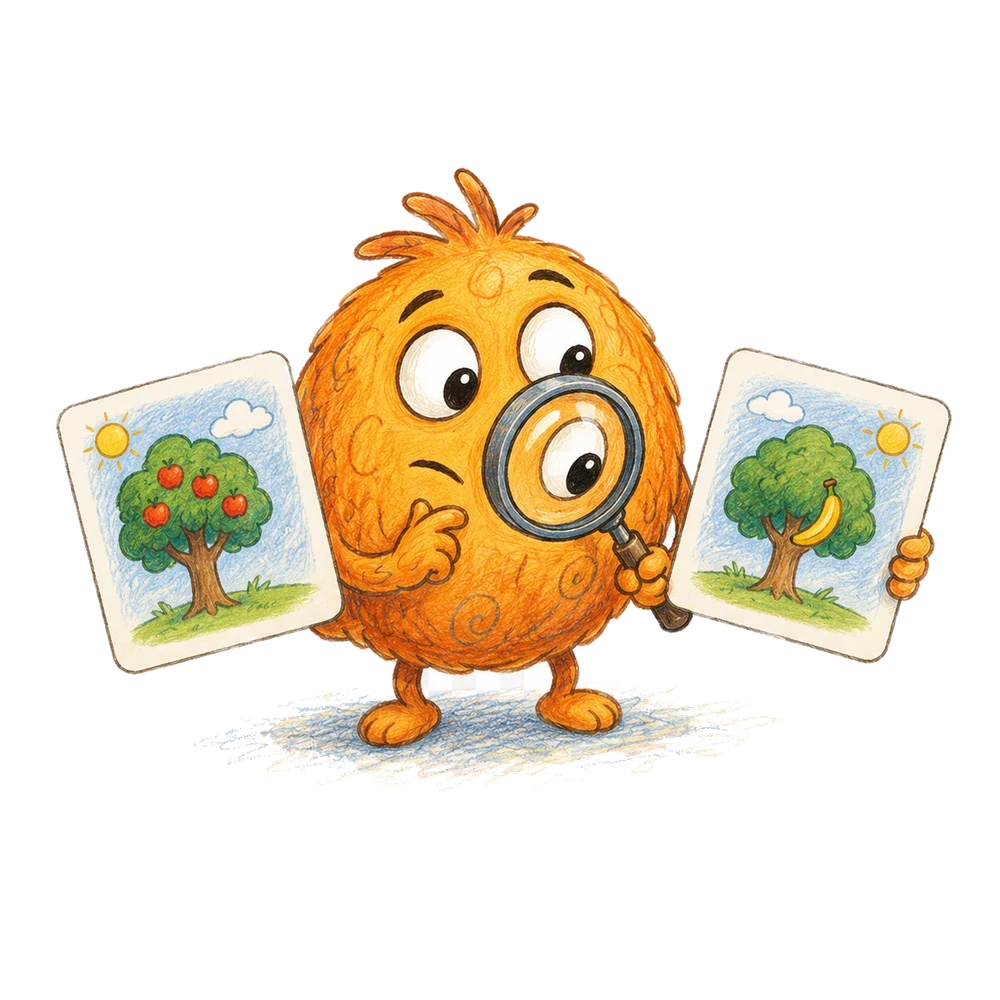
Second, compare two prepared pictures: an estimated 1–2 minutes if clear images of a leaf and a block are already available. Place them where the child can access them and ask what visible features differ. This estimate includes selecting and positioning two existing images, not searching online, printing, or preparing tactile alternatives.
Third, compare dry and damp paper: an estimated 2–5 minutes if identical pieces of the same paper towel, a small amount of water, and a waterproof plate are ready. An adult places both pieces on the plate and dampens one. This requires preparing two conditions and protecting the surface; the estimate does not include a later drying observation or cleanup.
Fourth, test a paper boat: an estimated 5–10 minutes if paper, an appropriate basin, water, and a suitable work surface are ready. An adult folds a boat, prepares a small amount of water, and arranges supervision. Folding skill, the basin, accessibility, and cleanup can make this activity take longer or change the ranking. A child may direct the adult instead of handling the water or paper.
These ranges are illustrative planning estimates, not timings collected from families. They cover preparation before the question begins and assume the materials listed are at hand. They exclude shopping, finding an accessible format, the child’s observation time, drying time, and cleanup. If your setup differs, time your own steps or reorder the list; the quickest option is not automatically the best fit.
Before choosing: access, materials, and supervision
Ask what the child is interested in observing and how they prefer to respond. They may point, speak, use gaze or a communication device, direct an adult, or listen to a description. A science conversation does not require holding a small object or producing a spoken sentence. Keep familiar communication supports available even if preparing them changes the time estimate.
An adult selects objects and tools appropriate to the child’s needs. Small detachable pieces are unsuitable for a child who may put them in their mouth. For activities with water, maintain continuous, direct adult supervision, use an appropriate shallow container, keep electrical devices away, and dry spills promptly. A shallow container does not remove the need for supervision.
The first two activities can be done without water. If a child dislikes damp materials or direct touch is not appropriate, touching is optional throughout. The adult can present or describe samples, and the child can make a choice using an accessible format. A dry picture discussion should not be recorded as a physical water test that actually occurred.
Choose a stable surface and leave walkways clear. A paper towel, folded boat, or block should not be placed where it can cause a slip or obstruct mobility equipment. If the setup cannot be made safe for the current space, choose another activity or wait. The estimated minutes do not override this check.
If the child is not interested, the family does not have to complete the ranking. One observation can be the entire invitation. A missed activity does not need to be made up later, and a child’s choice to stop is not evidence that they cannot investigate.
First: observe a familiar block
Place one clean, appropriate block on a stable surface. Ask, “What can you notice about it?” The child might indicate a flat face, a corner, a color, or a mark. An adult can describe the side facing the child or rotate the block with permission. Do not assume a particular shape or color unless your actual block has it.
For a specific example, imagine a rectangular block with one visible red face. A participant might say, “This face looks red and flat.” That is an observation of the described face under the current lighting. Saying “the block is made of wood” would require information about its material; appearance alone may not establish it.
If the child wants to compare two faces, rotate the block so both can be examined one at a time, or offer two accessible descriptions. Ask what is the same and what differs. Do not claim that hidden faces have the same finish as the visible face without checking them.
A child can direct the adult: “Turn it,” “show the top,” or another message in their familiar communication system. The adult confirms the request before moving the object. Touching is optional, and an object that cannot be safely or comfortably explored directly can be replaced with an accessible representation.
The setup estimate is shortest only if the block is already suitable and reachable. If the adult must wash it, find a safer object, create a tactile model, or clear the area, those steps add time. The family can record that actual preparation rather than treating the illustrative range as a target.
Second: compare two prepared pictures
Place a clear picture of a leaf beside a clear picture of a block. Name what each image is intended to show and ask the child whether they use the same words. An image can be ambiguous: a green shape might be a leaf in the adult’s mind and a feather to the child. Agree on the labels or discuss the child’s interpretation before comparing.
Ask a question tied to visible information: “What do you notice about the outlines in these pictures?” A particular leaf drawing may have a curved edge, while a particular block drawing may show straight edges. Describe the actual images rather than declaring that every leaf or every block has exactly those features.
A picture is a representation, not the physical object. You cannot infer how the pictured leaf feels, whether it is alive, or what material the block is made from unless that information is provided or separately checked. If the child predicts a texture, record it as a prediction, not as a touch observation.
If the child prefers a two-choice prompt, ask something checkable such as “In these pictures, which outline looks curved: the leaf or the block?” only after confirming that one option actually fits the description. Allow “both,” “neither,” or another response when the pictures make those answers reasonable. Avoid forcing an answer to an ambiguous drawing.
The 1–2 minute estimate assumes prepared pictures. Searching for images, printing them, creating accessible descriptions, or getting permission to use an image can require additional work. An existing book or drawing may change which activity is quickest. Do not treat an estimate as evidence that any family can prepare a suitable comparison in that time.
Third: compare dry and damp pieces of the same paper
An adult prepares two similar-sized pieces from the same paper towel or other appropriate paper. Place them separately on a waterproof plate. Keep one dry and add a small amount of clean water to the other. If the pieces were not cut to exactly the same size, describe them as similar rather than claiming precise equality.
Before adding water, invite a prediction: “What do you think might look different after one piece gets damp?” The child can say “darker,” “the same,” “I don’t know,” or use another response. Write down the prediction if useful, then perform the action. A prediction is a statement made before observing the result, not a measurement of what will happen.
After the adult dampens one piece, ask what the child notices. Depending on the paper, water, background, and light, the damp area may look darker or more translucent, or the difference may be difficult to see. Record the actual appearance rather than telling the child that a darker patch must appear. The child does not need to touch wet paper to participate.
Keep the comparison specific. If one sample is on a darker part of the plate or has much more paper layered beneath it, the apparent difference may not be due only to water. Use a similar background and single layer where practical, and record any known differences. A home activity need not control every variable perfectly, but the limits matter when explaining the observation.
A sample may change as it dries. If you choose to look again, note when you first observed it and when you returned. Do not claim an exact drying duration without measuring it, and do not require the child to wait beside the plate. If the damp area remains visible, disappears, or becomes hard to judge, each is a possible observation for the specific sample.
When finished, an adult disposes of or dries the materials as appropriate and wipes the surface. Cleanup is separate from the estimated setup range. Never leave the water unattended with a child, even if the quantity is small, and avoid positioning it near electronics.
Fourth: test a paper boat
An adult folds a paper boat from suitable paper and checks that it has no unsafe parts for the participants. Place a shallow basin on a stable waterproof surface and add a small amount of water appropriate for the boat to float freely. This is a supervised activity; the adult remains present and handles the basin according to the child’s needs.
Before placing the boat on the water, ask, “What do you think will happen to this boat?” A child may predict that it will stay on the surface, tip, fill with water, or sink. The adult can record the prediction with a word or drawing. The response may be a gesture, a device message, or “I’m not sure.”
Gently place the boat on the water and release it without holding it against the basin. Watch its actual behavior. A paper boat may float for a time, tip, take on water, or change as the paper becomes wet. Do not promise a particular outcome for every fold or paper type. If it touches the basin edge, note that condition before interpreting the result.
If the child asks about adding a load, make that a separate question. Choose a large, safe object suitable for the child and basin, or skip the load test. Observe the empty boat first, then place the object carefully under adult control. Its position, weight, and whether the boat takes on water can affect the outcome, so a single trial does not establish a universal rule.
A drawing of a boat on a page can help a child choose a prediction, but it does not physically test whether this paper boat floats. If water is not appropriate or supervision is unavailable, discuss the picture and label the answer as an idea. The physical test can be omitted entirely.
At the end, an adult removes the boat, empties the basin appropriately, and dries the area. The paper may become too wet to reuse. The original time range is only an estimate for setup; cleanup and observation time depend on the actual materials and are not included.
A worked comparison of prediction and observation
Imagine an adult has two similar pieces of the same paper towel on a white plate. Before water is added, a child predicts, “The wet one will look darker.” The adult writes that sentence in a prediction column. This is a fictional example of a possible response, not a result measured for a particular product.
The adult dampens one sample. Suppose the participants then describe a darker patch on that sample. The observation can be written: “A darker-looking patch appeared on the damp piece under the kitchen light.” It is acceptable that the prediction and observation match; the record should still keep their times and roles separate.
Suppose instead the participants cannot see a clear difference. Record that result rather than changing the description to fit the prediction. You may inspect the background, amount of water, and lighting, then decide whether to prepare another pair. A repeated trial is a new observation and should not silently replace the first.
A child might say, “The dry one will become wet later.” That is a new prediction, not an observation of the first comparison. If no water is added to the dry piece, there is no need to assume the prediction happened. The group can choose whether a later check is safe and useful or leave the idea untested.
An adult can also have a different prediction from the child. Record both before testing and compare each with what was observed. The purpose is not to award points for guessing correctly. It is to make clear what was expected, what was done, and what was actually seen.
How to compare the setup estimates fairly
The block estimate assumes one appropriate object is already on the table. The picture estimate assumes two images already exist and need only be selected and positioned. If the block is not available but a book with the two pictures is open, picture comparison may require less setup. Starting conditions matter to any ranking by time.
The damp-paper estimate includes preparing two pieces and adding water to one. It does not include waiting for paper to dry. The boat estimate includes folding and preparing the basin but not measuring how long the boat floats. Keep setup, activity, waiting, and cleanup as separate phases when planning your own time.
If you time a setup, use a clock or timer and record the actual start and finish for that attempt. For example, a family might find that locating a plate took longer than expected; that is their result under their conditions. Do not replace an unmeasured duration with the suggested range or present one household’s timing as a guarantee for another.
Accessibility preparation is part of the real work even though these illustrative ranges exclude it. Opening a familiar communication system, making a raised diagram, or arranging a stable reachable surface may take time and should not be skipped to meet an estimate. A usable activity is more important than matching the order on this page.
The ranking also does not estimate adult attention during the activity. A basin requires continuous direct supervision around water even if preparation was quick. A block observation may also need adult support depending on the object and child. Setup minutes and supervision requirements answer different planning questions.
Respond to observations without overclaiming
If the child says a block is heavy, ask what comparison they are making only if it is comfortable and safe to explore. “Heavy compared with this other block” is a different statement from a measured weight. Do not ask a child to lift an object that is unsuitable for them to handle.
If a leaf picture looks greener than a block picture, that is a comparison of two images under current display conditions. A printed page, screen, or illustration can represent color differently from a real object. The image does not establish the color of every leaf or the pictured leaf’s condition on another day.
If a damp patch looks darker, avoid concluding that all wet paper always darkens. Your observation concerns this material, quantity of water, background, and light. Testing another paper or repeating later could produce a different result. The uncertainty is part of the investigation rather than a reason to disregard the child’s observation.
If a paper boat remains on the surface, describe this boat at this time. The result does not prove that any paper shape will float indefinitely. A boat can take on water or tip; timing requires a clock and clear start and end conditions. If those were not recorded, do not invent a duration.
If the child gives an imaginative explanation, such as “the boat likes water,” you can enjoy it as a story and ask what they actually saw. A story and an observation may coexist, but they answer different questions. There is no need to demand a technical explanation before allowing the child to participate.
Simplify one activity or extend it
For the smallest invitation, show one safe block and offer two observations: “I see a flat face” and “I see a corner,” if both are true of that block. The child may choose one, offer a different detail, or simply listen. No comparison material is needed.
To simplify the damp-paper activity, the adult can prepare both samples while the child observes from a comfortable distance. Label one dry and one damp, and ask about a single visible difference. If the child did not see the water added, explain what the adult did rather than implying the child witnessed it.
To extend the paper comparison, prepare another pair from a different type of paper while keeping the water amount and background as similar as practical. Record which paper is which. If the amounts or sizes differ, note that limitation; the result cannot isolate paper type as the only cause when several conditions changed.
To extend the boat activity, compare the same boat empty and with one suitable load, under continuous adult supervision. Check that it is still the same shape and has not already absorbed substantially different amounts of water. If it has become damaged or wet between trials, record that change and avoid treating the two trials as identical except for the load.
An extension is optional. The child may want to repeat the same observation, use a prepared image, or stop after one question. Increasing the number of materials or variables does not automatically improve the experience and may make the result harder to interpret.
A simple record for any of the four options
A useful record has room for the object or image, the question, a prediction if one was offered, the action, and the observation. For example: “Same paper towel, one dry and one damp; predicted darker; observed a darker-looking patch on the damp piece.” Add the date and relevant support if the family wants to compare later.
If the adult made the samples and the child pointed to one, describe both roles. Do not write that the child independently measured water if the adult used the utensil. A spoken comment, a gesture, or a device message can be recorded in the child’s preferred form when it has been confirmed.
Record uncertainty as data about the observation: “The picture was too dark to compare the edges” or “The boat touched the basin wall.” A later, clearer trial can be added separately. Do not erase the first result simply because it was inconvenient or did not match the expected outcome.
A record is optional and need not contain a photograph or exact numbers. If a picture or measurement is used, identify what it represents and how it was obtained. An illustration made from memory is different from a photograph of the actual sample; a guessed time is different from a timed interval.
Continue with BrainHunters
For another way to distinguish a visible detail from an inference, read observation versus guess: a picture detective game. Use an image the child can access and identify which details the picture actually provides.
If the child wants a digital activity, explore the available shapes and object practice on BrainHunters together. Identifying a shape on screen is not the same as observing damp paper or testing a physical boat. Read the specific instruction, use appropriate communication supports, and keep devices away from any water.
Choose one activity whose materials, supervision, and access fit the moment. The estimates can help plan, but the actual observation and the child’s participation are not measured by how quickly an adult prepares the table.
Helpful answers
Are the setup times measured benchmarks?
No. They are illustrative planning ranges under stated assumptions. Actual preparation, accessibility, supervision, and cleanup can change the time and the order.
Does damp paper always look darker?
Not necessarily. The appearance depends on the paper, water, background, and lighting. Describe what happens to your own samples.
Does a shallow basin make supervision unnecessary?
No. An adult should provide continuous direct supervision during water use and keep water away from electrical devices.
Turn a little idea into an adventure.
Try a short activity together, then bring the discovery back into your day.
Shapes and object practice