


Letters & reading
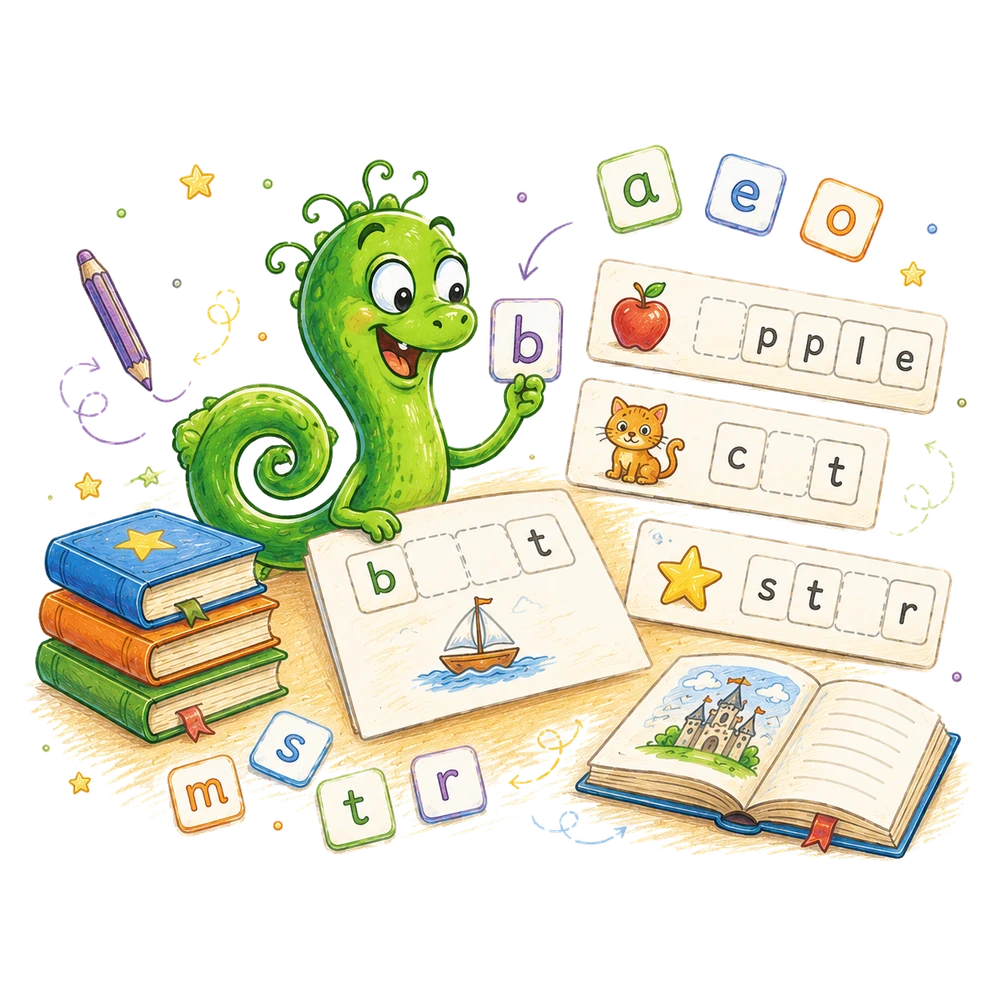
KindergartenBeginning Sound Games with Objects You Already Have
Use familiar, safe household objects to listen for beginning sounds, compare spoken words, and adapt a short game to the child.
17 min read brainhuntersacademy
Letters & reading · Kindergarten. Practical activities for children ages 5–6: letters, counting, shapes, colors, science, and social learning, with examples and tips for parents.

Use familiar, safe household objects to listen for beginning sounds, compare spoken words, and adapt a short game to the child.
17 min readUse an alphabet strip, movable cards, and practical examples to find and compare English letters without relying on a memorized song.
17 min read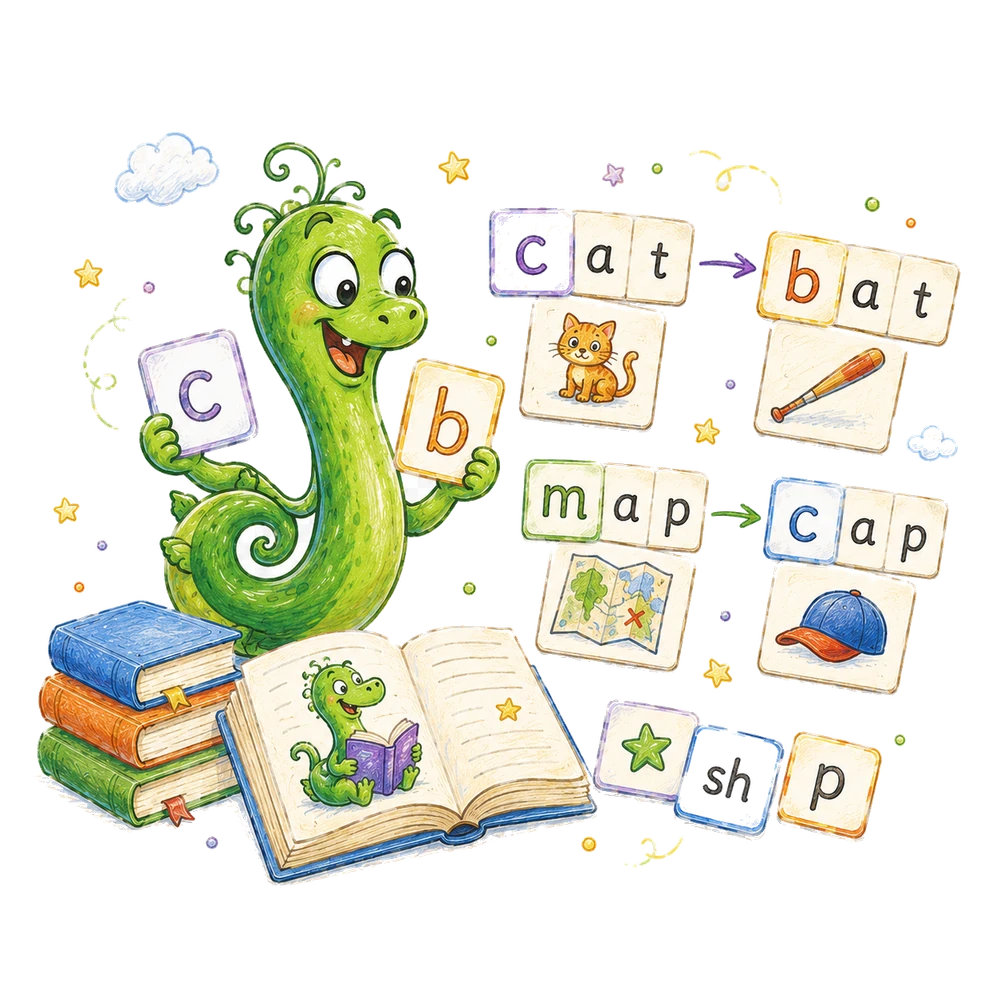
Use a small basket of pictures or safe objects to listen for rhyming word endings, check choices, and adapt the game to the child.
17 min read
Listen for syllables in a familiar or fictional name, mark each spoken part, and adapt the activity without requiring clapping or public sharing.
17 min readUse a toy train and three spaces to blend the spoken sounds in a short English word, then connect the activity to print only if the child wants.
17 min readHelp a beginning reader distinguish b and d through letter features, sound practice, writing, and concrete checks without treating one error as a diagnosis.
18 min read
Make and revise predictions during a picture-book read-aloud using details from the story and illustrations as evidence.
18 min read
Choose a few useful read-aloud questions that invite observation, explanation, and checking against a story without interrupting every page.
17 min read
Set up a family message center where beginning writers can plan, dictate, write, deliver, and read real messages for a real audience.
17 min readUse a wordless picture book to build and revise a story from visual evidence, sequence events, and distinguish observation from invention.
17 min read