




Letters & reading
KindergartenBeginning Sound Games with Objects You Already Have
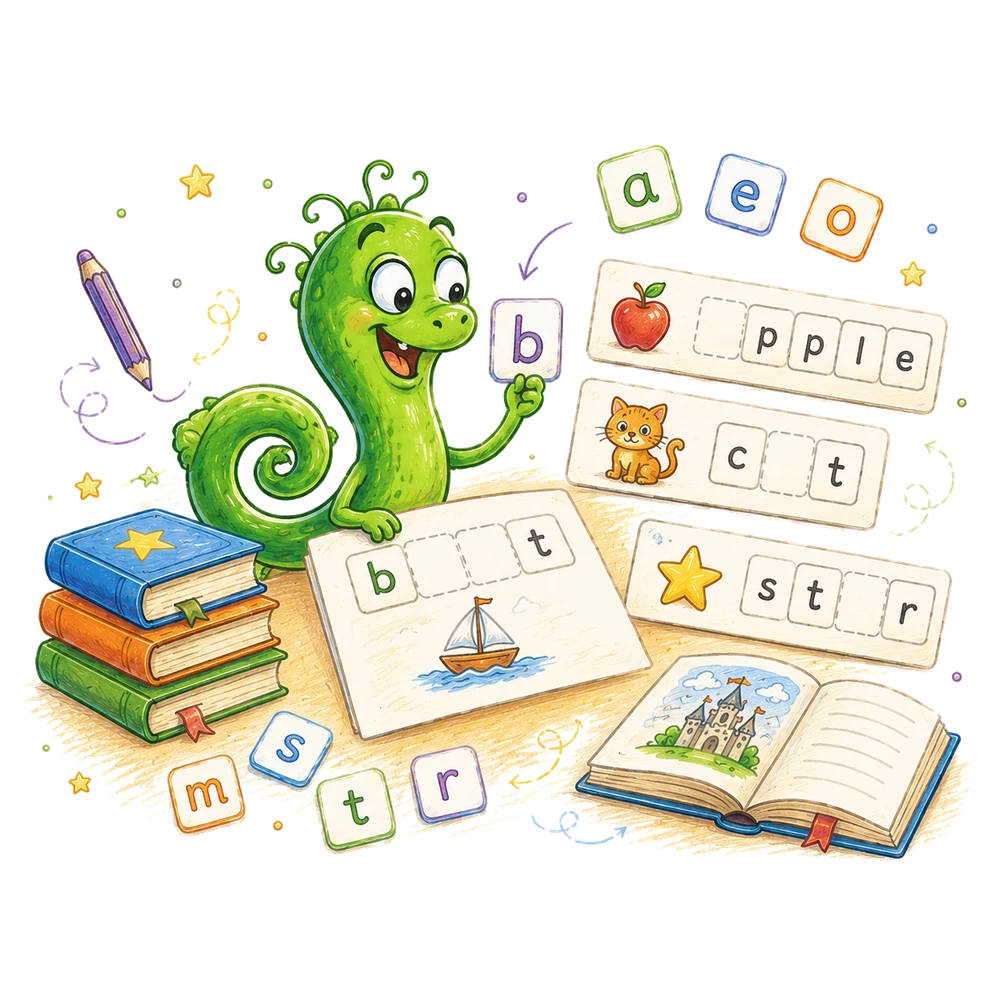
Listen for the first sound in a familiar spoken word. Sock starts with /s/, while mug starts with /m/.
10 min read brainhuntersacademy
Kindergarten. Practical activities for children ages 5–6: letters, counting, shapes, colors, science, and social learning, with examples and tips for parents.

Listen for the first sound in a familiar spoken word. Sock starts with /s/, while mug starts with /m/.
10 min readFind a letter’s neighbors by inspecting an alphabet strip. D comes between C and E.
9 min read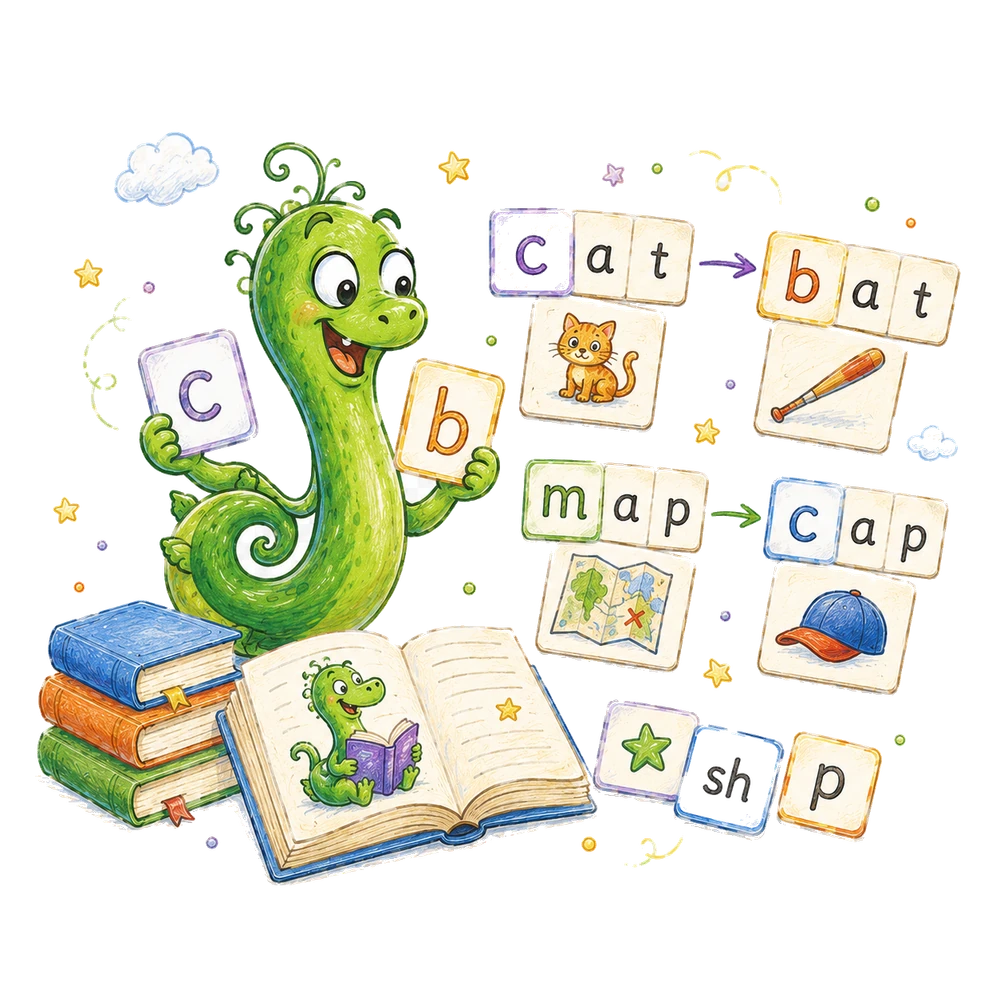
Hear a shared ending in two spoken words. Cat and hat share an ending, while cat and sun do not.
10 min read
Notice the spoken beats inside familiar words. Mia has two spoken beats: Mi-a.
9 min readCombine separate spoken sounds into a short word. /m/ /a/ /p/ can join into map.
9 min readCompare orientation by noticing a letter’s specific features. B has its tall line on the left of its round part.
9 min read
Make a prediction and compare it with what the story shows. A character carrying an umbrella might be expecting rain.
9 min read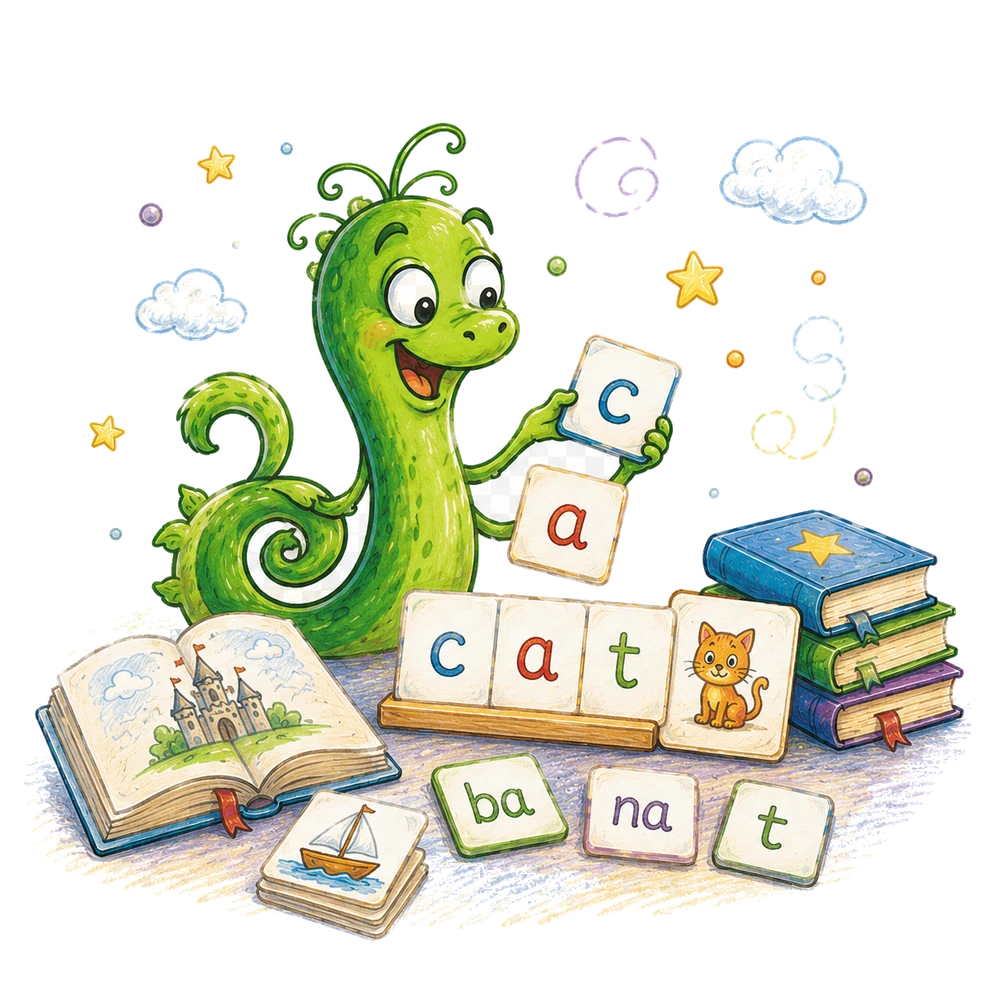
Talk about a story without turning every page into a quiz. What do you notice about the character’s face invites observation.
10 min read
Use marks, drawings, and words to communicate a real message. A drawing of a cup can ask a grown-up to bring water.
10 min readBuild a coherent spoken story from a sequence of illustrations. A dropped mitten can connect two neighboring pictures.
9 min read
Compare two groups by pairing objects. Four spread-out blocks can still be fewer than five close-together blocks.
9 min read
Decompose a small total into two parts. Five can be split into two and three.
9 min read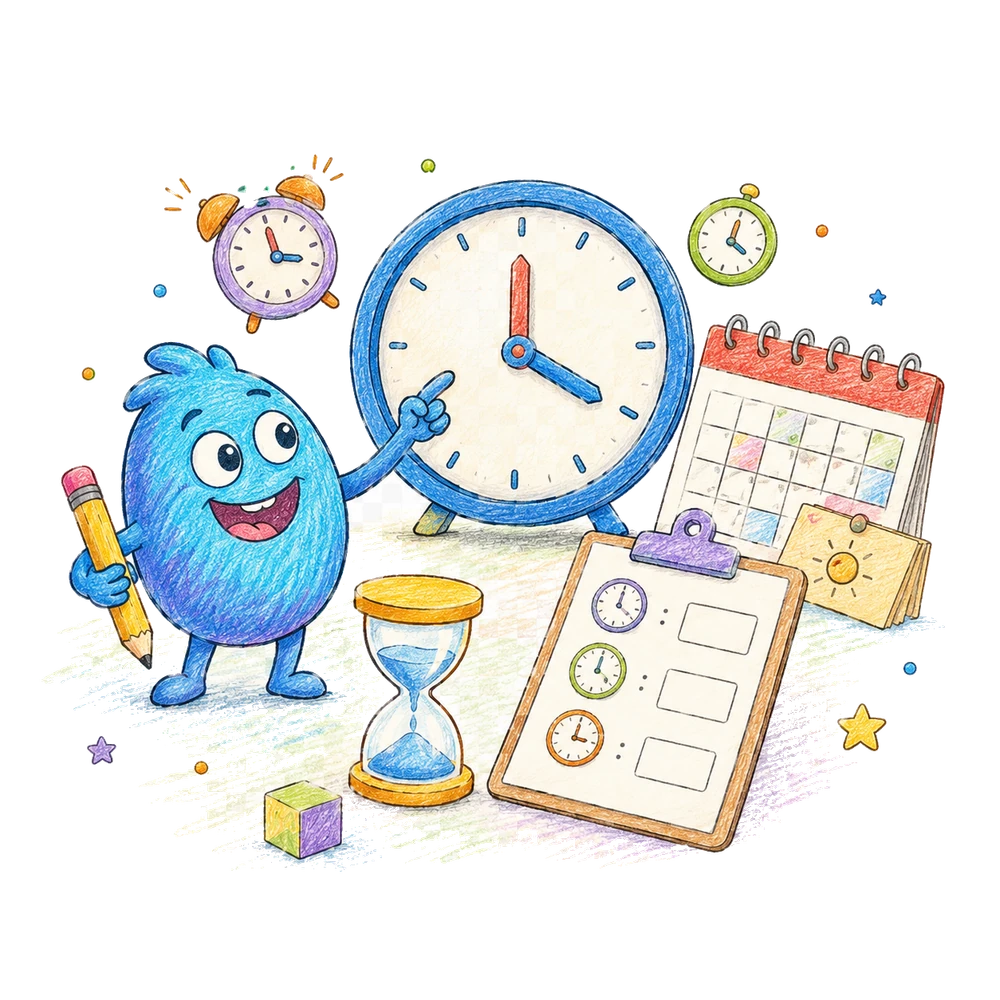
Recognize ten as a full arrangement with two rows of five. Seven filled spaces leave three empty spaces.
9 min read
Model addition as joining two groups. Two animals join three animals to make five.
9 min readModel subtraction by removing objects from a visible set. Seven leaves with two moved away leaves five.
9 min read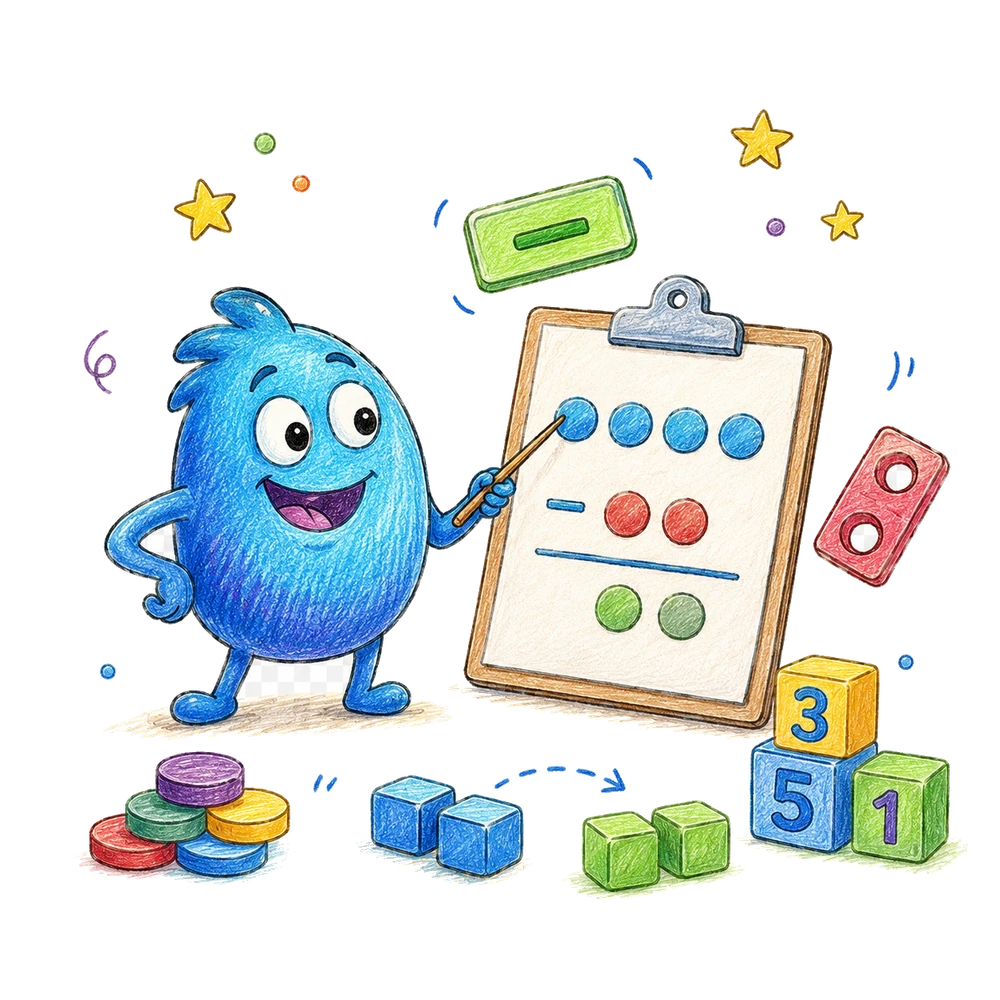
Compare and arrange several quantities consistently. 2, 5, and 8 belong in that increasing order.
9 min read
Use neighboring numbers to complete a sequence. 4, 5, blank, 7 needs 6 in the open space.
9 min read
Recognize a triangle by three straight sides rather than orientation. A triangle still has three sides when its point faces left.
9 min readSort by one property and then change to another. Red circles can be grouped by color first and shape second.
9 min read
Identify parts of a drawing by their geometric outlines. A roof may resemble a triangle and a window a square.
9 min read
Compose a recognizable picture using separate geometric pieces. A rectangle and two circles can suggest a bus.
9 min read
Count each vertex of a polygon exactly once. A pentagon has five places where straight sides meet.
9 min read
Compare circular and oval outlines through direct observation. An oval can be longer in one direction than another.
9 min read
Interpret left and right from a shared viewing position. When both people face the row, the bear can be left of the rabbit.
10 min read