




Shapes & spatial thinking
KindergartenBetween Two Objects: A Three-Toy Challenge
Identify a middle position using two reference objects. The fox is between the bear and the rabbit.
9 min read brainhuntersacademy
Kindergarten. Page 2. Practical activities for children ages 5–6: letters, counting, shapes, colors, science, and social learning, with examples and tips for parents.

Identify a middle position using two reference objects. The fox is between the bear and the rabbit.
9 min read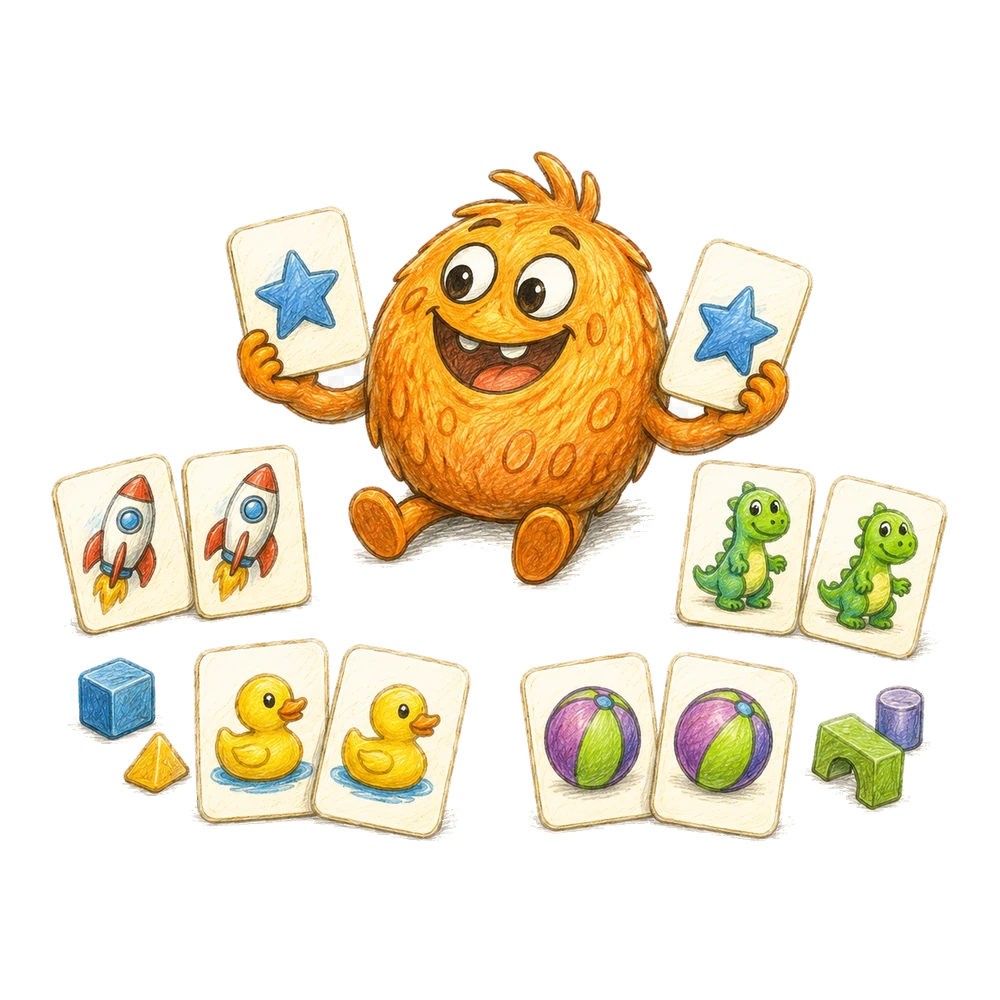
Compare distances from a named reference point. A counter can be near the house but far from another counter.
9 min read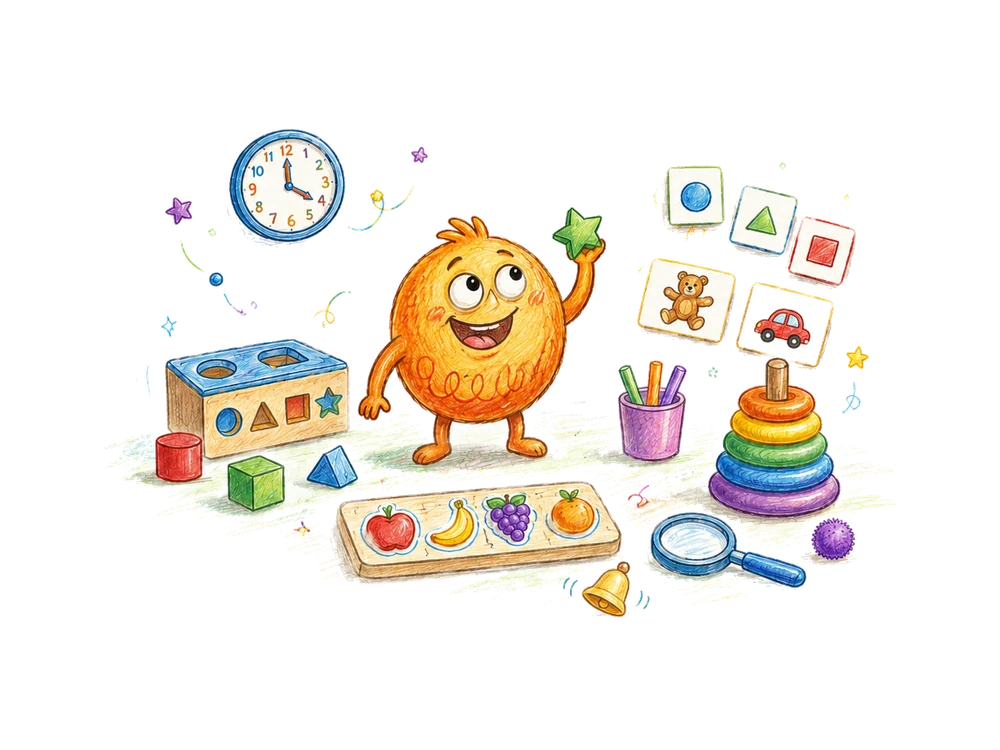
Match the arrangement and orientation of a simple structure. A two-block tower beside one flat block is a specific arrangement.
9 min read
Remember and carry out two connected position instructions. Put the bear in the box, then place the box on the mat.
9 min readConnect a shape feature with a physical action. A curved surface may roll, while a flat face can support stacking.
9 min read
Identify a repeated unit using shape alone. Circle, triangle repeats as a two-piece unit.
9 min read
Compare examples of a color without expecting exact shade matches. Two blues can look different while sharing a color name.
9 min read
Observe variations in green using a respectful nature activity. Two living leaves can show different green shades.
9 min read
Discriminate clearly chosen examples from neighboring color families. An orange card differs from both a red card and a yellow card.
9 min readCompare two related color examples using descriptive language. A light pink sample may look lighter than the chosen red sample.
9 min readNotice brown across natural and manufactured objects. Cardboard and wood can share a broad color name.
9 min read
Compare light and dark neutral colors. Gray is visibly different from both the chosen white and black references.
9 min readIgnore shape while applying a color-matching rule. A green circle can match a green triangle by color.
9 min readIdentify a two-color repeating unit. Red, blue, red, blue repeats a two-piece unit.
9 min read
Remember a small arrangement of distinctly colored objects. A tray can contain blue, yellow, and red in that order.
9 min readFollow a simple color instruction in a self-made drawing. Color the roof red identifies both a part and a color.
9 min readPair color information with readable or tactile cues. A blue circle card carries both a color and a shape cue.
9 min readSeparate how something looks from how its surface feels. Two green materials can have different textures.
9 min readExpress a personal preference while allowing other people different choices. One person may like purple while another chooses green.
9 min readDescribe a seed using direct observation rather than guessing. A bean seed may have a smooth surface and a curved outline.
9 min readConnect an adult-led care action with a plant’s needs. Some plants need watering at different times from others.
9 min read
Compare visible features without removing living leaves. One leaf may have a smooth edge while another has pointed sections.
9 min read
Record the weather visible at a particular time. Cloudy at breakfast is an observation about one time.
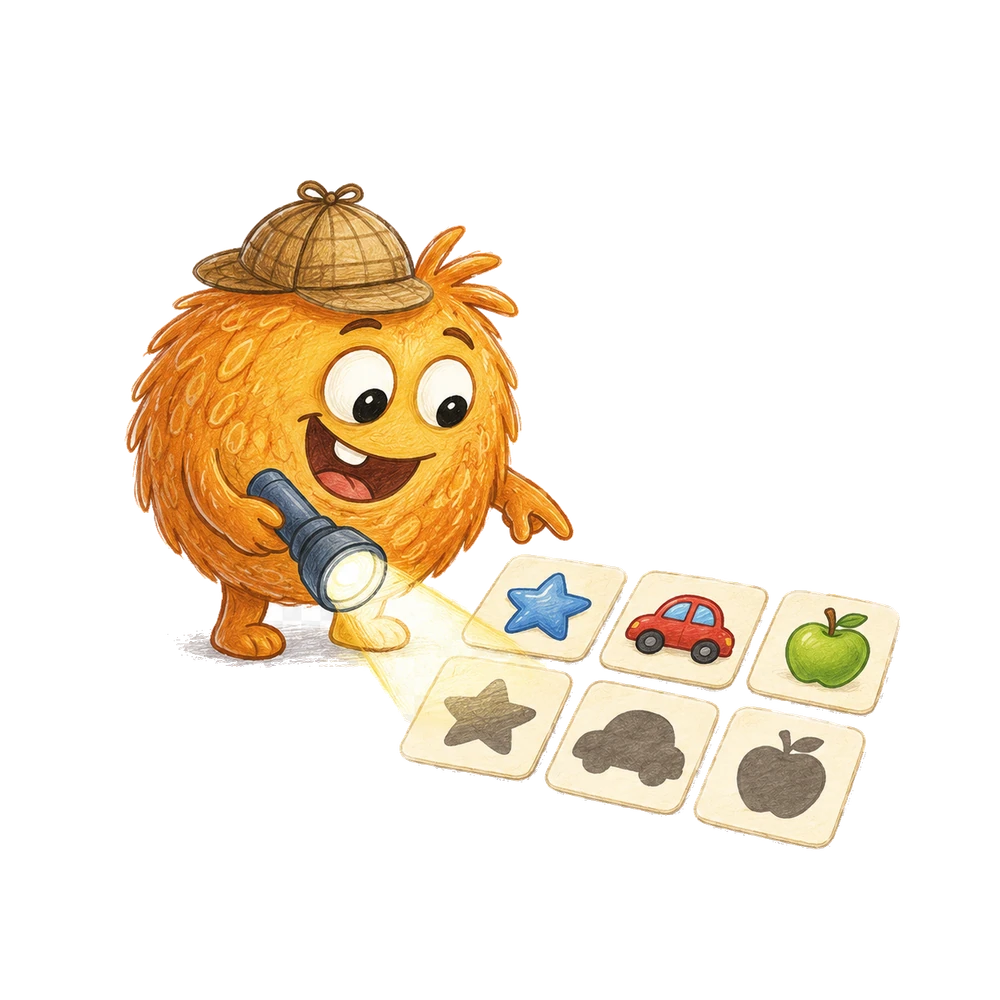
9 min readObserve how a light source and an object produce a shadow. A triangle cutout can cast a triangular-looking shadow.
9 min read