





Family learning routines
KindergartenCreating a Learning Routine after a Family Schedule Change
Rebuild a small predictable practice moment after disruption. A story after lunch may replace a former morning routine.
9 min read brainhuntersacademy
Kindergarten. Page 4. Practical activities for children ages 5–6: letters, counting, shapes, colors, science, and social learning, with examples and tips for parents.

Rebuild a small predictable practice moment after disruption. A story after lunch may replace a former morning routine.
9 min read
Use a familiar activity while introducing an optional small variation. One new picture can change a familiar game without replacing it.
9 min read
Connect selected printed letters with sounds in familiar words. M can connect with the first sound in map.
9 min read
See addition as a change that brings two small sets together. Two counters joining three counters make one group of five.
9 min read
Describe a shape with visible properties. A triangle has straight sides and corners.
9 min read
Reconstruct a short repeated pattern. Blue, red, blue, blank continues with red.
9 min readCoordinate a simple rule with a predictable social exchange. The marker shows whose turn it is to choose a card.
9 min read
Describe a visible feature before offering an explanation. The leaf has a long line through its middle is an observation.
9 min read
Compare two letter formats using the same learning goal. Both formats can build map, but handling and storage differ.
9 min read
Compare an unstructured set with a fixed quantity arrangement. Seven loose counters and seven filled frame spaces show the same quantity.
9 min read
Choose between solid construction and flat composition for a specific task. A block tower occupies space while a paper house stays on the page.
9 min read
Choose a direction format that supports understanding and independence. Replayable audio and an adult’s explanation offer different kinds of support.
9 min readCompare interaction demands while keeping the matching rule the same. Tapping an answer differs from lifting and placing a card.
9 min read
Compare erasability, surface feel, and record keeping. A board allows quick revision while paper keeps earlier attempts visible.
9 min read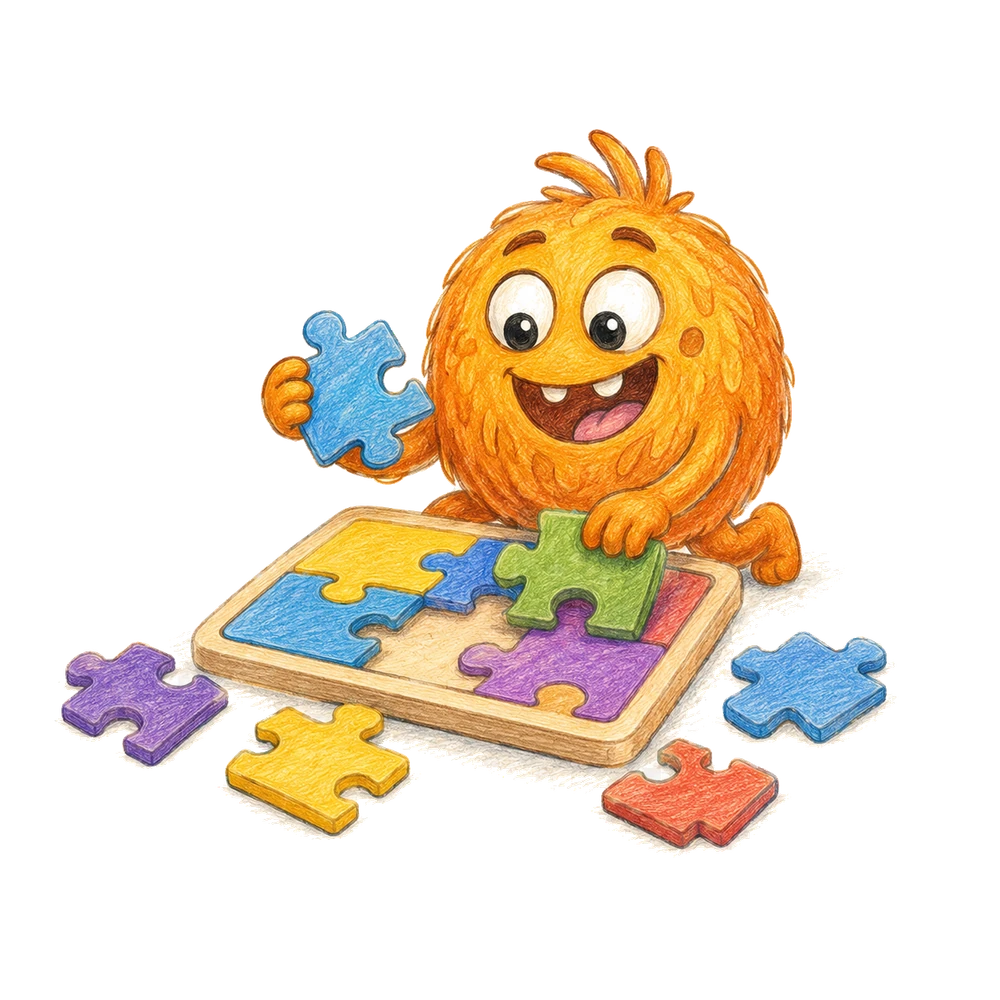
Match puzzle complexity to the intended spatial challenge. Fewer large pieces can still require useful turning and matching.
9 min read
Compare controlled examples with varied everyday materials. A plain swatch is simpler than a patterned fabric sample.
9 min readCompare guided motor practice with noticing a letter’s structure. Building an L highlights its two straight parts.
9 min read
Choose a storytelling format based on the kind of participation wanted. Wordless pages invite invented narration while written text supplies exact wording.
10 min readEvaluate convenience, available materials, and task fit without assuming a purchase is needed. A counting tray may need only large blocks and paper spaces.
10 min readCompare portability, lost-piece risk, and flexible use. One notebook can support drawing, patterns, and simple word play.
9 min readChoose among useful letter activities using setup effort as the stated criterion. A name-card search needs less preparation than cutting a new tile set.
9 min read
Select spatial activities using available movement space. Pointing to a shape needs less space than walking a shape path.
9 min readChoose questions that match a child’s desired level of verbal participation. Pointing to an object demands less speech than explaining a character’s choice.
9 min readChoose social-learning invitations that fit ordinary shared moments. Noticing a helpful cleanup action fits an event already happening.
9 min read