A weather watch can begin at a safe window with one question: what can we notice outside right now? A child might describe visible clouds, falling rain, or branches moving. Record the time and view, and distinguish the observation from a prediction about later weather. This guide includes sample conversations, accessible ways to respond, and careful comparisons between observations. Local forecasts and warnings remain the right sources for planning and safety decisions.
Observe the weather at one time and place
Choose a safe place to look outside, such as a window or a sheltered doorway. Ask the child, “What can we notice about the weather here right now?” They might point to moving branches, describe visible clouds, or say that rain is falling. Record the date, approximate time, and place if a record is useful.
The skill is describing present evidence. A child does not have to predict tomorrow’s weather or assign a single icon to a day that may change. “Rain is falling outside our window now” and “it will rain tomorrow” are different statements.
The [National Oceanic and Atmospheric Administration explains the difference between observations and forecasts](https://www.noaa.gov/education/resource-collections/data/tutorials/weather-gov) in its guide to weather data. This activity focuses on a child’s own limited observation, not on replacing a professional forecast.
Prepare a safe observation spot
An adult chooses a location appropriate to the current conditions. A closed window can provide a view of clouds, moving branches, or rain without requiring a child to go outdoors. Do not look directly at the sun, and follow local safety guidance during severe weather.
Bring a sheet of paper or an accessible device if the child wants to record the observation. A pencil, a large picture symbol, or a dictated sentence is enough. A thermometer is optional and must be used according to its instructions by an adult or with suitable supervision.
If the view is obstructed, identify what can and cannot be seen. A child can also describe a photograph or listen to a trusted adult’s report, while noting that those sources provide a particular view rather than direct access to every condition.
A short observation routine
The child may answer with words, pointing, eye gaze, a communication device, or a direction to a helper. A single clear observation completes the first round.
- Choose a safe viewing place and note the date and time.
- Invite the child to select a visible or otherwise accessible feature.
- Ask what they notice and where the evidence can be found.
- Record the description, view, and any uncertainty if desired.
- Keep any prediction about later weather separate from the observation.
- Compare with another timed observation only if the child wants to continue.
A conversation at the window
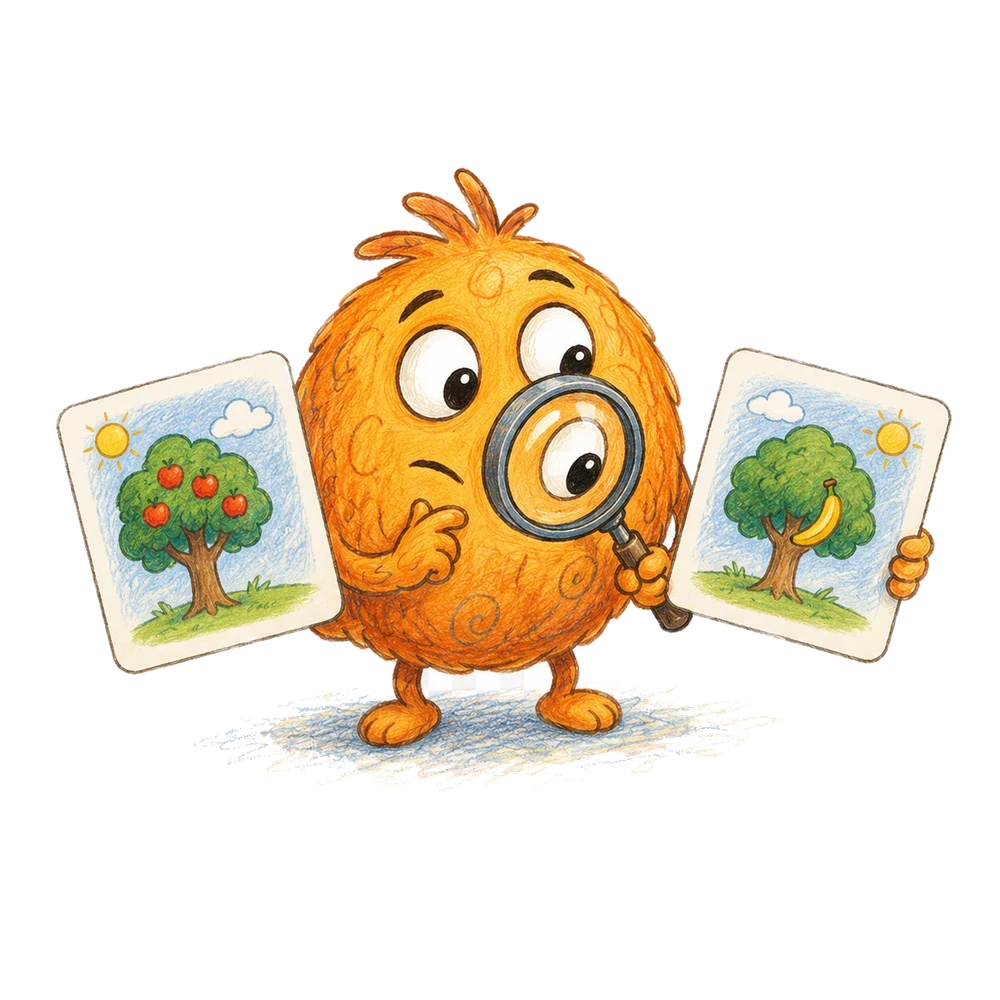
Adult: “What can you notice outside right now?” Child: “The tree branches are moving.” Adult: “Can you show me which branches?” The child points. Adult: “We can write that the branches moved while we watched.”
Child: “It is windy.” Adult: “Moving branches are a clue that air is moving there. We have not measured the wind speed.” If the child wants, draw the tree and add the time. The drawing records an observed effect rather than an exact wind measurement.
If the branches stop moving during the observation, add that change. The record might say, “Branches moved, then were still during our short watch.” It does not need to assign one condition to the entire day.
Weather and a forecast answer different questions
An observation describes a condition measured or noticed at a particular time and place. A forecast describes expected future conditions based on available information and forecasting methods. Both can be useful, but they are not the same kind of statement.
A child may say, “It is cloudy, so it will rain.” Respond, “We can see clouds now. Whether it rains later is a separate question.” If planning requires a forecast, an adult can consult the appropriate local weather service and follow any warnings.
Do not use this simple activity to predict severe weather or make safety decisions. A clear view from one window cannot reveal all conditions that a forecast or warning service considers.
Make a record with a time
A simple entry can read, “10:15 a.m., looking east from the kitchen window: gray clouds visible; no rain seen during our two-minute look.” The precise example is hypothetical; write what actually happened in your setting.
Include the direction or window only if it helps identify the view. A child can draw a cloud and dictate the words while an adult writes. A symbol key can explain what each mark means for the group.
“No rain seen” is narrower than “there is no rain anywhere nearby.” Rain could be outside the view or begin after the observation. The time and location keep the statement tied to its evidence.
Notice clouds without naming every type
Ask the child to describe the visible sky in their own words: “I see a large white cloud” or “clouds cover much of the view.” Point to the part being discussed. If buildings block the rest of the sky, record that limitation.
A cloud shape can resemble an animal or another familiar object. That imaginative comparison is welcome; distinguish it from a claim about what the cloud is made of or what weather it will produce.
The child does not need to learn formal cloud names for this first observation. If they want a later activity, a labeled cloud-observation page can organize drawings and descriptions.
Rain: what can the observer actually see?
From a protected place, the child may see drops moving past the window or landing on a surface. Ask, “What do you see that makes you say it is raining?” The answer can be a gesture toward drops or a spoken description.
A wet pavement alone shows that the surface is wet. It does not prove rain is falling at this moment; water may have another source or rain may have stopped. Observe the current view and keep the two statements distinct.
Do not go outdoors during unsafe conditions to confirm a detail. The adult follows relevant local advice and can postpone the activity. A window view is sufficient when it is safe and useful.
Wind through its effects
Air movement may be suggested by leaves, branches, flags, or loose material moving. Describe the specific effect: “The flag moved back and forth while we watched.” If there is no visible movement, say so rather than concluding there is no wind everywhere.
The observation does not establish speed or direction. A flag’s motion can be affected by obstacles and changing air flow. A properly used instrument and a defined method are needed for a measured value.
The child can point to the moving object or tell a helper when it starts and stops. There is no need to touch branches or stand outside in strong wind.
Temperature and how it feels
A child may say, “It feels cool.” That is a personal description of their experience. Another person may feel differently in the same place. Both can report their sensations without deciding that one is wrong.
A thermometer gives a measured temperature when it is suitable, placed appropriately, and read correctly. Record the number, unit, location, and time. An adult manages the instrument and checks its instructions; a device indoors does not automatically show the outside air temperature.
Do not convert a personal feeling into an exact number. “Feels cool to me” and “the thermometer reads 15°C” are different kinds of information and can both be recorded.
One sky can have several features
A child may see blue sky between clouds while sunlight reaches part of the ground. Rather than forcing a choice between “sunny” and “cloudy,” describe both observations: “Clouds and blue sky are visible; sunlight is on the wall.”
If using picture symbols, allow more than one or add words to explain the combination. The meaning of a symbol should be agreed in advance. A single icon may summarize a view but can omit a detail the child noticed.
Never ask a child to stare at the sun to decide whether sunlight is present. Look at safely observable effects such as a lit surface or a shadow.
Compare two times on the same day
Make one observation in the morning and another later, from the same safe window if possible. Label the times. Ask, “What looks similar? What looks different?” The child might notice more clouds or a branch that is now still.
If a view is blocked in the second observation, record that rather than assuming the unseen sky stayed the same. A change in lighting or viewing position can affect what is visible.
Two observations do not describe every moment between them. If it was dry at both checks, the record does not prove that no rain fell between them.
Compare two places carefully
One child might look through a window facing a garden while another sees a street from a different window. Record the location of each view and ask what each person can see. One may notice moving branches that are not visible to the other.
Different reports can both be accurate for their views. Do not average them into one statement without preserving the location. If the views are photographs taken at different times, include the times as well.
A weather station’s current reading may come from another nearby location and time. Compare its label and update time with the child’s observation before treating the numbers as descriptions of the exact window view.
A simpler first look
Offer a choice between two pictures that match the actual view, such as a cloud symbol and a branch symbol. Ask which feature the child wants to observe. The child can point or direct a helper to the relevant part of the window.
The adult models one observation: “I see the branch moving.” The child may agree, indicate another feature, or pass. Keep the question about what is visible now rather than asking what will happen tomorrow.
If the window view is unclear, use a dated photograph and say it is a photograph. A simple activity can end after one located feature is described.
A more detailed observation
Invite the child to choose two features, such as clouds and moving branches, and record each separately. For every feature, ask where it was seen and whether it changed during the short observation.
A child who wants to use a thermometer can compare two properly labeled readings from the same instrument and location at different times. The adult supervises the device and records the units. A difference between readings is not by itself an explanation for every other weather change.
Keep predictions separate if the child offers them. An observation page may include a “wondering” box, but the prediction should not be written as something already seen.
Use a weather word carefully
Words such as “windy,” “cloudy,” and “rainy” can summarize a view. Ask what the child noticed that led to the word. “Cloudy because I see many clouds” connects the label to evidence without demanding a formal measurement.
If the child calls a sky “cloudy” while another calls it “partly cloudy,” return to the view. They may be using the words differently or looking at different parts of the sky. Point to the relevant area and record each description if helpful.
Official observing systems may use defined categories and instruments. A child’s everyday description need not be treated as an official measurement; it should accurately reflect what they can observe.
A weather symbol can represent a view
Create large symbols for a cloud, raindrops, and a moving branch. Explain what each symbol means in this activity and allow the child to select one or more. Add a “not visible” or “another observation” option.
If the child selects both clouds and rain, record both when they are supported by the view. If the selected icon represents a prediction rather than something seen, place it in a separate prediction area or discuss the distinction.
Symbols should be accessible through the child’s preferred method. An adult can write the child’s description beside a symbol rather than assuming a picture communicates every detail.
Listen without going outside
From a safe indoor space, a child may hear rain against a roof or wind moving an object. Ask, “What did you hear?” and record the sound itself: “A tapping sound came from the window area.”
A sound may have several possible sources. If the child says it is rain, look for additional safe evidence or record it as their interpretation. A tapping sound alone does not prove rain is falling.
Hearing the sound is optional. Some children may prefer a visual description, a vibration they can safely notice, or a different way to participate. Do not increase noise to make the activity work.
A photograph is a record of a view
An adult can take an optional photograph of the sky or an observed surface when appropriate. Record the date, time, and direction or location if useful. Avoid including identifiable people or private details unnecessarily.
A photograph taken at noon shows that particular moment and frame. It cannot establish the weather outside the frame or throughout the day. A dark image may also reflect camera exposure as well as the visible scene.
The child can choose which part to describe or direct the framing without operating the device. A drawing or dictated note is an equally valid record for this activity.
Two children observe together
One child may choose the feature to watch and another may record a word or symbol. They can exchange roles or work together. An adult confirms that both have access to the view and that the observation spot is safe.
If one child reports moving branches and another says the branch is still, check whether they watched the same branch at the same moment. The wind may change during the observation, or each child may have selected a different object.
Record the separate observations with their times rather than forcing an immediate winner. A child can also pass or choose to listen while another person records.
What if the view changes?
Clouds may move across the window or rain may begin during the observation. The child can say, “At first I saw no rain; then I saw drops.” Record the order and approximate times if available.
A changed observation does not mean the earlier one was necessarily wrong. Weather can change over short periods, and the second statement concerns a later moment. NOAA describes weather as atmospheric conditions at a particular place over the short term in its [weather and climate explainer](https://www.noaa.gov/explainers/what-s-difference-between-climate-and-weather).
If the adult did not observe the change, record the child’s report as such and ask which part they saw. Preserve the distinction between a direct observation and a report from another person.
Do not treat a short record as climate
A week of window observations can show conditions noticed on those particular days. It does not establish the long-term climate of the location. Weather and climate concern different time scales and require different kinds of records.
A child can still compare the entries: “We saw rain on two of our checks.” Include the number and timing of checks. This does not say how many days it rained overall if observations were brief or some days were missed.
If the child asks about climate, use an age-appropriate reliable source and explain the longer period involved. Do not force the short activity to answer a question it was not designed to answer.
When a child makes a prediction anyway
A child may say, “I think the clouds mean rain later.” Write this as a prediction if they want to keep it. The adult can separately record the present observation: “clouds visible now.”
At a later safe check, record what is actually seen and the time. If it is raining then, the two entries show what was observed at those checks; they do not reveal the full weather between them or prove how the forecast was made.
For plans and safety decisions, consult the relevant local forecast and warnings. The child’s prediction is part of a conversation, not a substitute for that information.
Record uncertainty
If a distant object moves but the child cannot see whether it is a branch or a flag, write “something moved near the building” or choose a clearer feature. The uncertainty is part of the observation.
If a thermometer reading is hard to read, ask an adult to check the device and report the value only when it is clear. Do not guess a number to complete a chart. A blank or “could not read” entry is informative.
The same applies to cloud cover beyond the window frame. A record that identifies its limits is more useful for later comparison than a confident claim about an unseen area.
An accessible observation page
Use a large date field, a space for the child’s chosen feature, and a separate area for questions. Provide labels in the participant’s preferred language or communication format. A helper can write dictated words and confirm the entry before saving it.
Some children may prefer a close-up photograph or an adult’s description to a distant view. State which source was used. The goal is to communicate an observation or a report clearly, not to require a particular sense or movement.
Do not infer that a child has observed a feature they could not access. Record the helper’s description separately from the child’s own selection or statement.
Finish and revisit the entry
Read or show the entry back: “You pointed to moving branches at 10:15 from this window.” Ask whether it matches what the child wanted to record. Correct the note if the child identifies a different object or time.
A later comparison can ask what is similar or different while preserving each entry’s location and time. If the view or instrument changed, note that before comparing. One missed check does not need a guessed replacement.
The child can decide whether to keep the drawing or finish without a record. A brief, accurate observation is a complete activity.
Compare a report with the window view
An adult may read a current report from a nearby weather station and show its observation time and location. The child can compare that report with the view outside the window. A station report and a household view can differ because they refer to different places, times, or methods.
For example, the report may describe clouds at the station while the child sees a small patch of blue sky. Record both with their sources rather than assuming one must be false. The station may observe more of the sky than the window reveals.
If the report is unavailable or its update time is unclear, say so. The child can still record the window observation without filling in a missing official value.
Continue with a cloud page
For a closer look at one part of the sky, making a cloud observation page provides a related activity with a dated drawing and descriptions. The child can compare the visible cloud shapes without promising a forecast.
A separate activity on shadows that move during the day uses timed observations of a different feature. It should be done safely without looking at the sun.
When the family needs to plan travel or respond to severe conditions, use an appropriate local weather service. The window observation remains a learning record of a particular view.
Helpful answers
Does the child need to predict tomorrow’s weather?
No. The activity focuses on conditions observed at a particular time and place.
Can the weather be observed from indoors?
Yes. A safe window view can show clouds, rain, or moving objects without going outside.
Does wet pavement prove that it is raining now?
No. It shows that the surface is wet; look for current evidence or record the uncertainty.
Can we use a thermometer?
Yes, if an adult uses a suitable instrument correctly and records the location, time, units, and reading.
Can this replace a weather warning?
No. Use the appropriate local weather service and follow its warnings for safety decisions.

Turn a little idea into an adventure.
Try a short activity together, then bring the discovery back into your day.
Shapes and object practice