A shared-reading challenge is useful when the child can participate in a meaningful part of the reading with the support available and still has something to explore. That might mean recognizing one familiar word while an adult reads the rest, discussing a picture, or reading a short passage together. A single page, a fixed error count, or a book label cannot determine the right challenge for every child. This guide offers a practical way to choose a task, observe what happens, and adjust the text or support without treating the child as the problem.
The skill: match a task to a specific reading goal
First decide what the child will practice: following print, identifying a known word, decoding a taught pattern, discussing an event, or another concrete goal. A book can be suitable for one of those tasks with adult support and too demanding for a different task without that support.
The adult's role matters. Reading most of a page aloud while the child finds one word creates a different challenge from asking the child to read every word independently. State the task and the available help before judging whether it is workable.
A ‘just-right’ choice is a working decision for a particular child, text, purpose, and moment. It is not a permanent label for the child or a universal property of a book. Observe the response and adjust if the task no longer serves its purpose.
Prepare a text and one small task
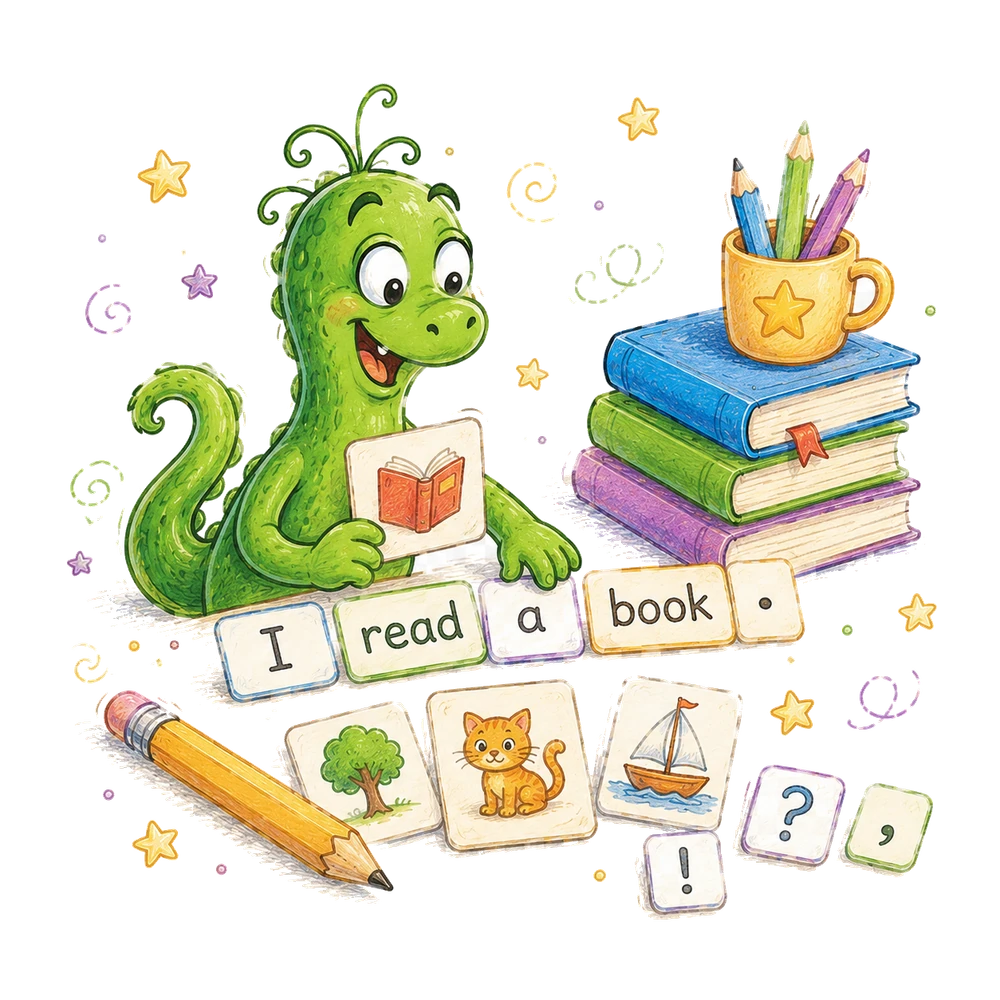
Choose a short passage from a book the child is interested in or write a simple sentence such as ‘I see the cat.’ Prepare a visible word card for the if that is the target. A pencil and paper are enough for a homemade example.
Decide what the adult will do: read the sentence aloud, point to the words, and invite the child to find the matching target. The child can point, speak, use eye gaze or a communication device, or direct the adult.
Check the print size, contrast, and page layout. If the child cannot see or access the text comfortably, change the format or provide assistance. Accessibility is part of preparing the task, not a test the child must pass before reading can begin.
A complete first trial
Show the sentence ‘I see the cat.’ and the separate the card. Explain that the adult will read the whole sentence and the child will find the matching word.
- Read the sentence naturally and point beneath each word.
- Show the target card and name the word.
- Ask the child to find the same printed word in the sentence.
- Compare the selected word with the card, including the letters in order.
- Reread the full sentence and discuss what it says.
- Observe whether the task and support were useful; repeat, adjust, or stop according to the child's response.
A conversation after a difficult choice
Adult: ‘Can you find the in this sentence?’ Child points to see. Adult: ‘Let's put the card beside that word and compare. The starts with t-h; see starts with s.’
The child can point to the matching word after the comparison. Adult: ‘The card helped us check the letters. Shall we read the sentence again?’ The adult can continue reading the surrounding words.
This response suggests that comparing two visible forms with a prompt may be useful. It does not establish that the child cannot read all common words or that the entire book is unsuitable for shared reading.
Separate interest from reading demand
A child may love a story whose printed words are not yet accessible for independent reading. The adult can read it aloud while the child discusses pictures, predicts an event, or identifies a selected familiar word.
Conversely, a short decodable sentence may be manageable to read but uninteresting in that moment. Ask the child what they would like to explore and adapt the task or choose another text.
Interest and decoding demand are separate considerations. A shared-reading choice can preserve a meaningful book while changing who reads which words or what question is asked.
Look at the text before assigning a task
Check print size, spacing, line length, pictures, and unfamiliar vocabulary. A dense page may make tracking difficult even if individual words are known. A clear short excerpt or enlarged format can reduce that demand.
For a decoding goal, identify whether the passage contains patterns the child has already been taught. For a comprehension goal, consider whether the scene provides enough information for the question. Do not assume a single label on the cover captures every demand.
If a page includes a topic unfamiliar to the child, a brief explanation or picture discussion may support understanding. That vocabulary support is distinct from supplying a written word during decoding.
Observe the specific response
A useful observation is ‘With the target card visible, pointed to the after the adult read the sentence’ or ‘Needed a prompt to compare the first letters of the and see.’ Include the task and assistance.
Avoid a broad conclusion such as ‘this book is easy’ based on one supported word match. The child may still need help with other words, page navigation, or meaning. A single difficult response likewise does not establish a general inability.
Ask whether the child could access the materials, understood the question, and had a way to respond. An unclear instruction or small print can affect the result independently of reading knowledge.
Adjust the support without changing the goal
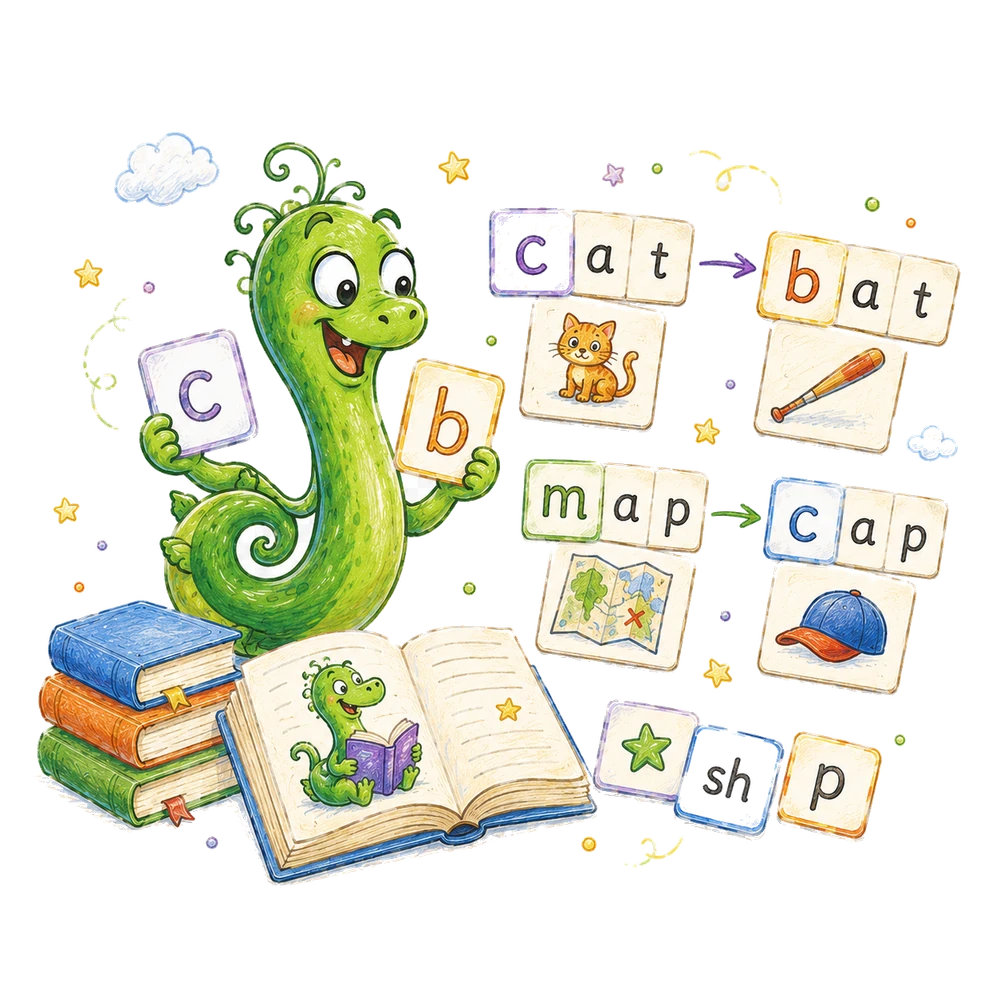
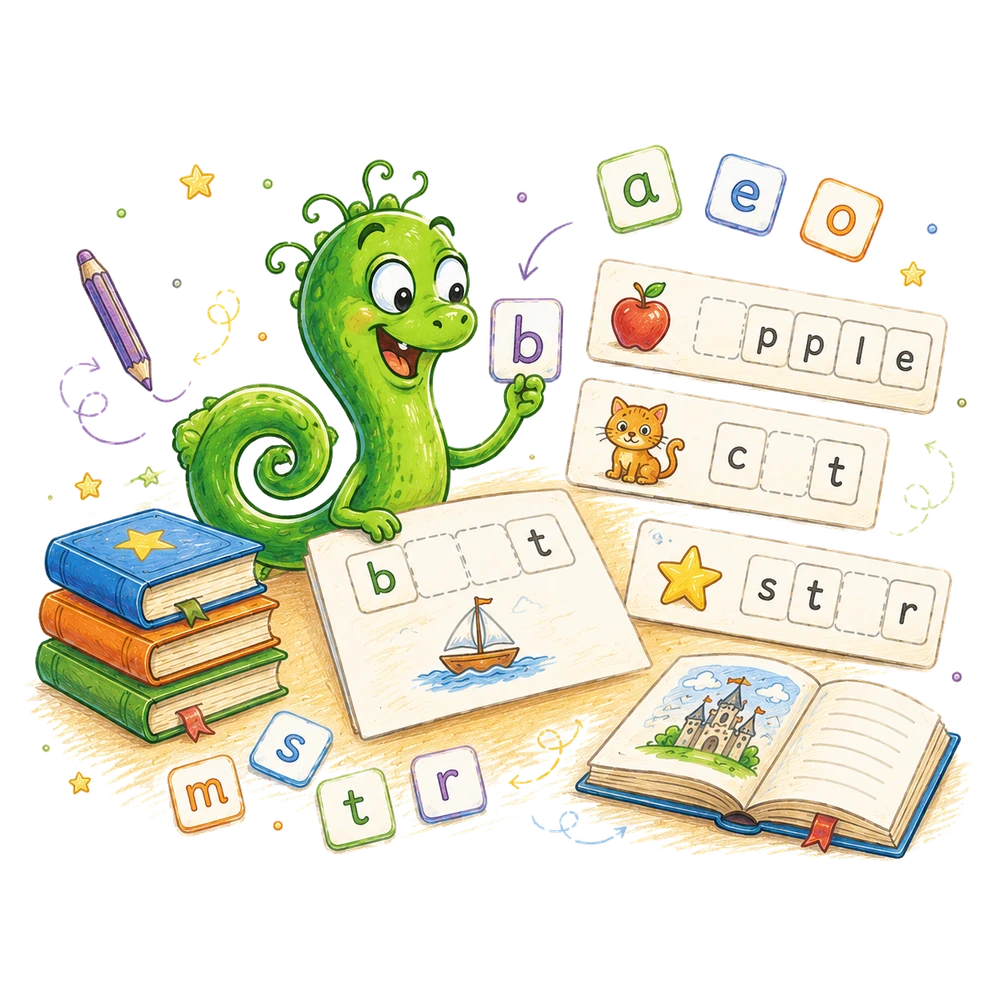
If the child cannot locate the among several words, place the target card beside two choices and compare their first letters. Keep the sentence visible and let the child point to the match.
If the child finds it easily, move the target to another short sentence or include a similar-looking word such as then. Explain the added letter and check the whole spelling. The goal remains identifying the target word.
An adult can continue reading unfamiliar surrounding words in either version. The amount of help can change while the meaningful reading task stays connected to the same text.
Change the goal while keeping the book
If decoding the page independently is too demanding but the child wants the story, the adult can read it and ask one question about a visible event. For example, ask where a character placed an object, then return to the page to check.
That is a comprehension or discussion task rather than an independent decoding task. Both can be valuable, but the result should be described accurately. The child may participate by pointing or selecting a response.
On another occasion, a brief word-level task can use one familiar word from the same book. A text need not be rejected for all purposes because one particular demand was not useful.
Use a short trial rather than a fixed score
Try one paragraph, one sentence, or a few lines with the chosen support. Observe whether the child can follow the task, whether the text provides the needed information, and whether the child wants to continue.
A fixed number of errors on one page is not a universal measure of an appropriate shared-reading challenge. Errors vary in type, and adult support changes the task. Use the actual responses and goals rather than treating a single threshold as a diagnosis.
If the trial is too demanding, reduce the number of choices, provide a model, or let the adult read more. If it offers no opportunity to practice the chosen skill, adjust the question or select another excerpt.
Check meaning as well as print
After reading ‘I see the cat,’ ask what the sentence says or invite the child to choose a matching picture. The child can identify the target word and still need help understanding an unfamiliar noun or situation.
A picture can support meaning, but it should not replace a check of the written word. Compare the target with its card and read the complete sentence. The two checks address different aspects of the task.
If the child gives a plausible interpretation that differs from the adult's expectation, return to the words and the stated scene. A good challenge allows a response to be checked and discussed, not merely judged by an unstated answer.
Offer the child a choice of role
The child might choose to find the target word, turn pages, point to a picture, or listen while the adult reads. Agree on the role before beginning so the expectation is clear.
A child can change roles later. For example, they may first listen to the whole story and then choose one sentence to inspect. The reading remains shared even when the adult supplies most of the print.
If the child declines a particular task, ask whether a different role or a pause would be useful. Participation can be meaningful without requiring a performance for every page.
Make the task easier
Use one short sentence and a target card with an identical printed word. Read the sentence and point to the target's position. The child can match the card with two visible choices.
Use large print and clear spacing. An adult may move the card under the child's direction. A gesture, eye gaze, or communication device can indicate the selected word.
Keep the support visible and reread the sentence for meaning. One checked match can be sufficient. The next step can remain equally supported if that serves the child's goal.
Add challenge with a controlled change
After a successful match with the model visible, put the target in a second sentence or compare it with a similar-looking card. Ask the child to check the full letter sequence rather than only the first letter.
If the model is briefly covered for a recall attempt, reveal it afterward and compare. This is a different task from matching with the model visible. A changed result is information about the support, not a reason to remove the reference permanently.
A comprehension extension might ask the child to support a prediction with a page detail and then check the next page. Choose the extension that matches the intended goal rather than increasing every demand at once.
Discuss the choice with a partner
One person reads and another observes whether the child has access to the agreed task and support. Afterward, the child can indicate what was useful: a larger word card, a repeated reading, or a different role.
If the adults disagree about the challenge, compare specific observations. Was the model visible? Who read the surrounding words? Did the child identify the target or explain the story event? These details are more informative than a general label.
When a teacher has provided a reading goal or method, use that information to align the home activity. Share concrete examples rather than claiming that one short session determines a child's reading level.
Compare two tasks on the same page
On a page with the sentence ‘I see the cat,’ one task is to match the printed word the to a visible card. Another is to read every word independently. The second requires additional word-reading skills and should not be assumed equivalent to the first.
If the child matches the target with a model, describe that supported action. If they read the whole sentence, describe which words were read and what help was given. Both observations can inform a later choice.
A third task might ask what the sentence says. An adult can read it while the child selects a matching picture. That checks meaning with oral support, not independent decoding. The same page can therefore serve several purposes.
Compare two texts for one goal
Suppose the goal is to locate the word the. One text presents a four-word sentence in large print; another has a dense paragraph with several occurrences. Both may contain the target, but the visual search demands differ.
Begin with the format that makes the target accessible. If the child wants more challenge, introduce a second occurrence or a longer line while keeping the reference card visible. Change one feature at a time so the effect is observable.
If the denser page is part of a favorite book, the adult can read it aloud while using a separate large-print sentence for the target-word task. Interest in the book and the format of the practice need not be treated as the same decision.
Check whether the prompt is understood
An instruction such as ‘read this’ may not tell the child whether to read every word, point to one word, or listen to the adult. State the role: ‘I will read the sentence. Please show me the word that matches this card.’
If the child points to a picture, explain that the current question concerns a printed word and show the text area. If they choose the wrong word, compare it with the model rather than repeating the same vague instruction.
A task may seem difficult because the instruction was unclear. After clarifying, observe the response again with the same text and support. This separates a communication issue from the specific reading skill being practiced.
Adjust the number of choices
If the target word is hard to find in a full sentence, place the and cat as two separate choices beside the model. Read both and invite a match. After checking, return the chosen card to the sentence.
If two choices are easily distinguished and the child wants another challenge, add a similar-looking word such as then. Explain the extra final n and compare the whole spellings. The child can continue to use the reference card.
The number and similarity of options are part of the task conditions. Record them when comparing attempts. A response made with two distinct choices is not identical to locating a word in an unfamiliar paragraph.
Distinguish help that supplies an answer from help that enables access
An adult may enlarge the print so the child can see the word, or point to the location of the target. These supports affect the task in different ways. One changes access to the text; the other directly narrows the answer location.
Both can be appropriate. Describe what was done: ‘selected the target after the adult pointed to two possible words’ gives a clearer account than simply ‘read the word independently.’
If the child later tries without a location prompt, keep other conditions comparable where practical. A difference in response can guide the next support choice without turning assistance into a failure.
Use a comprehension question with evidence
After an adult reads a short story in which a character places a hat on a bench, ask where the hat was placed. The child may point to the bench in the illustration or ask to hear the sentence again.
For a more demanding question, ask why the character might look near the bench after the hat is missing. The earlier placement is a possible clue. Mark the explanation as an inference if the story does not state the reason directly.
If the page offers no clue for a proposed question, revise the question or accept that more information is needed. A challenge is not useful merely because an answer is hard to guess.
Respond when the task becomes frustrating
If the child repeatedly selects a different word, pause and compare the model with one or two options. The adult can name the letters or read the sentence again. The child may choose to stop or change roles.
Do not increase the number of unfamiliar words at the same time as removing the model. Multiple changes make it hard to identify what affected the response. Try one adjustment and observe whether the task becomes clearer.
A pause or change in activity is a practical decision, not a diagnosis. If the child wants to continue listening to the book, the adult can read without requiring another word match.
Respond when the task is already familiar
If the child quickly matches the target in one sentence and wants another task, place the word in a different sentence or ask them to compare it with a similar form. Keep the new text meaningful and checkable.
For example, compare the and then. The second word has an additional final n. The child can point to that difference and choose the exact target. The added challenge is attending to the complete spelling.
If the child is not interested in extending the word task, they can choose a story question instead. A suitable shared-reading session can include familiar material as well as a new challenge.
Compare a supported response with a later trial
Suppose the child matches the with the model visible on one day. On another day, use a similar sentence and keep the same model available. Note whether the child locates the word and what prompts are needed.
If the later trial removes the model or uses a much denser page, the conditions changed. A different result may reflect those changes. Describe them before making a comparison.
The goal is to choose useful support, not to demand identical performance. A teacher's information about the child's current instruction can help select a relevant next task.
Invite the child to evaluate the setup
After a short trial, ask what helped: the large card, the adult's reading, the picture, or another feature. The child can point to a choice or communicate a preference in another way.
Ask whether they want the same task, a different role, or a break. A preference does not replace observing the skill, but it is relevant to choosing a workable shared activity.
If the child says the print is hard to see or the page is confusing, inspect the materials and adjust them. The task should give the child access to the evidence needed for a response.
Explain the chosen task to a listener
A partner who was not present might hear: ‘The adult read the sentence, and the child matched the word the to a visible card.’ That describes the goal and support without claiming that every word was independently decoded.
The child can show the card and sentence or direct the partner to reread them. If the partner asks what comes next, identify a concrete adjustment such as trying the same match in a second sentence.
This explanation is more useful than a general statement that the book was easy or hard. It tells the listener what was attempted, what evidence was observed, and which support was available.
Return to the first trial
Show the original sentence and the target card again. Read the sentence and invite the child to locate the matching word with the chosen support. Check the letters in order and reread for meaning.
Ask whether the child wants another sentence, a story discussion, or to finish. The response and preference guide the next task; no fixed number of repetitions is required for the initial check.
Observe and continue
A useful note might say: ‘Found the target word with the model visible after the adult read the sentence’ or ‘Pointed to the picture supporting a prediction.’ Include the text, task, and assistance.
One response does not establish overall reading ability, and one difficult page does not establish a diagnosis. If concerns persist, share specific examples with the child's teacher or an appropriate professional.
For target-word practice, see High-Frequency Word Practice in a Tiny Sentence. For a question grounded in a book, try Asking Better Questions during Read-Aloud Time. Letters and reading offers an optional digital continuation.
Helpful answers
Does a book have one fixed difficulty for every child and task?
No. The purpose, text, child's experience, and available support all affect the challenge.
Can an adult read most of the text?
Yes. The child can participate by finding a target word, discussing a picture, or choosing another meaningful role.
Should one error count determine the choice?
No. Observe the specific task, types of response, access, and support rather than relying on a universal single-page threshold.
Can the child use a visible word model?
Yes. Matching with a model is a supported task; recall without it is a different optional challenge.
What if the child loves a book but cannot read it independently?
An adult can read it aloud while the child participates in a suitable discussion or word-level task.

Turn a little idea into an adventure.
Try a short activity together, then bring the discovery back into your day.
Letters and early reading practice