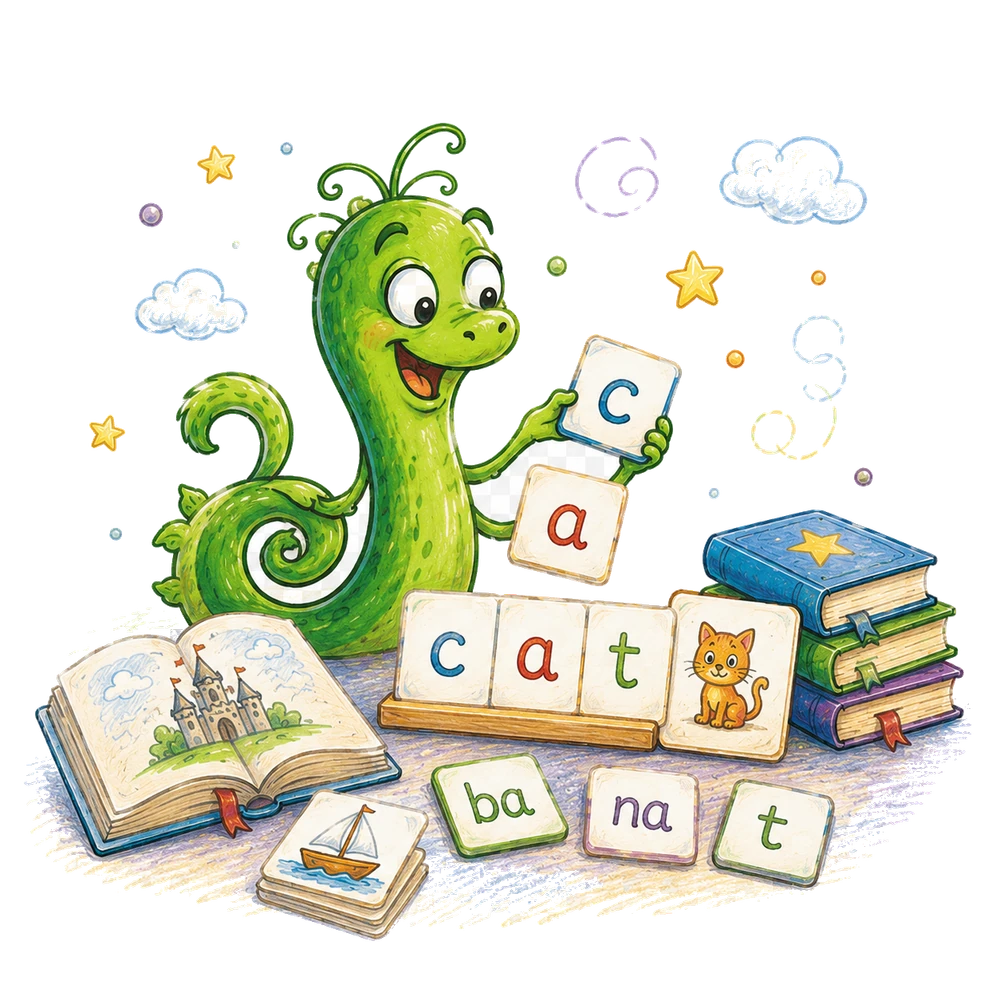
A picture card can show an object before a child reads its name; a written card presents the word in print. Compare both in a sorting game, and make the category rule and any adult support clear.
Choose the representation for the question
Object pictures can make a sorting game accessible before a child reads the corresponding words. Written word cards offer a chance to connect print with known categories or practice reading words the child has already encountered.
For example, a picture of a sock can be placed in a “clothes” group, while a card reading “sock” asks the child to interpret print before sorting it. An adult can read the word aloud when that support is useful. The same category decision is then possible, but the reading demand has changed.
Neither format automatically reveals what a child knows. Pictures may be ambiguous, and a child may identify a written word through a familiar logo or letter pattern rather than decoding every letter. Ask the child what they think each card represents.
A practical comparison
Preparation: picture cards require recognizable images; word cards require clear, readable print and a plan for words the child does not yet read. A family can draw pictures or write words on paper already available at home.
Information carried by the card: a picture can show color, shape, and context but might support several names. A word names a category member in a particular language but does not automatically show what the object looks like.
Support: an adult can name a picture, read a word, or provide a matching object. These supports are useful, but they change what the activity asks. Record or describe the support when discussing the child's response.
Prepare two small categories
Choose familiar items from two categories, such as clothes and kitchen items. Draw or find pictures of a sock, a hat, a spoon, and a cup. Provide two large spaces labeled or represented as “clothes” and “kitchen items.”
Choose examples that make sense for the child and the household. A cup might be used in many rooms, so clarify that “kitchen items” means objects the family uses in the kitchen for this particular game. The child may have a different, reasonable way to group it.
For the word version, write SOCK, HAT, SPOON, and CUP clearly on separate cards or use familiar lowercase forms. Use the same words when naming the picture cards so the two sets can be compared.
Start with the picture cards
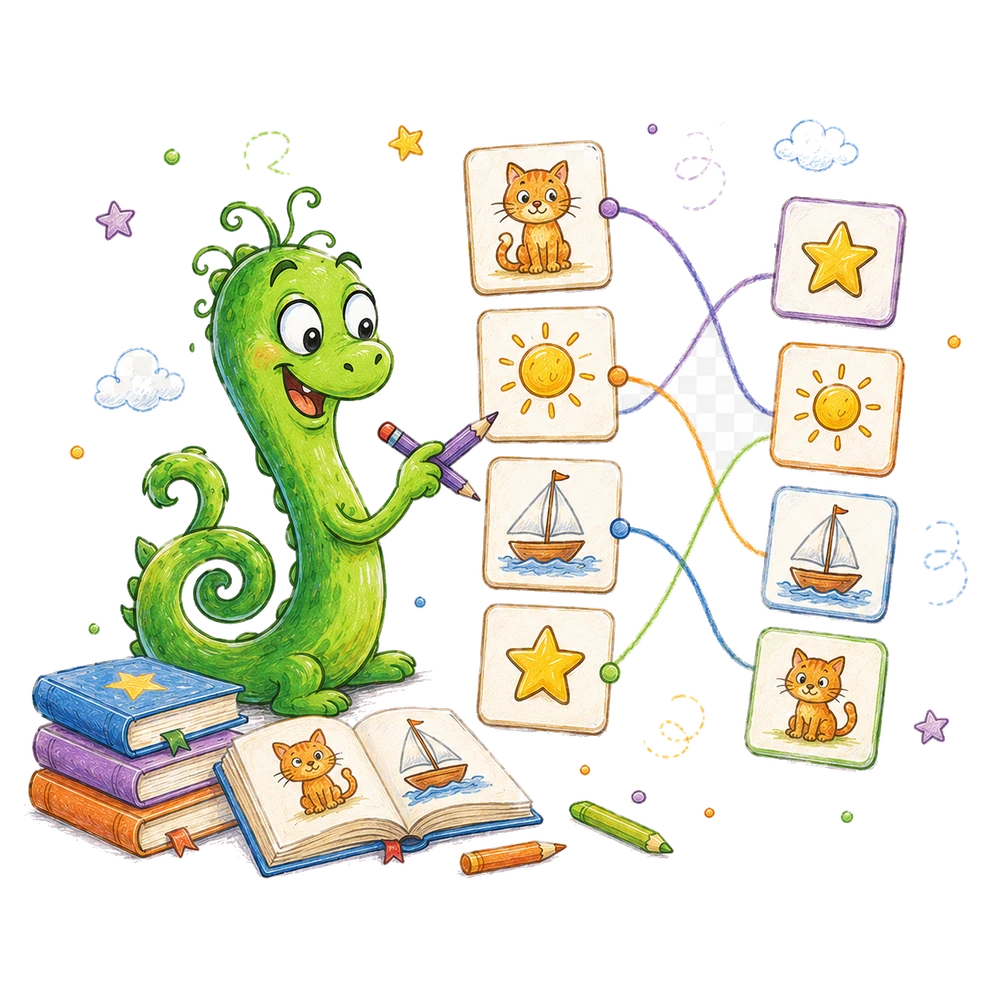
Show the four pictures and ask the child what they see. Agree on a name for each image before sorting. If a picture is unclear, replace it or use the real object. Then introduce the two group spaces.
Ask the child to place the sock picture in a group and explain or show why. The child might place it with clothes. A spoon might go with kitchen items. Allow the child to move a card, point, or direct an adult.
If the child chooses a different group, listen to their explanation. A picture of a cup could be associated with a bedroom or a picnic. Clarify the agreed category rule rather than assuming the child failed to recognize the object.
Try written words with support
Place the word cards where the child can see them. Ask whether they want to read a card, hear it read, or match it to a picture. An adult may say “sock” while pointing to the corresponding word.
After the word is understood, ask which group it belongs in under the same rule used for the picture cards. A child who cannot independently read “sock” can still make the category decision after hearing the word.
Describe what happened accurately: “The adult read the word; the child placed it with clothes.” This response shows a sorting choice with reading support, not independent recognition of the printed word.
Compare a picture and a word
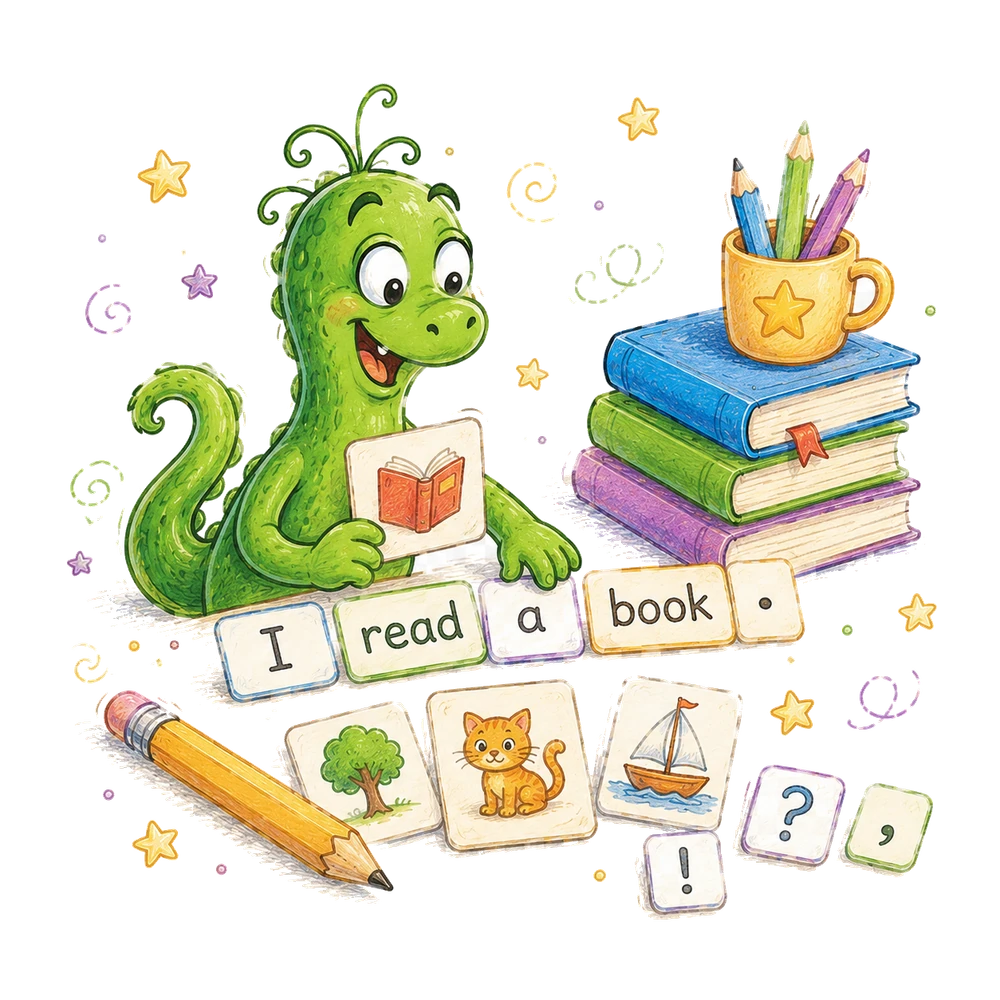
Put the picture of the sock beside the card SOCK. Name both: “This picture shows a sock, and these letters spell sock.” The picture and the word are different representations of the same chosen item.
The picture might show a striped sock while the written word does not specify a color. Ask what extra details appear in the picture. A word can describe a general item without including every visible feature.
If the picture could be called a stocking or something else in the child's experience, discuss the label before matching. The written card should reflect the word you actually intend to compare.
An example conversation
Adult: “What do you call this picture?” Child: “A sock.” Adult: “Let's put the sock in the clothes group. Would you like to move it or point to the place?” The child places the picture.
Adult: “This card says sock. Would you like me to read it again?” Child: “Yes.” Adult: “Sock.” The child places the word card next to the picture.
Adult: “You put both in the clothes group. One is a picture and one is a written word.” The adult does not claim that the child read the word independently after providing the spoken label.
Common mistake: assuming a picture has one name
A drawing of a cup might be called “cup,” “mug,” or “glass” depending on its appearance and the child's experience. If the adult expects only one word without explaining it, the child may appear to be wrong despite identifying the image sensibly.
Ask, “What do you call this?” and agree on the label for the round. If the written card is CUP but the child sees a mug, discuss the relationship or choose a clearer picture.
The child's own word is useful information. Do not silently replace it with the adult's label and then treat the resulting mismatch as a reading or sorting error.
Common mistake: changing the sorting rule
A child might put a red sock and a red cup together because they share a color. If the adult intended to sort by use, the two participants are applying different rules.
Acknowledge the color match, then ask whether the child wants to try grouping clothes separately from kitchen items. Identify what belongs in each group before expecting a particular placement.
The same objects can be sorted by color, material, location, or use. None of these rules is inherent in the picture. A clear rule makes the expected answer meaningful.
Make the game easier
Use two familiar pictures and two clearly explained groups. A real sock and a spoon can sit near their matching spaces as examples. Ask about one card at a time and allow a gesture or point.
If reading is not the goal, an adult can read every word card aloud or use picture cards only. If sorting is not yet comfortable, model one placement and invite the child to choose whether to continue.
An adult can move a card at the child's direction. Independence in picking up the card is separate from understanding the category.
Add a challenge
Introduce a third familiar category or remove the example object from each group, but not necessarily both at once. Ask the child to explain how they chose a group for one card.
For a child interested in print, place a known picture and two written choices beside it. Offer to read the choices or let the child try. Then sort the selected word under the agreed category rule.
If the child wants a more open task, invite them to invent their own sorting rule and tell the adult what it is. The adult should follow that rule rather than imposing the original one.
When a card fits more than one group
A hat might be clothing and also a sun-protection item. A cup can be used in a kitchen or taken outdoors. A single object may reasonably fit multiple categories.
Before sorting, decide whether each card must go in exactly one group or can belong to more than one. A child might place a card between groups or explain that it fits both.
Do not call a reasonable alternative wrong merely because the adult imagined one use. The goal is to make the rule explicit and hear the child's reasoning.
The effect of reading a word aloud
A written card by itself asks the child to access print. When an adult reads it aloud, the child receives spoken language as well. The child can then sort based on meaning without independently identifying the word.
That support can be exactly what the child wants. For a question about category knowledge, reading aloud may remove an unrelated obstacle. For a question about independent word reading, the adult needs to recognize that the task changed.
There is no need to withhold help simply to obtain a score. Decide what you want to learn from the activity and offer support transparently.
Pictures with unfamiliar details
A spoon drawn beside a bowl of soup contains several possible items. A child might name the bowl or the soup rather than the spoon. Point to the intended object or use an image containing fewer competing details.
If you ask the child to find “a spoon,” be sure one is clearly visible. A crowded or blurry picture can make the task about interpreting the illustration rather than understanding the word.
A real spoon may resolve uncertainty, provided it is appropriate and safe for the child. The object, image, and word can then be compared as three different representations.
Words in different forms
A child may encounter SOCK in uppercase and sock in lowercase. They represent the same word, but the shapes of the letters differ. Use a clear print style and ask whether the child wants to compare the two forms.
Do not assume that recognizing an uppercase card means the child will immediately recognize every typeface or lowercase form. Provide a spoken label or picture when useful.
The example does not require teaching letter names. The sorting task can focus on the object's category while the written form remains available for children interested in print.
Using actual objects alongside cards
Place a clean sock and a suitable spoon beside their picture cards. The child can match each picture to the object, then sort the object or picture into the chosen groups.
A written card can be added after the match. Name the object, show the picture, and point to the word. The three items do not have to be physically identical: a picture of a blue sock can represent a sock of another color if the category is “sock.”
If color is the sorting rule, that difference matters. State the rule and choose materials that support it. Avoid sharp or otherwise unsuitable kitchen tools.
Making pictures without a printer
Draw simple, recognizable outlines on separate pieces of paper. Ask the child to identify each drawing before using it. If the drawing is ambiguous, add a detail, use a real object, or choose another image.
The child can draw a card too and explain what it represents. An adult can write the agreed word on a separate card, leaving the child's picture intact.
Drawing skill is not the goal of the sort. A recognizable label or a real object may be more useful than a complicated illustration.
Choosing words in a multilingual family
A child may call the same object by different words in different languages. Ask which word they want to use, and name the language of the written card when that is helpful.
A picture can support discussion across languages, but it does not automatically translate every word or category. A category boundary may also depend on how the family uses an item. Listen to the child's explanation.
If the game uses English word cards, an adult can read and explain them while welcoming the child's response in another language. Do not treat the use of a home language as evidence that the child cannot sort.
Accessible choices
Make cards large enough to distinguish and arrange them within reach. A child may point, use eye gaze, select a symbol, or direct another person with a communication device. Confirm the intended choice before moving the card.
If vision is not the preferred way to access a picture, use actual objects, tactile symbols, spoken descriptions, or another familiar format. The appropriate support depends on the child and the available materials.
A tactile or spoken substitute may change the demands of the task. That is acceptable; describe the support rather than assuming every child must use the same card format.
Two children and different strategies
One child might recognize a written word; another might ask an adult to read it. Both can then decide where the item belongs. Avoid ranking the children by how quickly they choose.
If they disagree about a cup, ask each to describe the intended category. They might be thinking about different uses. Agree on a rule for the current round or allow the card to fit both groups.
Children can take turns selecting cards or work with separate sets. A child may decline a turn or ask for a different role.
What to notice afterward
A useful observation might be: “After an adult read ‘spoon,’ the child placed the word card with kitchen items.” Another might be: “The child named the sock picture and grouped it with clothes.”
These observations do not establish independent reading, general vocabulary, or mastery of every category. They describe two responses under specific conditions.
A written record is optional. The child can choose whether to save or discard their drawings. A family does not need to publish a picture or record the child's voice to use this activity.
Keep the category labels clear
A group label can be a written word, a picture, a real object, or a combination. For the clothes group, a picture of a shirt might serve as a reminder, provided the child knows it represents the broader category rather than only shirts.
For the kitchen group, a picture of a spoon can be an example, but clarify that cups can belong there too. Ask the child what the label means before asking them to sort.
If a label is unclear, change it together. An ambiguous group heading can produce a disagreement even when the object cards are easy to recognize.
A closed sort and an open sort
In a closed sort, the adult or group agrees on categories before placing the cards. For example, clothes and kitchen items are identified first. The child decides where each agreed item belongs under that rule.
In an open sort, the child chooses the groups and explains or shows the rule. They might put objects made of fabric together or group items they use in the morning. Ask what each group represents.
Neither approach is a universal measure of knowledge. An open sort may reveal a rule the adult did not anticipate; a closed sort makes a specific category question easier to discuss.
A category example that needs context
A hat is usually clothing, but a picture of a hat might also belong in a group of objects used outdoors. If both categories are available, ask whether a card can fit in both or whether the players will choose one use for this round.
The adult can say, “I am thinking of things we wear. Does that group fit your hat?” The child might explain a different use. Both perspectives can be discussed without declaring that all hats have a single purpose.
Category names should be broad enough to include the examples you intend. If the family uses a different distinction, adapt the labels to that shared experience.
A matching round before sorting
Put the four pictures on the table and offer one written card at a time. Read SOCK if the child requests a reading and ask them to find the corresponding picture. Repeat with a second familiar word only if they want to continue.
This round connects a spoken label, print, and an image. It does not show independent reading if the adult provided the word. Afterward, the picture and word can be sorted together.
If the child selects a different picture, ask what they think each card represents. A confusing drawing or an unfamiliar printed word may explain the mismatch.
A sorting round without picture clues
For a child who wants to try familiar printed words, place word cards in the two groups without picture cards next to them. The adult can still offer help and should respect the child's request for a reading or a break.
After a choice, reveal or show the corresponding picture if the child wants to check. Make sure the picture and word were matched correctly in the first place.
One correct placement does not establish that the child can read the word in every font or context. Describe the specific card and any assistance rather than making a broad claim.
When the child makes a new category
The child might group a sock and a hat as “things I wear when it is cold” and leave the cup and spoon together as “things for eating or drinking.” Ask how the groups were chosen.
If the adult had planned different categories, the child's groups can still be coherent. Continue with the child's rule or agree to try the adult's rule in a separate round.
Do not change the group label after a card has been placed and then call the placement incorrect. Explain the new rule before anyone rearranges the cards.
How many cards are enough?
Two pictures can make a useful first comparison. Four cards offer two examples for each of the proposed categories. A larger set creates more choices but may also add unfamiliar objects or ambiguous cases.
Start with the number of cards the child can comfortably inspect. Add one new card at a time if they are interested. A completed sort does not require a fixed number of items.
If cards are placed in a row, leave space between them. Crowding can make it difficult to see or reach a choice, especially when the child uses a pointer or another access method.
Check the word card itself
Write each word clearly and check the spelling. If the card says “cup,” use an image the participants agree to call a cup. If the word and image do not match, correct the materials before assessing a response.
Use enough contrast between print and background. Decorative lettering can obscure individual letters, so a plain printed form may be easier to inspect. Ask the child what is legible.
A label on a picture card provides an additional clue. If the question is whether the child is sorting pictures or reading words, be clear about whether such labels are visible.
Comparing two uses of the same card
A picture of a spoon can be sorted by object type, by color, or by the activity in which the spoon appears. Choose one rule and say it before the child places the card.
After finishing, invite the child to sort the same cards by a different rule. A card may move to a new group without either placement being a mistake.
A written word such as SPOON does not specify the color of a particular spoon. Sorting word cards by color would require additional agreed information or a picture; it cannot be inferred from the word alone.
Reading the result together
Once the cards are grouped, point to the clothes group and name the agreed items: sock and hat. Then point to the kitchen group and name spoon and cup. The child can correct a name or explain a different placement.
Ask, “What do the items in this group have in common?” Accept an explanation that fits the chosen rule. If an item appears in two groups, ask how the child intended to represent that overlap.
The discussion can end after one group. The purpose is to make the sorting decision understandable, not to require a long verbal explanation.
Continue on BrainHunters
If the child wants to explore printed letters separately, visit the letters activities together and inspect the instructions for the chosen activity.
An activity on the site may use a different set of words or ask a different question. The picture and word sorting game described here is a separate example.
Helpful answers
Can a child sort written words if an adult reads them?
Yes. The child can make the category choice after hearing the word, with reading support from the adult.
What if a picture has more than one possible name?
Ask what the child calls it and agree on a label for the round, or choose a clearer image.
Can an object fit more than one category?
Yes. Agree on the rule or allow a card to belong to more than one group when the categories overlap.

Turn a little idea into an adventure.
Try a short activity together, then bring the discovery back into your day.
Letters and early reading practice