




Numbers & math
PreschoolOne-to-One Counting with Snack-Time Supplies
Match one number word to each object in a small set. One spoon can be moved for each number spoken.
9 min read brainhuntersacademy
Numbers & math. Practical activities for children ages 3–8: letters, counting, shapes, colors, science, and social learning, with examples and tips for parents.

Match one number word to each object in a small set. One spoon can be moved for each number spoken.
9 min read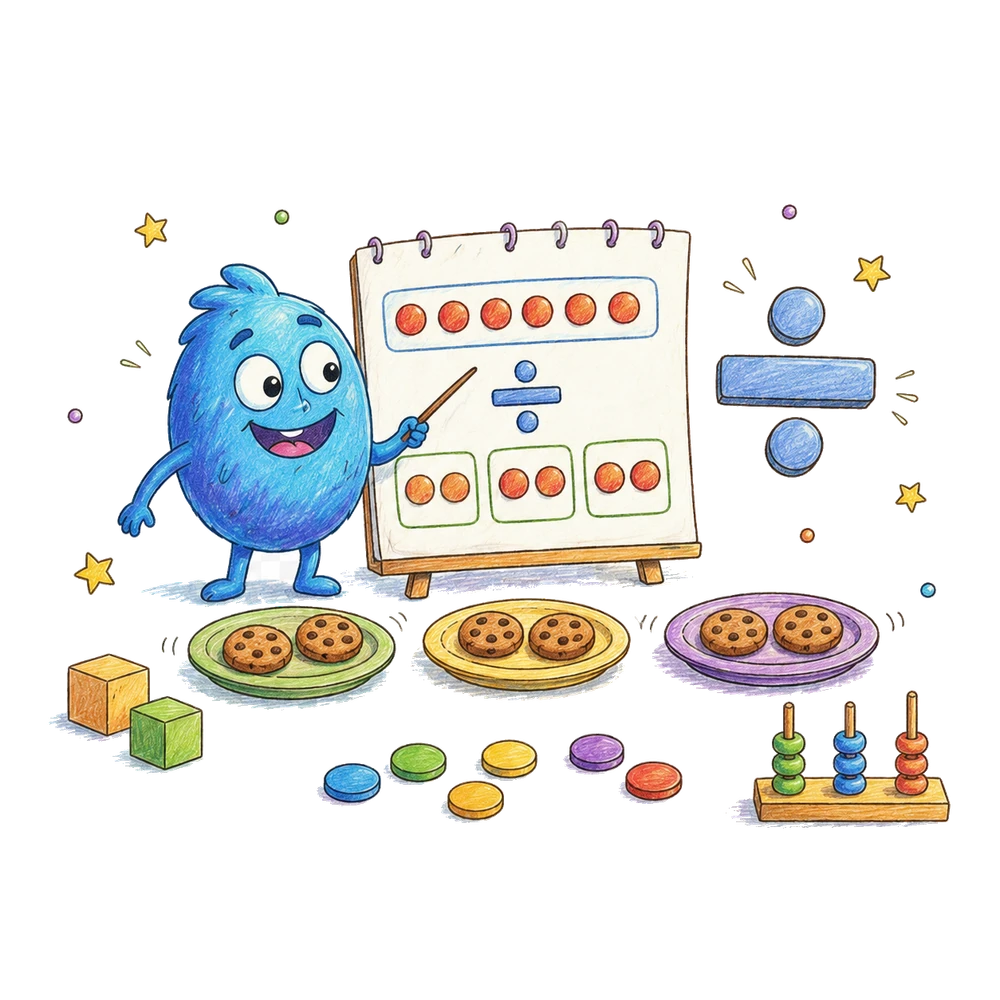
Connect the word zero with a set containing no objects. A basket with no blocks has zero blocks.
9 min read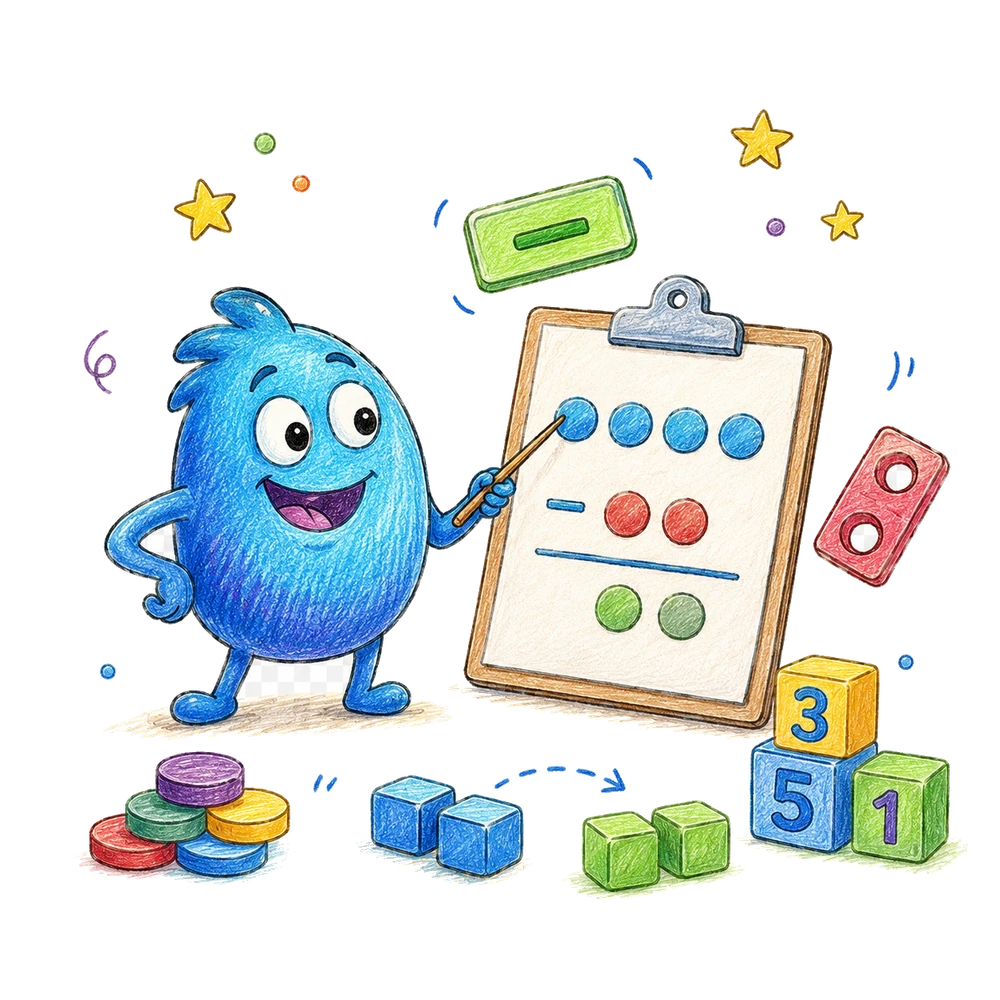
Match a written numeral with a counted group. The space labeled 3 needs three blocks.
9 min read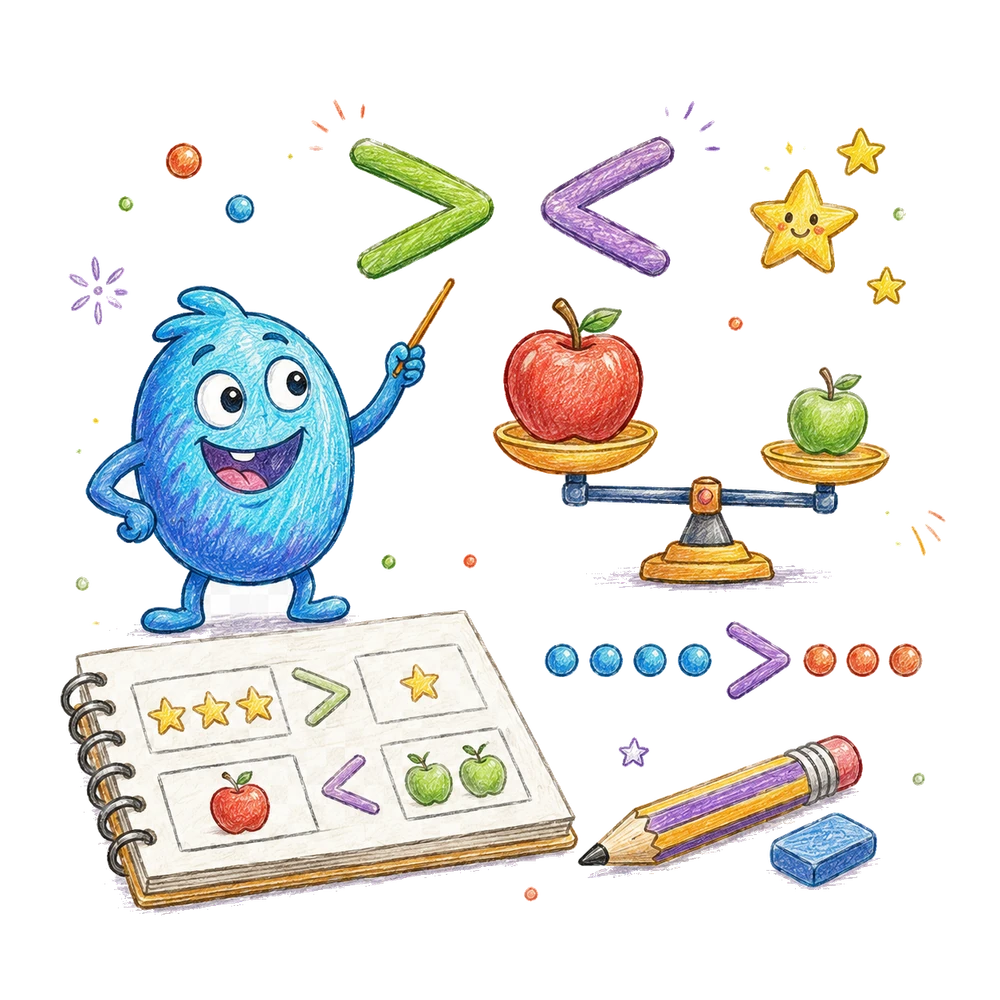
Compare two groups by pairing objects. Four spread-out blocks can still be fewer than five close-together blocks.
9 min read
Decompose a small total into two parts. Five can be split into two and three.
9 min readRecognize ten as a full arrangement with two rows of five. Seven filled spaces leave three empty spaces.
9 min read
Model addition as joining two groups. Two animals join three animals to make five.
9 min readModel subtraction by removing objects from a visible set. Seven leaves with two moved away leaves five.
9 min readContinue a count from an established total. Knowing there are four lets the next count begin at five.
9 min readConnect a move along a number line with a numerical change. Starting at 3 and moving two spaces forward lands on 5.
9 min readCount equal pairs as groups of two. Five pairs can be counted as 2, 4, 6, 8, 10.
9 min readConnect equal groups of five with a growing total. Three five-finger outlines represent fifteen fingers.
9 min readCompose a two-digit number from tens and ones. One bundle and four loose strips represent fourteen.
9 min readDistinguish teen quantities using a full ten and extra ones. Sixteen means a group of ten and six more.
9 min readCompare and arrange several quantities consistently. 2, 5, and 8 belong in that increasing order.
9 min read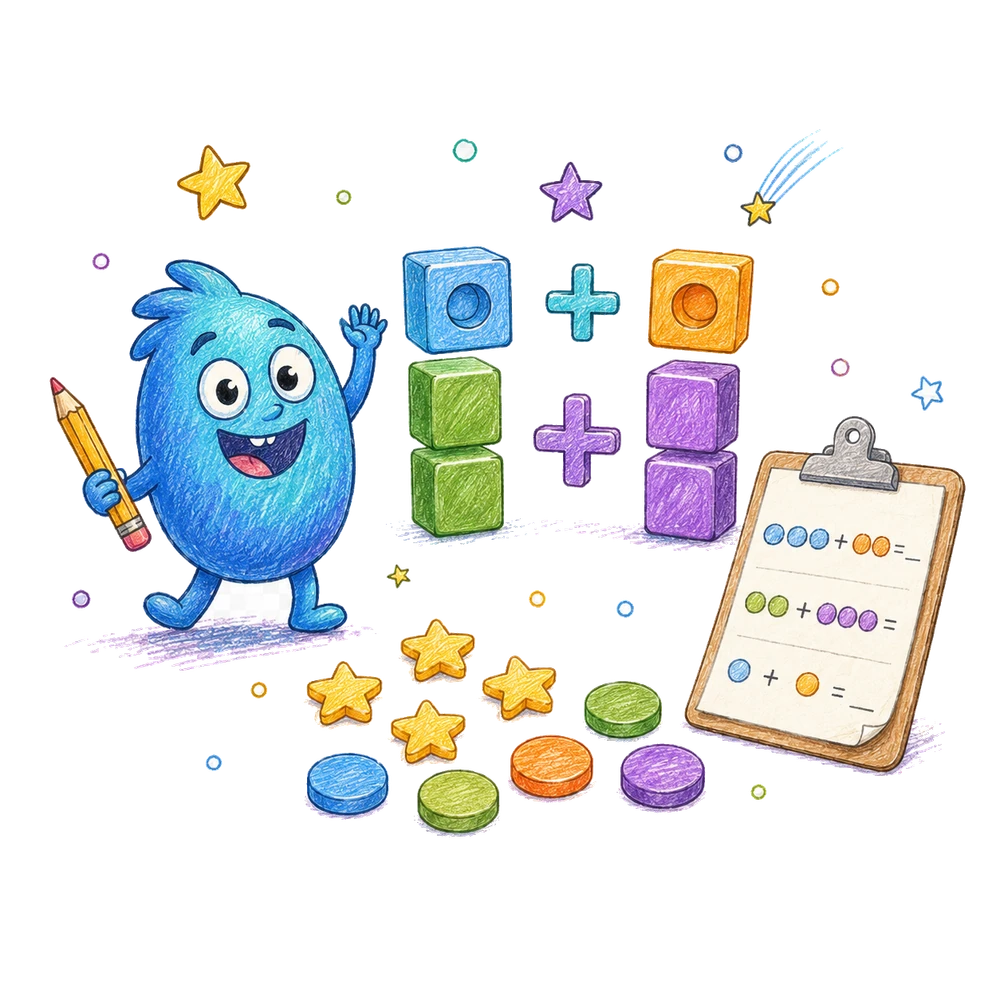
Use neighboring numbers to complete a sequence. 4, 5, blank, 7 needs 6 in the open space.
9 min readDistribute objects so each recipient receives the same amount. Six crayons shared equally between two toys gives three each.
9 min readDistinguish equal quantities from a discussion about different needs. Equal groups can be counted, while fairness also depends on the story.
9 min readSee whether a set can form pairs without a leftover object. Seven counters make three pairs and one leftover.
9 min readConnect two equal groups with a doubles addition fact. A tower of four beside another four represents double four.
9 min readUse a known double to reason about a neighboring addition fact. Four plus five is double four and one more.
9 min readCompare tens before ones when ordering two-digit numbers. 32 is greater than 28 because three tens exceed two tens.
9 min readMeasure by repeating the same unit without gaps. A pencil can be described as six paper clips long.
9 min readConnect the hour hand’s position with an exact hour. At 3:00 the short hand points to 3 and the long hand to 12.
9 min read