Letter Activities Ranked by Preparation Effort
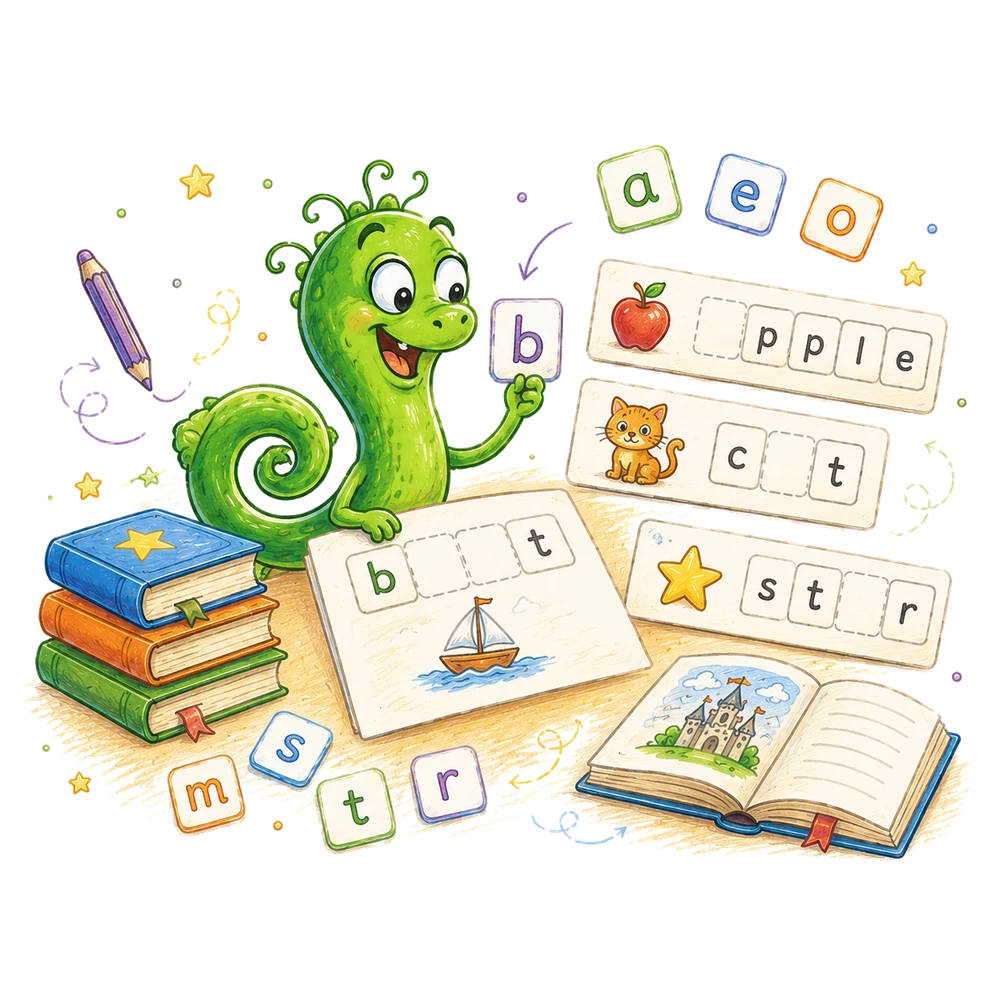
Choose among useful letter activities using setup effort as the stated criterion. A name-card search needs less preparation than cutting a new tile set.
9 min readActivity shortlists & rankings. Practical activities for children ages 3–8: letters, counting, shapes, colors, science, and social learning, with examples and tips for parents.
Choose among useful letter activities using setup effort as the stated criterion. A name-card search needs less preparation than cutting a new tile set.
9 min read
Compare counting activities by space and cleanup requirements. Moving spoons uses a narrow strip while sorting several groups needs more room.
9 min read
Select spatial activities using available movement space. Pointing to a shape needs less space than walking a shape path.
9 min read
Compare color practice formats by realistic cleanup needs. Matching cards usually requires less cleanup than paint mixing.
9 min read
Choose questions that match a child’s desired level of verbal participation. Pointing to an object demands less speech than explaining a character’s choice.
9 min read
Compare portable math activities by noise, pieces, and interruption tolerance. A drawn number sequence can stop immediately when a name is called.
9 min read
Choose spoken word games that do not require driver participation. Naming a word by its first sound needs no loose materials.
9 min read
Compare shared-goal activities by coordination demands. Jointly sorting cards requires less role negotiation than a shared building plan.
9 min read
Choose an observation task based on the preparation actually available. Weather observation requires less material setup than a sink-or-float test.
9 min read
Choose social-learning invitations that fit ordinary shared moments. Noticing a helpful cleanup action fits an event already happening.
9 min read
Compare ways to explore letter structure without assuming equal motor demands. Arranging large strips can be easier to handle than writing tiny letters.
9 min read
Find several meaningful uses for a familiar material. The same blocks can be counted, compared, and combined.
9 min read
Connect drawing with literacy through progressively more print. Drawing a named object demands less independent print than labeling a scene.
9 min read
Choose a geometry task according to the reasoning it asks for. Matching an identical triangle differs from describing an unseen triangle.
9 min read
Compare formats by the number of useful non-color cues. A labeled blue circle offers more cues than an unlabeled blue patch.
9 min read
Choose an observation goal that fits a limited safe route. Looking for circles can fit a shorter walk than mapping several landmarks.
9 min read
Compare activities by space, supervision, and preparation needs. Shared reading needs less floor space than a building project.
9 min read
Compare familiar practice with progressively larger optional changes. Replaying the same game changes less than introducing a new rule.
9 min read
Prioritize activities that use materials already in reach. Describing an object can begin before any cards are made.
9 min read
Choose a storytelling demand that fits current language comfort. Listening to a story requires a different contribution from inventing one.
9 min read
Choose a repeating pattern by the complexity of its unit. AB repeats two positions while AAB requires tracking three.
9 min read
Compare pointing, moving a token, and whole-body number-line actions. Moving a token may make each counted step easier to inspect.
9 min read
Choose a written task by the reasoning and writing load it combines. A two-sentence report requires more writing than labeling a diagram.
9 min read
Choose activities that respect library rules and other visitors. Finding one letter in a title is less involved than comparing several books.
9 min read