


Letters & reading
KindergartenBeginning Sound Games with Objects You Already Have
Use familiar, safe household objects to listen for beginning sounds, compare spoken words, and adapt a short game to the child.
17 min read brainhuntersacademy
Letters & reading. Practical activities for children ages 3–8: letters, counting, shapes, colors, science, and social learning, with examples and tips for parents.

Use familiar, safe household objects to listen for beginning sounds, compare spoken words, and adapt a short game to the child.
17 min read
Make a small set of letter cards, match uppercase and lowercase forms, and use examples, dialogue, and accessible variations to support the child.
17 min read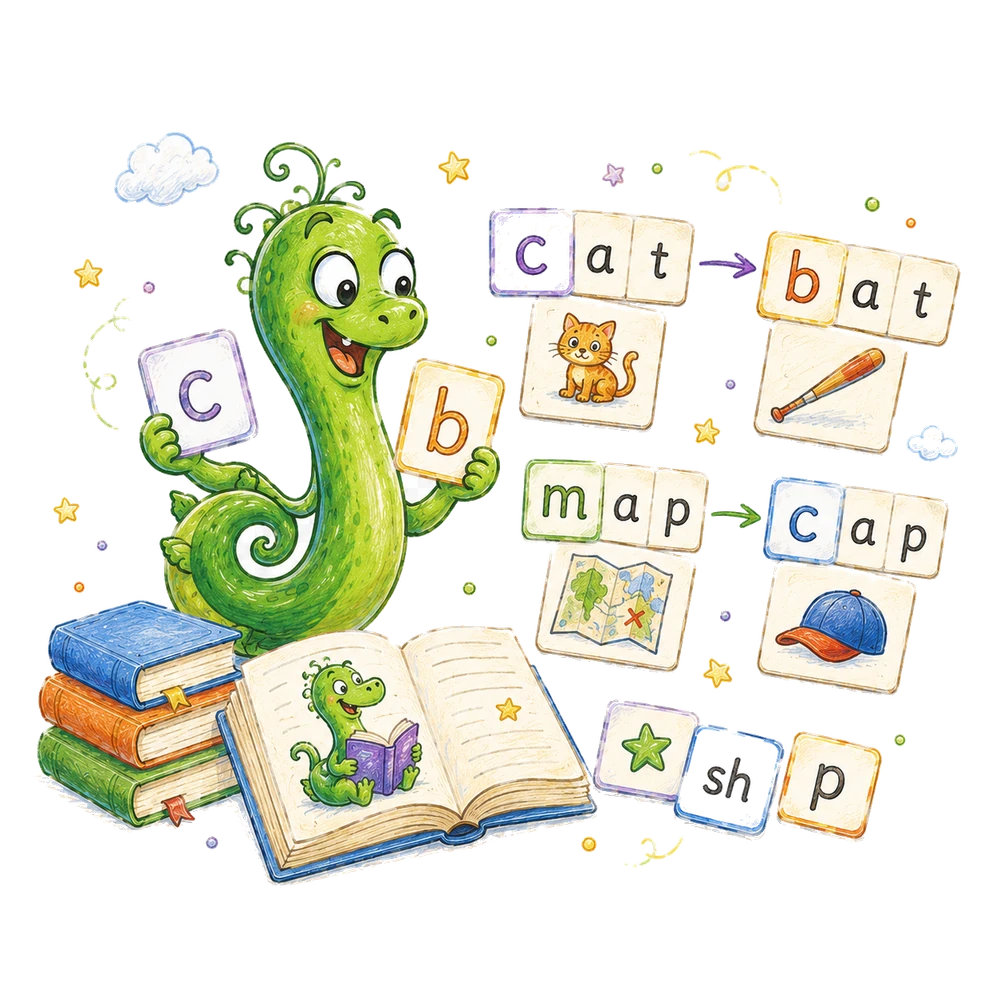
Make a private reference card and movable letters for a familiar nickname, then practice identifying and ordering its letters with appropriate support.
17 min readUse an alphabet strip, movable cards, and practical examples to find and compare English letters without relying on a memorized song.
17 min readUse a small basket of pictures or safe objects to listen for rhyming word endings, check choices, and adapt the game to the child.
17 min read
Listen for syllables in a familiar or fictional name, mark each spoken part, and adapt the activity without requiring clapping or public sharing.
17 min readUse a toy train and three spaces to blend the spoken sounds in a short English word, then connect the activity to print only if the child wants.
17 min readListen for the final sound in familiar spoken words, compare examples, and adapt the activity with pictures, objects, or a communication device.
17 min readCompare familiar English words that differ in a vowel sound using clear picture pairs, adult modeling, and accessible choices.
17 min readMake paper letter tiles, build simple consonant-vowel-consonant words, change one sound at a time, and support the child's choices.
17 min readExplore how sh and ch can represent single speech sounds with word cards, sorting, spelling, and specific checks for common mix-ups.
19 min read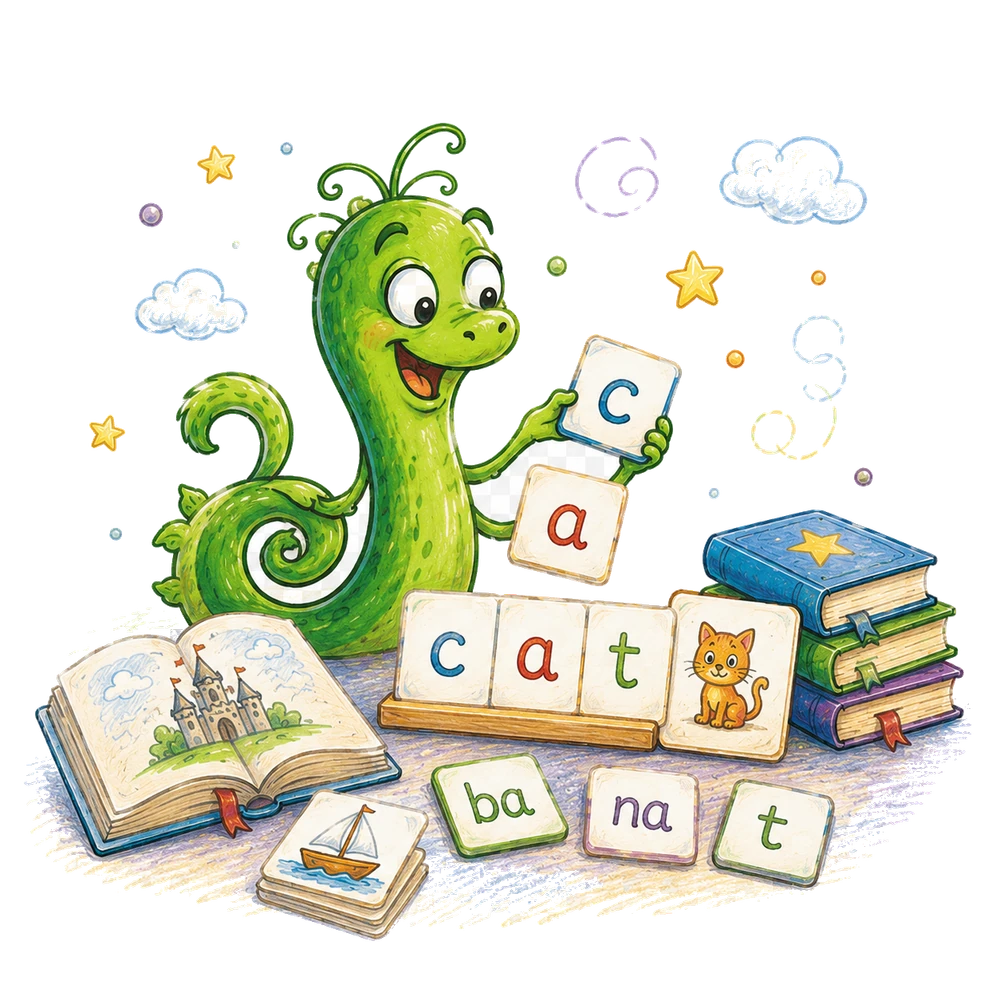
Teach a common word in short, meaningful sentences with explicit attention to its sounds, spelling, and use in context.
17 min readHelp a beginning reader distinguish b and d through letter features, sound practice, writing, and concrete checks without treating one error as a diagnosis.
18 min readMake a missing-letter puzzle with a clear clue and one intended answer among the offered choices, then check the word's spelling and meaning.
18 min readBuild and compare familiar -at word-family examples with a paper house, letter cards, spoken sounds, and checks for meaning.
18 min readBuild familiar compound words from two picture cards, explore how their meanings relate to their parts, and check the written spelling.
18 min readSort familiar printed words by their initial letter, check the sorting rule, and compare letter names with beginning sounds.
17 min readOrder three words that share a first letter by comparing the next different letters and checking them against an alphabet reference.
17 min readMake and revise predictions during a picture-book read-aloud using details from the story and illustrations as evidence.
18 min readUse three pictures to retell a short story in order, connect the events, and distinguish the story from an invented ending.
17 min readChoose a few useful read-aloud questions that invite observation, explanation, and checking against a story without interrupting every page.
17 min readTrack English print from left to right and return to the next line using a finger, a simple sentence, and a clear visual reference.
17 min read
Set up a family message center where beginning writers can plan, dictate, write, deliver, and read real messages for a real audience.
17 min readMake picture cards for a person, an action, and an object; use complete examples, conversation prompts, and troubleshooting to build and revise sentences together.
19 min read