




Numbers & math
2nd gradeOdd and Even with Partners
See whether a set can form pairs without a leftover object. Seven counters make three pairs and one leftover.
9 min read brainhuntersacademy
Page 3. Practical activities for children ages 3–8: letters, counting, shapes, colors, science, and social learning, with examples and tips for parents.

See whether a set can form pairs without a leftover object. Seven counters make three pairs and one leftover.
9 min read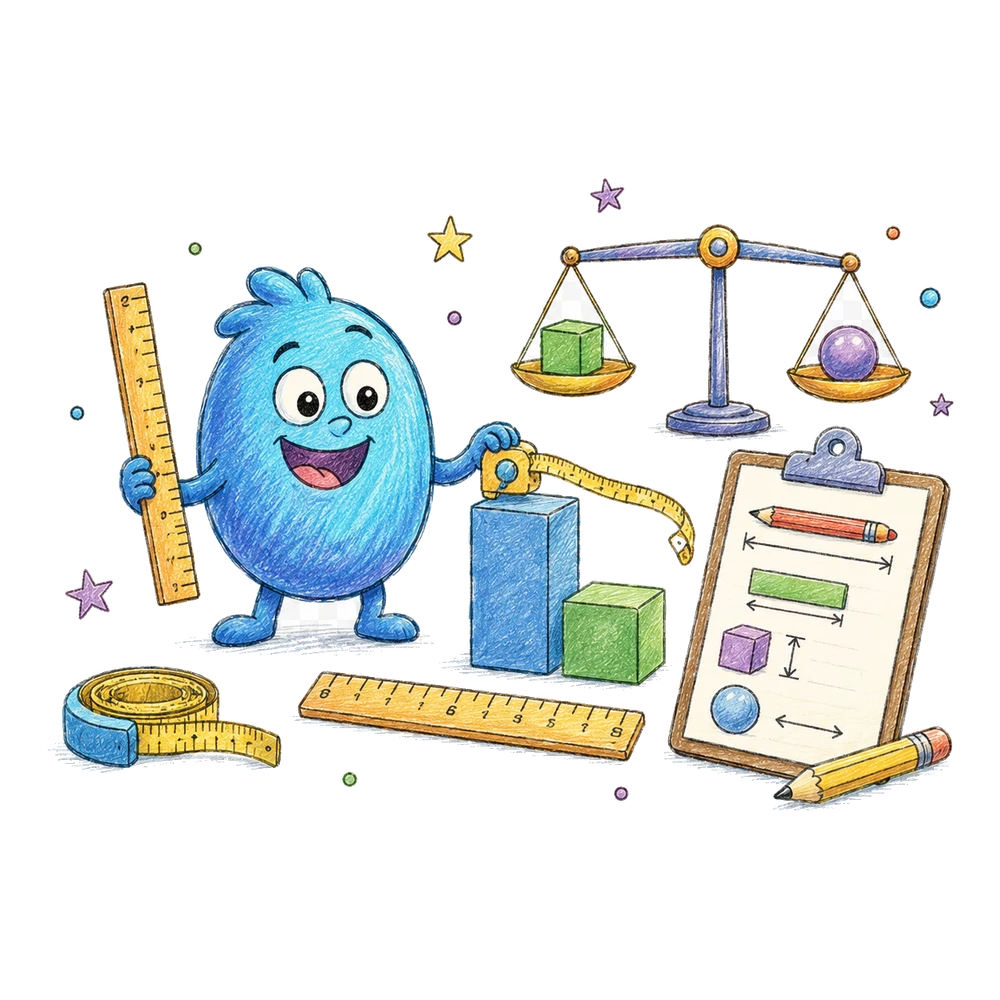
Connect two equal groups with a doubles addition fact. A tower of four beside another four represents double four.
9 min read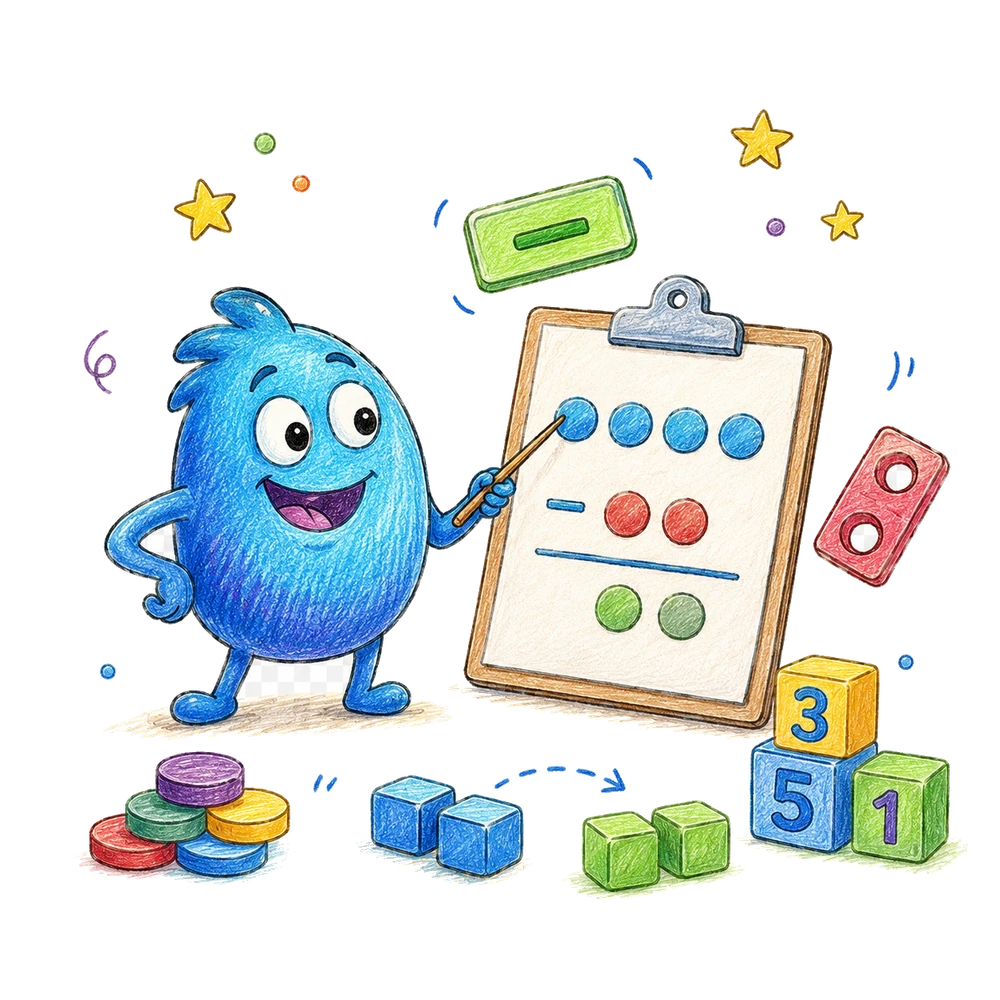
Use a known double to reason about a neighboring addition fact. Four plus five is double four and one more.
9 min read
Compare tens before ones when ordering two-digit numbers. 32 is greater than 28 because three tens exceed two tens.
9 min readMeasure by repeating the same unit without gaps. A pencil can be described as six paper clips long.
9 min read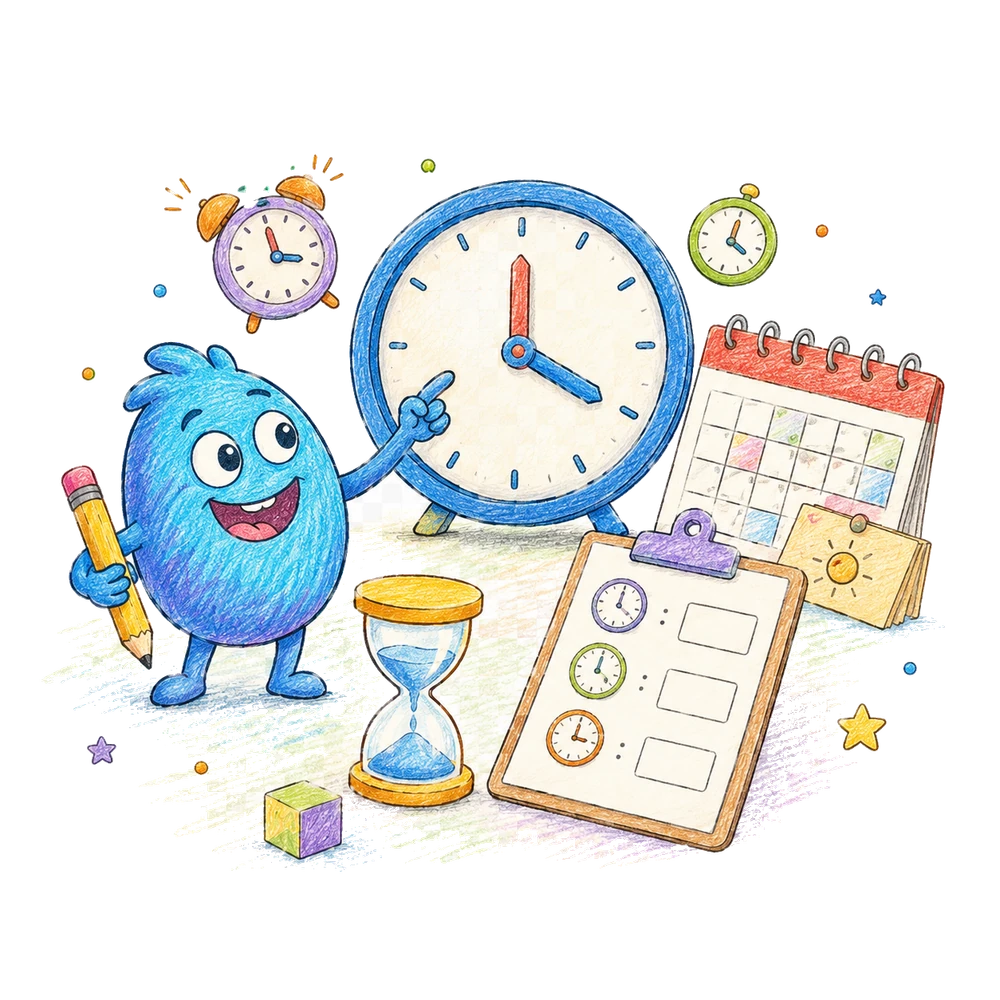
Connect the hour hand’s position with an exact hour. At 3:00 the short hand points to 3 and the long hand to 12.
9 min readNotice the hour hand’s movement at a half hour. At 3:30 the hour hand sits between 3 and 4.
10 min readDistinguish the number of coins from their total value. Two nickels have the same value as one dime.
9 min read
Represent one response with one picture marker. Each family vote for apples or bananas adds one square.
9 min readRecognize two equal parts of one whole. A fold that makes two equal areas can show halves.
9 min readConnect four equal parts with a whole. Four equal quarter pieces cover one original square.
9 min readVerify a result by representing the same problem differently. 8 plus 5 can be shown with counters and a number line.
9 min read
Recognize a circle across different everyday objects. A lid and a drawn wheel can both have circular outlines.
9 min read
Recognize a triangle by three straight sides rather than orientation. A triangle still has three sides when its point faces left.
9 min readCompare four-sided shapes without relying only on their names. Both shapes have four right-angle corners, while a square has equal sides.
9 min readSort by one property and then change to another. Red circles can be grouped by color first and shape second.
9 min read
Identify parts of a drawing by their geometric outlines. A roof may resemble a triangle and a window a square.
9 min read
Compose a recognizable picture using separate geometric pieces. A rectangle and two circles can suggest a bus.
9 min read
Count each vertex of a polygon exactly once. A pentagon has five places where straight sides meet.
9 min readNotice the difference between a straight edge and a curve. A ruler’s edge is straight while a rainbow arc is curved.
9 min read
Compare circular and oval outlines through direct observation. An oval can be longer in one direction than another.
9 min readRecognize and count the six sides of a hexagon. One hexagon has six straight boundary sides.
9 min readIdentify an eight-sided outline while separating shape from sign meaning. An octagon has eight sides even without printed words.
9 min readDistinguish a star’s outward points from all of its corners. A five-point outlined star has five outer points and five inward corners.
9 min read