




Shapes & spatial thinking
KindergartenLeft and Right with a Toy Lineup
Interpret left and right from a shared viewing position. When both people face the row, the bear can be left of the rabbit.
10 min read brainhuntersacademy
Page 4. Practical activities for children ages 3–8: letters, counting, shapes, colors, science, and social learning, with examples and tips for parents.

Interpret left and right from a shared viewing position. When both people face the row, the bear can be left of the rabbit.
10 min read
Describe vertical positions using a stable reference. A sun picture can be above a tree picture.
9 min read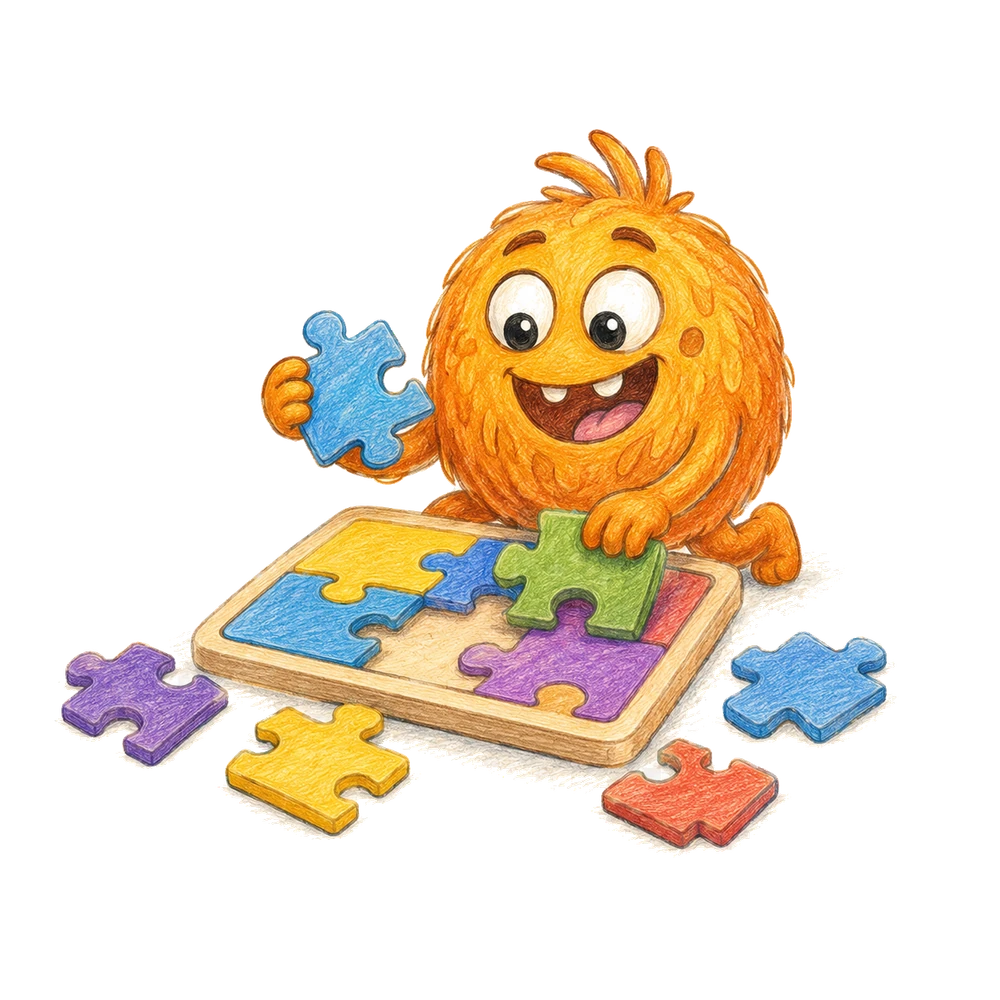
Classify a position relative to a visible boundary. A toy fully within the loop is inside it.
9 min readIdentify a middle position using two reference objects. The fox is between the bear and the rabbit.
9 min read
Compare distances from a named reference point. A counter can be near the house but far from another counter.
9 min read
Match the arrangement and orientation of a simple structure. A two-block tower beside one flat block is a specific arrangement.
9 min readPredict how a piece might fit after a turn. A triangle-shaped piece may fit after a quarter turn.
9 min readRepresent real positions with a small overhead drawing. A rectangle on the map can stand for the sofa.
9 min read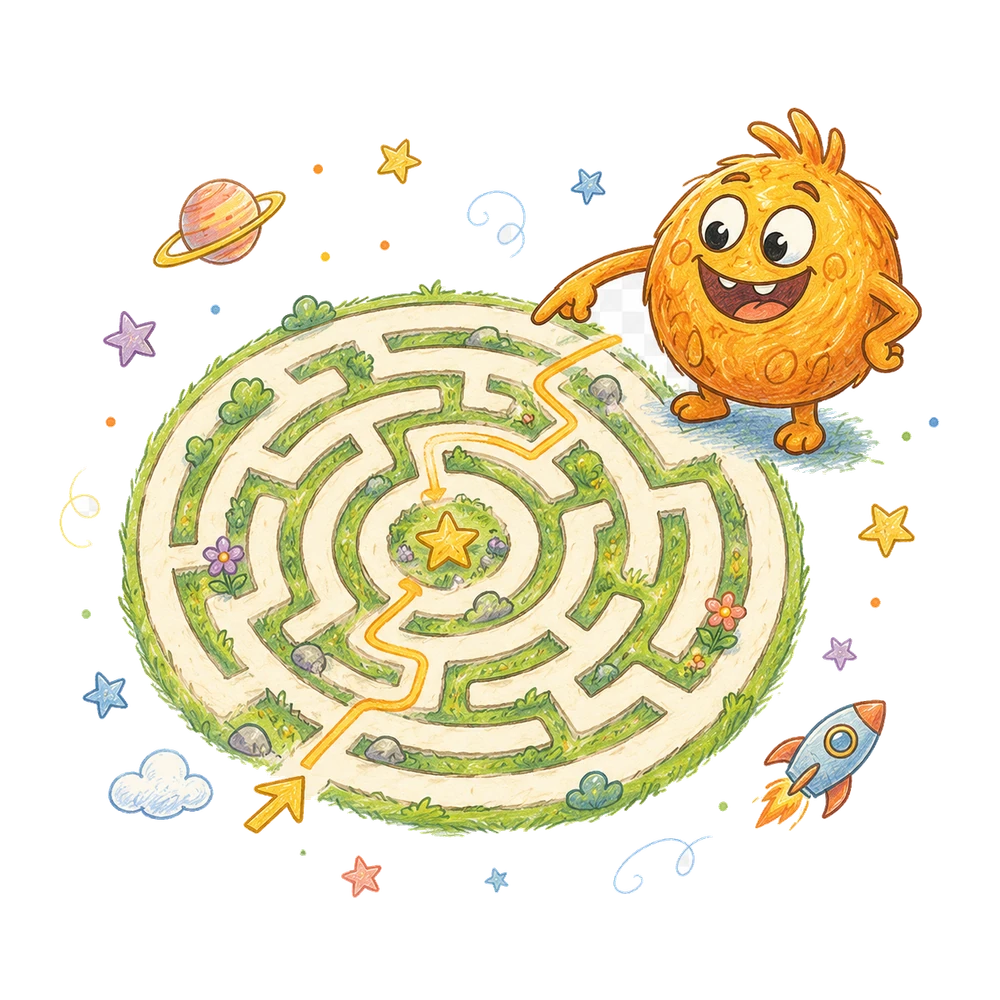
Remember and carry out two connected position instructions. Put the bear in the box, then place the box on the mat.
9 min readNotice whether two halves correspond across a fold line. Matching butterfly wings can reflect across a central line.
9 min readDistinguish a flat drawing from an object that takes up space. A paper circle is flat, while a ball is a solid object.
10 min readConnect a shape feature with a physical action. A curved surface may roll, while a flat face can support stacking.
9 min read
Identify a repeated unit using shape alone. Circle, triangle repeats as a two-piece unit.
9 min readRecognize that a repeating unit can contain three items. Circle, circle, square repeats as a three-item unit.
9 min readJustify a classification using a visible property. The square differs because it has four sides.
9 min readCompose and rearrange a silhouette using geometric parts. Two triangles can combine to form a larger shape.
9 min read
Plan a continuous route while respecting a boundary. The path must remain inside the maze’s open corridors.
9 min readCommunicate geometric properties precisely enough for another person to identify a shape. A shape with three straight sides and three corners describes a triangle.
10 min read
Connect a color word with a visible example. The cup can be described as red without naming its shape.
9 min readUse color as a consistent sorting property. Blue socks can share a basket even when their sizes differ.
9 min read
Recognize one color across unrelated objects. A red toy and a red cloth can match despite different uses.
9 min readCompare examples of a color without expecting exact shade matches. Two blues can look different while sharing a color name.
9 min read
Find a shared color in a small visual set. A yellow block can match the paper even when it is smaller.
9 min read
Observe variations in green using a respectful nature activity. Two living leaves can show different green shades.
9 min read